
Livraison le jour même et le lendemain

Qualité garantie

Débloquez vos offres de bienvenue: Livraison GRATUITE | Jusqu'à -80 % | 30 jours d'essai gratuits à JoyPlus
Téléchargez l'application
A nebuliser for respiratory therapy can be useful when you need to nebulise prescribed inhaled medication or a suitable solution. However, many devices look similar, even though they can differ considerably in their power supply, noise level, cleaning requirements and controls.
Look out for these three common pitfalls:
The right choice depends on who will use the device, where it will be used and which medication is suitable according to medical advice.
A compressor nebuliser uses compressed air to nebulise liquid. This type is generally suitable for long-term use at home and works while the device is plugged into a mains socket. According to the product descriptions, the Treesmile AR14, AR06 and AR01 use a compressor and deliver a continuous mist.
A mesh nebuliser uses a fine membrane. These devices are usually small, lightweight and suitable for use on the go. For example, the Treesmile JM-841 and JM-817 have a built-in lithium battery, a USB charging port and a stated maximum noise level of 25 dB(A).
An ultrasonic nebuliser, such as the Medisana IN 515, uses ultrasonic technology to create a fine mist. Always check the manual to see which liquids and medicines are suitable. Not every nebuliser is compatible with every liquid.
Manufacturers often state the MMAD value: the mass median aerodynamic diameter. The stated MMAD for the Treesmile compressor models is around 3 micrometres, with product information indicating that 75% to 80% of the effective particles are between 1 and 5 micrometres.
The JM-841 and JM-817 state a median particle size of 3.5 micrometres. The JM-802 is also listed as having a particle size of 3.5 micrometres. These figures describe how the device works; they don’t guarantee a particular treatment outcome.
Also consider the nebulisation rate. An adjustable rate can be useful if several family members use the device. The AR14, AR06 and AR01 compressor models offer three settings, with a stated range of 0.35 to 0.55 ml per minute. The JM-841 and JM-817 have two settings.
After each session, clean and dry the medication cup and other detachable parts according to the manual. Check:
A device with lots of features isn’t automatically easier to use. For older people, a clear dial or a simple on/off button may be more practical than several settings.
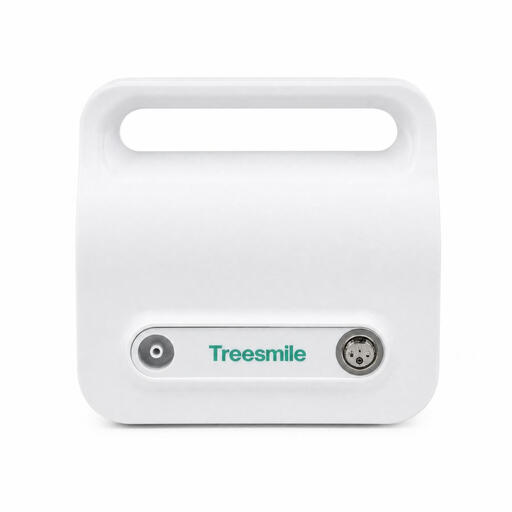
Why it suits this profile: The dial controls and three mist settings make it straightforward to use at home. The integrated handle makes it easy to move between the bedroom and living room.
It doesn’t give the impression of being cordless: the compressor runs on mains power. So it’s clear from the outset that this model is intended mainly for a fixed spot at home.
Three mist settings, a stated noise level of up to 57 dB, and adult and child masks included.
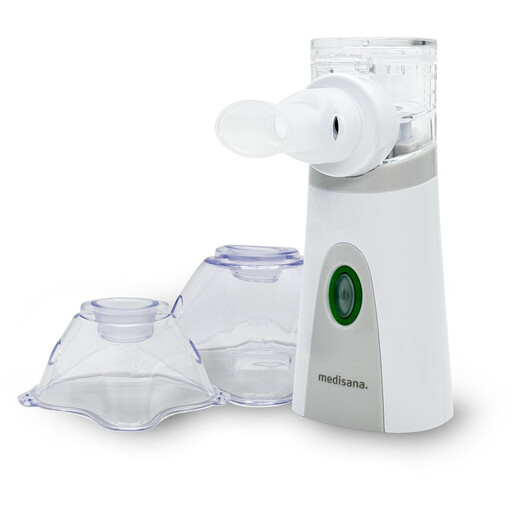
Why it suits this profile: This portable model is designed for inhalation therapy at home or on the go. The product information describes it as quiet and easy to use, with parts that can be cleaned.
The instructions supplied warn that not every liquid is suitable. Before buying and using it, check that it is compatible with your prescribed solution.
Ultrasonic technology, a portable design and a visible CE marking, according to the product information provided.
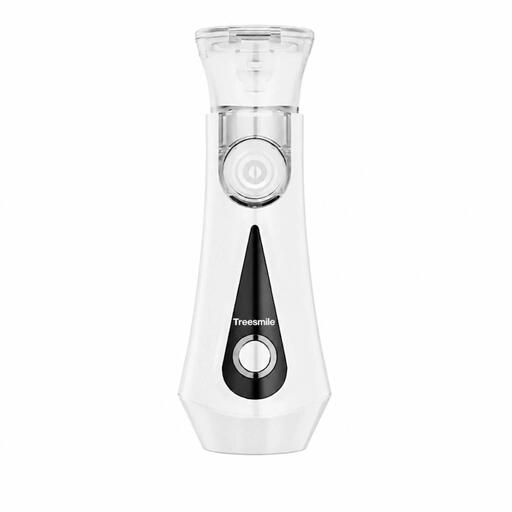
Why it suits this profile: The 15 ml medication cup and built-in battery are practical for users looking for greater capacity and flexibility when nebulising.
Its capacity is clearly stated, so you’re not relying on the word ‘portable’ alone. The stated maximum noise level is 50 dB(A), so check whether that’s suitable for overnight use.
15 ml medication cup, two mist settings, automatic switch-off and a stated residual volume of up to 0.3 ml.
We’ve put together a complete, up-to-date list of products that meet these strict selection criteria and the applicable European safety requirements.
Only use medication or liquids approved by a doctor, pharmacist or the manual. A medical nebuliser is no substitute for medical advice. Children must be supervised by an adult. Don’t share mouthpieces or masks unless they have been properly cleaned.
Running costs usually include electricity or charging, replacement filters and parts such as medication cups, tubes or masks. A compressor nebuliser may be suitable for longer sessions, but it needs a mains socket. A mesh nebuliser offers more flexibility on the go, but its battery needs charging and its membrane requires careful maintenance.
Fit the medication cup, tube and mask or mouthpiece according to the manual. Only add the prescribed or approved liquid. Switch on the device, breathe calmly as instructed, and clean all detachable parts afterwards. Always follow your doctor’s treatment plan.
Its lifespan depends on how often it’s used, how it’s cleaned and stored, and whether replacement parts are available. Leave parts to dry after each session, don’t block the air vents, and regularly check the tube, mask, filter and medication cup for wear.
A low stated noise level may be more comfortable in a bedroom, but check whether the figure applies to the setting you plan to use. The JM-841 and JM-817 state a maximum of 25 dB(A); the compressor products state a maximum of 57 dB. Also bear in mind the noise from airflow and accessories.
