
Vandaag of morgen in huis

Kwaliteit gegarandeerd

Welkomstaanbiedingen ontgrendelen: GRATIS bezorging | Tot 80% korting | Gratis 30 dagen JoyPlus-proefperiode
Download de app
A nebuliser for inhalation therapy can be useful for adults, children, older people and carers looking for an inhalation device for home use. However, many models look similar. A low price tells you little about noise levels, cleaning or the accessories included. A steam inhaler, nasal inhaler and medical nebuliser are also often confused with one another.
This guide helps you turn marketing claims into features you can check. That way, you can choose a compressor nebuliser, mesh nebuliser or portable nebuliser that suits the way you plan to use it.
“Quiet” is a subjective description. So check the stated noise level in dB(A). According to the product specifications, a mesh nebuliser rated at a maximum of 25 dB(A) is significantly quieter than a compressor nebuliser rated at up to 57 dB. That difference may matter if a child is easily startled or you use the device in the evening.
Bear in mind that noise level is not the only factor. A compressor nebuliser often runs on mains power, which can make it suitable for longer sessions. A mesh model is usually more compact, but the mesh needs careful maintenance.
Particle size is often listed as MMAD, for example around 3 to 3.5 micrometres. This is a technical indication of the average aerodynamic diameter of the mist particles. It helps you compare models, but it does not guarantee a particular medical effect.
Only use liquids and medicines that the instructions and a doctor or pharmacist say are suitable for nebulisation. An aroma inhaler or steam product is not a substitute for a medical inhaler.
A device may look attractively priced, but be less practical if it does not include a child’s mask, mouthpiece or spare filter. Check in advance whether the set includes an adult mask, child’s mask, medicine cup and tubing.
After every use, clean and dry the removable parts according to the instructions. Any liquid left behind can affect hygiene and performance. A removable medicine cup or cleaning function can make everyday maintenance easier to manage, but does not replace manual cleaning if the instructions require it.
A compressor nebuliser uses compressed air to turn liquid into a mist. This type generally produces a steady, continuous mist and runs on mains power. It can suit use in a fixed spot, such as a bedroom or living room. Bear in mind its size, tubing and noise level.
A mesh nebuliser uses a fine mesh or membrane and is often compact and battery-powered. This makes it a good option for travel, use on the go or use in a smaller room. The parts around the mesh need careful cleaning; dried residue can affect mist production.
Mist output is usually given in ml/min. A higher output can shorten a session, but it is not automatically suitable for every user or liquid. Adjustable settings give you more control. Always choose a setting according to the instructions and, for prescribed medicines, your treatment advice.
Some portable models switch off automatically after around 15 minutes. This can be handy, but check that the run time suits your prescribed use.
For home use, a mains-powered device can be handy because you do not have to rely on a battery. A model with a lithium battery and USB charging is more flexible on the go. Check the capacity of the medicine cup. An 8 ml cup is compact; a 15 ml model may be better suited to longer sessions, but often takes up more space.
Also check whether the device stands steadily, has a handle and lets you store the accessories neatly. These small details can make everyday use easier.
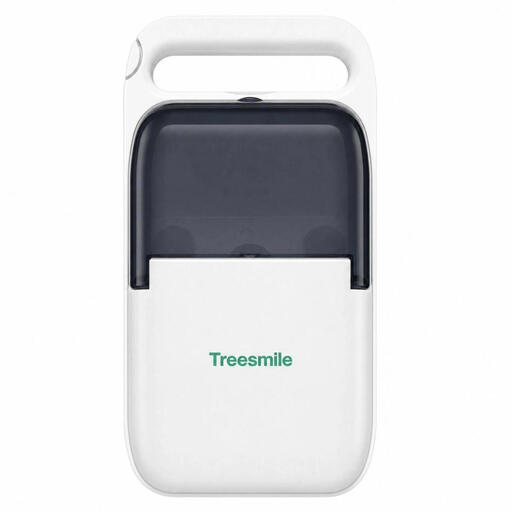
Why it suits this profile: This model is designed for use with mains power and has straightforward controls with three mist settings. The set includes a mouthpiece, an adult mask and a child’s mask.
Its stated noise level is a maximum of 57 dB, and the medicine cup is removable. This makes it easier to assess the noise level and cleaning requirements in advance than with a model described only as “quiet”.
Three adjustable settings, continuous operation on mains power and a storage compartment in the housing, according to the product description.
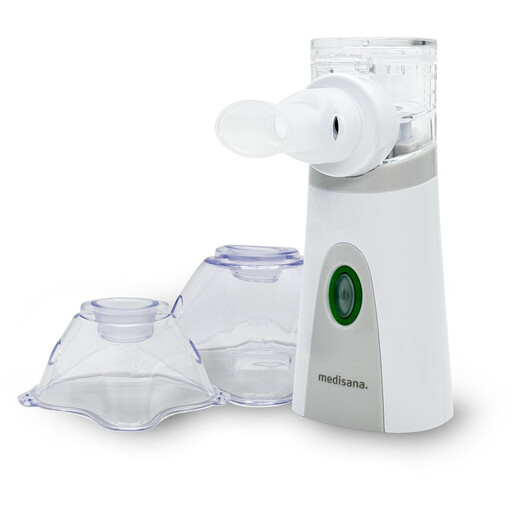
Why it suits this profile: This portable model is designed for use at home and on the go. The product specifications describe it as compact, quiet to operate and made with parts that can be cleaned.
The manufacturer describes it as a portable ultrasonic nebuliser. Before buying, check the instructions to see which liquids are permitted and how the parts should be disinfected.
Compact design, quiet operation according to the product information, and a model type suited to use at home or on the go.
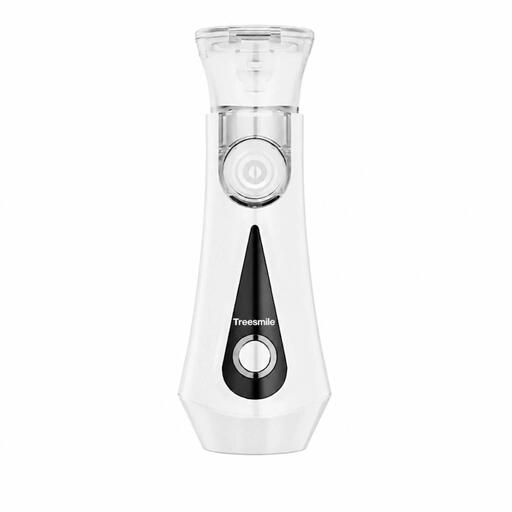
Why it suits this profile: Its 15 ml medicine cup is larger than those of many compact mesh models. This may suit users who need a larger capacity and use the device in a fixed spot.
The capacity, two mist settings and automatic shut-off are clearly specified. However, check whether the larger housing and stated maximum noise level of 50 dB suit your space.
15 ml medicine cup, two mist settings, water-level detection and automatic shut-off according to the product specifications.
We’ve put together a complete, up-to-date list of products that meet these strict selection criteria and the applicable European safety regulations.
Before using it for the first time, read the instructions and check that all parts are connected correctly. If your nebuliser comes with a mask, make sure it fits securely without pressing hard against the face. Children need to be supervised by an adult.
Always follow a doctor’s or pharmacist’s instructions when using medicines. Do not use essential oils, tap water or other liquids unless the manufacturer expressly says they are suitable. A product such as a nasal inhaler with menthol or eucalyptus works differently and is not the same as a nebuliser for inhalation therapy.
After each session, clean the medicine cup, mouthpiece and mask according to the instructions. Let the parts dry completely before putting them away. Do not immerse the main unit, battery or plug in water. Replace filters, masks and other wear parts at the recommended intervals.
Its lifespan depends on how often it is used, how well it is maintained, the condition of the battery and whether replacement parts are available. A compressor nebuliser generally has different wear parts from a mesh nebuliser. So check the warranty, spare parts and cleaning instructions before you order.
In addition to the purchase price, you may need to pay for electricity or batteries, prescribed liquids, filters and replacement masks. A mains-powered model does not need charging, while a portable nebuliser may offer more flexibility. So compare the accessories included and the cost of maintenance, not just the selling price.
That depends on the accessories included, how well the mask fits and the treatment advice. Some sets include both a child’s mask and an adult mask. Always supervise children when they use the device, and ask a doctor or pharmacist to advise on the right liquid, dose and session length.
