
Reader beside a bright window
You read charts and reports in a fixed spot and want to know whether reflections make the text and legends harder to see. Assess the screen in that location; specifications alone can’t predict the result.


Start by assessing the screen at your usual workstation: view a chart or PDF beside the window, as a quoted brightness level doesn’t guarantee that reflections will disappear. Then decide whether you’d prefer more room for charts and text or a more portable size, and check that the stylus, apps and accessories you need are compatible with the exact model.
You read charts and reports in a fixed spot and want to know whether reflections make the text and legends harder to see. Assess the screen in that location; specifications alone can’t predict the result.
You view chart material alongside notes or source files, and weigh the benefit of extra screen space against the size and weight you’re willing to carry.
You write on PDFs or charts and want to know which stylus is compatible with the exact tablet model and what’s actually included in the chosen package.
First assess the screen in daylight by a window, then weigh up screen space, stylus support, software and the complete package.
| What to consider | What should you check? | Who should pay particular attention? |
|---|---|---|
| Readability beside a window | View a chart or PDF from your usual viewing angle and check the screen type and brightness controls. | If I study beside a bright window, I want to be able to read chart labels from my usual viewing angle. Around 31% of consumers prioritise readability in daylight by a window. |
| Viewing a chart and report side by side | Open your own chart and report side by side, then compare the usable screen space, dimensions and weight of the exact model. | When I want to see legends and report text at the same time, workspace matters more than a compact size. Around 25% of consumers prioritise viewing charts and sources side by side. |
| Making notes on charts | Check the exact stylus model, compatibility, package contents and whether you can share notes in the required format. | If I want to mark boundaries or add comments to charts, the right stylus needs to suit both the tablet and the way I work. Around 19% of consumers prioritise stylus annotation. |
| Required study and GIS software | Ask which apps, versions, files and export steps your course requires. If desktop software is compulsory, check the full system requirements too. | When my course specifies particular software, I want to know whether the full configuration can run it before choosing a screen. Around 13% of consumers let compulsory software determine their choice. |
| Complete study set-up | Check what’s included in the exact offer and which compatible stylus, adapter or other accessories you actually need. | If I need a complete set-up, I don’t want to assume that a stylus or charger comes as standard. Around 12% of consumers prioritise the cost of the equipment they need. |
A maximum brightness figure or a particular mode doesn’t tell you how a chart will look from your viewing angle beside a window.
Compare a representative chart or PDF in the place where you plan to work, and check whether the exact model really has an anti-reflective coating or a matte screen.
The fact that a matte screen is available as an option within a product range doesn’t mean every model has one. The ZAE40020SE model is described as having a glossy screen.
Check the full model number and screen description for the one you’re choosing.
A tablet may support a stylus even if one isn’t included in the offer you choose. This varies by model and bundle.
Check what’s included with each offer and whether the stylus is compatible with the exact model.
Depending on the bundle you choose, a compatible stylus, keyboard or power adapter may need to be bought separately.
A device that lets you read or mark up charts isn’t automatically suitable for desktop software that runs locally, such as ArcGIS Pro.
Ask your course provider for the exact software version and check the full configuration against its system requirements. For ArcGIS Pro, Esri specifies, among other things, a supported Windows environment and a Windows x64 runtime.
If the tablet doesn’t meet the requirements for local use, you may need access to a suitable computer for that assignment.
Apple says the iPad Air M4 is available in 11- and 13-inch models, both with an anti-reflective coating. Compare this feature for yourself in the light and viewing angle at your workstation.
The Galaxy Tab S10 FE series offers an Android option for reading and annotation. Samsung lists a 10.9-inch screen and S Pen support for the standard FE model.
According to Lenovo, the Dutch Idea Tab Pro model ZAE40020SE combines a 12.7-inch screen with a stylus bundle. It could suit comparing material at a desk.
According to Xiaomi, the Xiaomi Pad 7 is an Android tablet with an 11.2-inch screen and Focus Pen compatibility.
A Surface Pro is worth considering in particular if your course requires Windows desktop software that runs locally.
This selection includes tablets for studying charts and reports, from larger screens for desk use to more compact options for reading and note-taking.
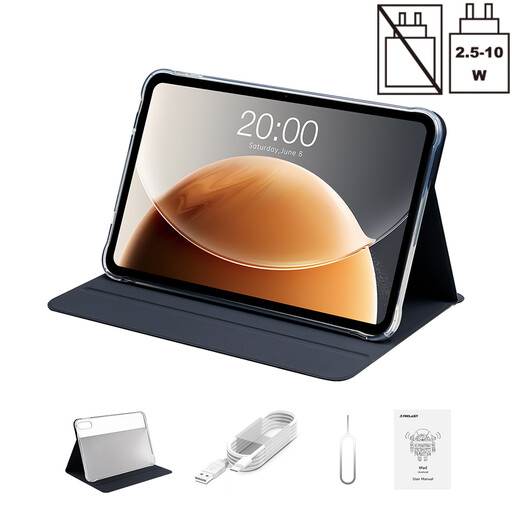 No image available
The 13.4-inch screen could suit you if you want extra room for chart material at your desk.
The product name lists a 120Hz screen, Android 16, 128 GB storage and an included folio case.
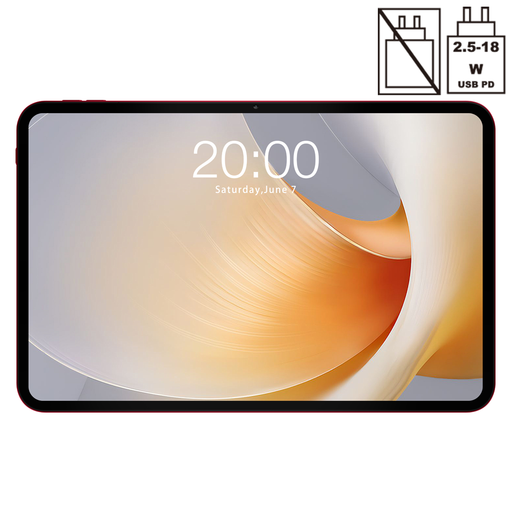 No image available
The 13.4-inch screen is worth considering if you mainly use chart material alongside text at your desk.
The product name lists a 120Hz screen, Android 15 and 256 GB storage.
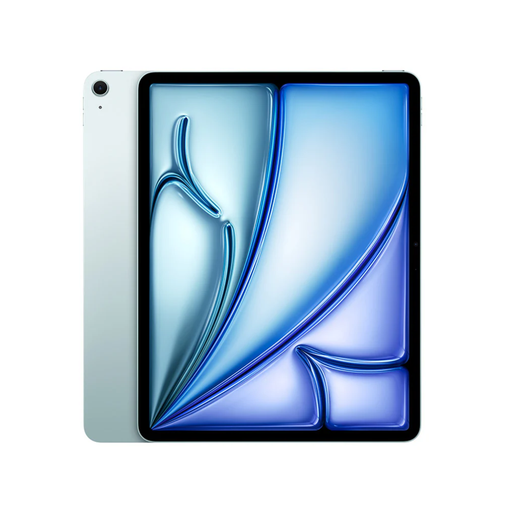 No image available
The 13-inch screen gives you more room to work with a chart and report. Apple lists an anti-reflective coating for the iPad Air M4, but this doesn’t guarantee a reflection-free view beside your window.
Apple quotes brightness of 600 nits for the 13-inch model. It hasn’t been confirmed that an Apple Pencil is included, so check the set you choose.
 No image available
The product description mentions reading and writing with a stylus for studying and note-taking.
The description calls the E-Ink screen ‘no-glare’; this is a product claim, not an independent reflection test. At 10.65 inches, the screen offers less room than larger models for viewing a chart and source material side by side.
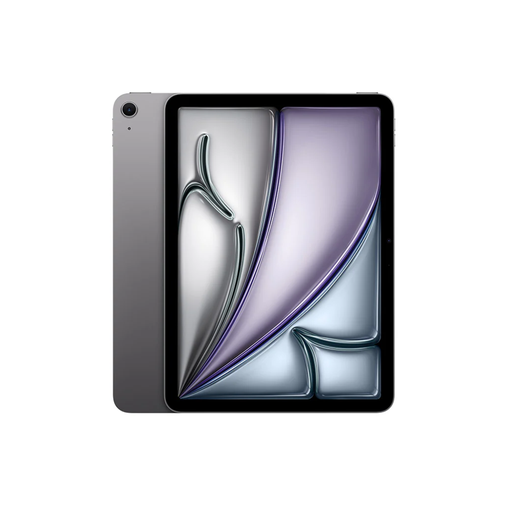 No image available
The 11-inch size is a more compact option for studying and note-taking. Apple lists an anti-reflective coating for the iPad Air M4, but this doesn’t guarantee a reflection-free view.
Apple quotes brightness of 500 nits for the 11-inch model. It hasn’t been confirmed that an Apple Pencil is included, so check the set you choose.
No. Samsung quotes up to 800 nits in HBM mode for the Galaxy Tab S10 FE series, while Xiaomi quotes a maximum brightness of 800 nits for the Pad 7. These specifications don’t measure reflections at your workstation. You should also assess the viewing angle and a representative chart or PDF.
Don’t assume so. Apple specifies particular Pencil models for the iPad Air M4, while Xiaomi explicitly lists the Pad 7 as compatible with the Focus Pen. Check the exact tablet and stylus models before buying a stylus.
No. If your course requires you to run ArcGIS Pro locally, check the requirements for the exact software version, including the operating system, runtime and hardware. For the relevant version, Esri lists supported Windows systems and a required Windows x64 runtime; check the full configuration even if you have a Windows device.
First check which study apps and file formats you need, then see what’s included with the model you choose. Xiaomi says that the Pad 7 is supplied without a power adapter; Microsoft says that the keyboard and Surface Slim Pen for the Surface Pro option reviewed are sold separately.
In many cases, when you buy online from a business, you have 14 days to change your mind; the Dutch government lists some exceptions. This is separate from your rights if a product is faulty: the seller is responsible for the statutory guarantee.