
Listening in a quiet library
If your main priority is stopping others from hearing your recording, consider the seal and fit, then check for sound leakage at a low volume.


In a quiet, shared library, start with well-fitting closed-back headphones and check at a low volume whether anyone else can hear your recording. A wired model is a good choice for listening at your desk without charging or using Bluetooth. ANC is most useful if background noise distracts you, while in-ear earbuds are an alternative if the ear tips fit comfortably. Shure notes that open-back earcups let sound through, but a closed-back design does not guarantee complete sound isolation.
If your main priority is stopping others from hearing your recording, consider the seal and fit, then check for sound leakage at a low volume.
If you want to pick out birdsong, wind and background sounds, compare a familiar recording at a comfortable volume. Assess the sound separately from ANC.
If you listen for long periods, consider any pressure around or inside your ears, and check the battery life for your chosen listening mode.
First decide whether you mainly need passive isolation or also want to reduce background noise. Then check for sound leakage and comfort using your own recording.
| What to consider | What should you look for? | Who will find this important? |
|---|---|---|
| Not disturbing others | Check the seal and listen at the low volume you intend to use; ask someone sitting next to you whether they can hear anything. | If I want to listen quietly without disturbing others, I want to know whether my headphones let sound through. Around 28% of consumers name preventing sound leakage as their top buying priority. |
| Hearing subtle details | Listen to the same familiar recording at a similar, comfortable volume, and assess the sound separately from noise cancellation. | If I want to pick out quiet sounds in a nature recording, I compare the sound with a recording I know. Around 22% of consumers put those details first. |
| Comfort during long listening sessions | Look out for pressure points and a seal that stays comfortable; assess over-ear and in-ear headphones based on their individual fit. | If I listen for long periods, I don’t want uncomfortable pressure around or inside my ears. Around 22% of consumers make wearing comfort their top buying priority. |
| Connectivity and controls | Check that the connection is compatible with your device. For wireless use, compare the controls and battery life in your preferred listening mode. | If I want to connect easily or switch between devices, I first check what my phone or laptop supports. Around 17% of consumers start with connectivity and controls. |
| Use and maintenance | Decide which features you need and check whether cables or parts are replaceable for the exact model. | If I want to avoid unnecessary features and difficult maintenance, I look at what I’ll actually use and which parts can be replaced. Around 11% of consumers prioritise use and maintenance. |
Open-back earcups let sound through. A quiet room doesn’t mean that other people won’t be able to hear your recording.
Start by comparing a closed-back model, and check for sound leakage at the volume you actually intend to use.
According to Shure, noise cancellation works best with continuous low-frequency sounds; it won’t remove every sound.
Compare the same track with ANC on and off in an environment similar to your study space.
Claimed battery life can differ depending on whether ANC is on or off.
Only compare manufacturers’ figures for the same listening mode, and bear in mind that actual battery life may vary.
The ATH-M50x is a wired, closed-back over-ear option for listening at your desk.
The Tune 770NC is a wireless over-ear option to compare if you want to weigh ANC against ambient sound.
The WH-1000XM6 is an over-ear model with ANC; the WF-1000XM6 is a separate, compact in-ear option.
The closed-back, wired HD 620S is one option to compare; the open-back HD 560S offers a different design.
The products below include wireless in-ear and over-ear models, as well as wired in-ear earbuds. Compare them based on fit, connectivity and the features you need.
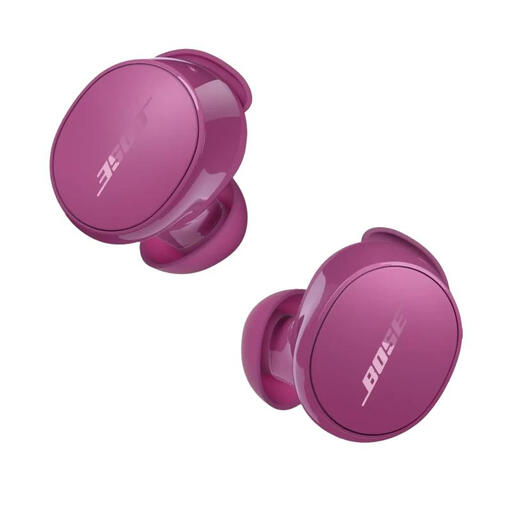 No image available
This in-ear option is suited to anyone looking for compact earbuds; check that the ear tips feel comfortable and fit securely.
Also check that the connection and controls work with the device you use to listen.
 No image available
This wireless over-ear option is worth considering if you want to reduce background noise; check that it remains comfortable during longer listening sessions.
The product name states a 60-hour battery life; check which listening mode this figure applies to.
 No image available
This wired in-ear option is suited to anyone who doesn’t want to use a wireless connection; check that the connector is compatible with your phone or laptop.
Check how the earbuds fit and whether sound leaks out at a low volume.
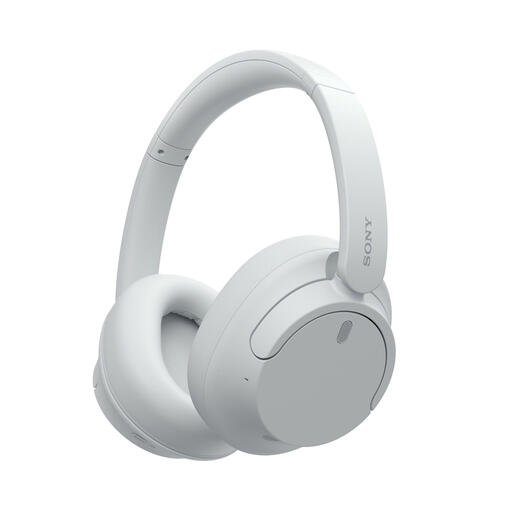 No image available
These wireless over-ear headphones are an option if you want to use ANC; check the fit and compare battery life in your chosen listening mode.
The product name mentions Bluetooth; check that your device supports this connection.
 No image available
This wireless over-ear option is designed for anyone who wants to reduce background noise; check that the fit and controls suit the way you use your headphones.
The product name mentions Bluetooth. Check whether you also want to listen using a cable and which connection you’ll need.
No. ANC is designed to reduce background noise; it doesn’t restore sounds in the recording. Assess how your recording sounds separately. In a quiet library, ANC is most useful if background noise still distracts you.
Choose ear tips that feel comfortable and check the seal at a low volume. Sony warns that using the wrong size can reduce the performance of the earbuds and noise cancellation; the available fit tests and instructions vary by model.
Keep the volume low and take breaks. The World Health Organization gives a guideline of up to 40 hours a week at an average sound level of 80 dB; this is advice on safe listening, not a product requirement for headphones.
According to the Dutch Government, you’re entitled to a product that works properly and can contact the seller if there’s a problem; there’s no fixed statutory warranty period. For most consumer purchases made at a distance, you have 14 days to change your mind, with some exceptions. Check the terms of the specific purchase.