
Vandaag of morgen in huis

Kwaliteit gegarandeerd

Welkomstaanbiedingen ontgrendelen: GRATIS bezorging | Tot 80% korting | Gratis 30 dagen JoyPlus-proefperiode
Download de app
As a Joybuy Product Recommendation Officer, I see the vast number of choices available every day. For dog owners who want the very best for their four-legged friend, finding the right treat can be overwhelming. You want to spoil your dog, but in a responsible way. The shelves are packed with snacks, but what is truly a good choice?
This article is designed to help you. We'll explore what to look for when choosing natural dog snacks and highlight a few popular options. This way, you can make an informed choice that's perfect for your dog.
A good snack is more than just a treat. It can contribute to your dog's health, dental hygiene, and training. Here are three key considerations.
The foundation of healthy dog snacks is a short and clear ingredient list. Look for products with recognisable ingredients like meat, fish, vegetables, or fruit.
Why are you giving the snack? The purpose helps determine the best choice.
The size and texture of the snack should match your dog's size and age. A small puppy needs a different snack than a large adult dog. Soft snacks are suitable for older dogs with dental issues, while harder chews are great for strong chewers.
Based on product specifications and ingredients, we've selected a few options from the MeatyWay dog snacks brand. These products focus on natural ingredients and high protein content.
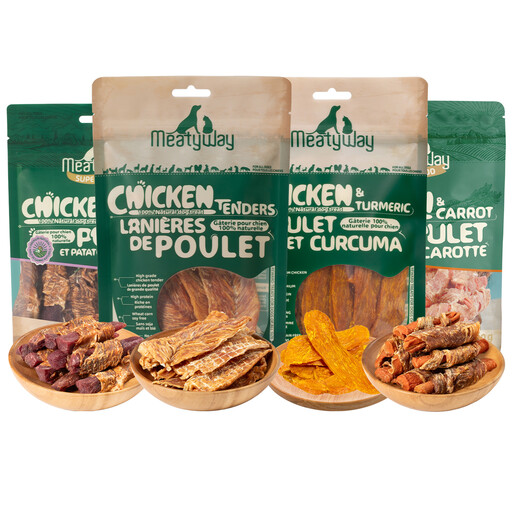
Why It Stands Out: This pack offers variety with four different types of treats. It includes chicken strips, chicken wrapped with apple, chicken with sweet potato, and whole dried fish snacks for dogs (mackerel). It's ideal for discovering your dog's favourite.
Product Features:
Who It's For: For dog owners who like to offer variety or aren't sure which flavour their dog prefers. Suitable for dogs of all ages.
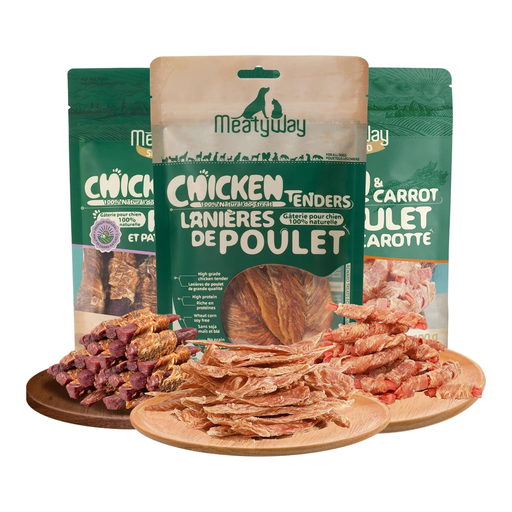
Why It Stands Out: These soft jerky snacks combine chicken dog treats with purple sweet potato and carrot. The soft texture makes them easy to chew, even for dogs who have more difficulty.
Product Features:
Who It's For: Dog owners looking for a soft, easy-to-chew treat. Excellent for training sessions or for dogs with sensitive teeth.
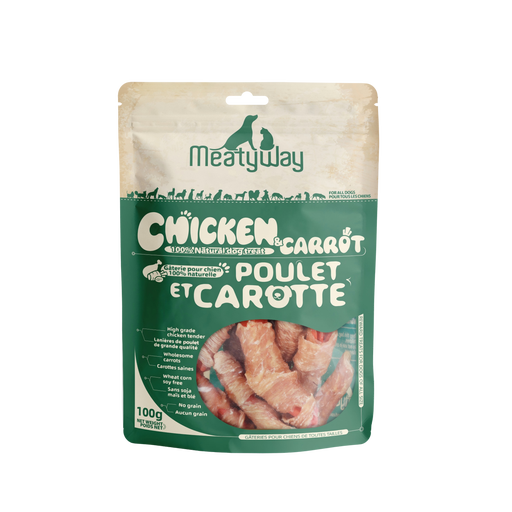
Why It Stands Out: The simplicity of this product is its strength. With only chicken and carrot as the main ingredients, this is a very pure and straightforward snack. The smaller package is convenient for trying the product first.
Product Features:
Who It's For: Ideal for owners who prefer a snack with a very short ingredient list. Also a great choice for those who want to try a new snack without buying a large package right away.
Are you looking for products with a specific ingredient, like carrot? Sometimes you can find surprising options by broadening your search. For example, discover our selection of yellow carrot products and see what else is possible for a varied diet.
Healthy dog snacks consist mainly of natural, unprocessed ingredients. Think of dried meat or fish, and snacks with vegetables or fruit. They do not contain unnecessary fillers, sugars, or artificial additives. The healthiest snack is one that fits your dog's specific nutritional needs.
Not necessarily. Grain-free snacks are primarily beneficial for dogs with a diagnosed grain allergy or sensitivity. Many dogs can digest grains perfectly well. If your dog has no issues with grains, a grain-free snack isn't inherently better, but it can be a conscious choice if you prefer a diet closer to that of their ancestors.
A good rule of thumb is that treats should not make up more than 10% of your dog's daily calorie intake. The exact amount depends on your dog's size, weight, age, and activity level. Always read the feeding guidelines on the packaging and give snacks in moderation.
