
Producer who regularly transfers projects
This producer often needs to move large project folders between a work computer and central storage. So it’s worth assessing the entire network path, not just the NAS port.


For frequent transfers, a NAS with a suitable network port only makes sense if your computer and the rest of your network can support that connection too. You’ll also need enough usable storage and a separate backup: the NCSC stresses that RAID is no substitute for a backup. If you want to work directly on an active DAW session stored on the NAS, check the requirements of your software and your network setup too.
This producer often needs to move large project folders between a work computer and central storage. So it’s worth assessing the entire network path, not just the NAS port.
This creator wants to be able to recover projects and recordings after loss or errors. The NCSC recommends arranging a separate backup in addition to NAS storage.
This studio wants to choose enough usable capacity and drive bays for future project folders. The number of bays and the chosen storage configuration both affect how much space remains available.
First, check that your computer, network equipment and NAS are compatible for file transfers. Then work out how much usable storage you need and how you’ll back up complete projects separately.
| What to consider | What should you look for? | Who should prioritise this? |
|---|---|---|
| Transfer speed | Check the network ports on your NAS and computer, as well as the equipment in between. Manufacturer figures are based on the stated test setup and don’t necessarily reflect the speed you’ll get with your project folder. | If I regularly move large project folders, I want my computer, network and NAS to handle the transfer together. Around 31% of consumers rank transfer speed as their top buying priority. |
| Recovering projects | Plan for a separate backup location in addition to your NAS, and consider how you’d actually restore a project. RAID is not a backup. | Anyone who wants to be able to restore irreplaceable recordings and project versions will benefit most from a separate backup. An estimated 25% of consumers put recoverability first. |
| Usable capacity | Estimate your current project storage needs and how they’re likely to grow. Check drive compatibility and allow for the capacity left after applying your chosen storage configuration. | If my project archive is growing, I want to avoid running out of space too soon. Around 25% of consumers put room to grow first. |
| Complete DAW projects | Check that the audio and other files you need are included in the project folder you’re transferring. After copying, make sure the project opens correctly in full. | Anyone moving projects between workstations will want to transfer the audio files too. Around 19% of consumers say transferring complete projects is their top buying priority. |
With the right configuration, RAID can help maintain availability if a drive fails, but it doesn’t protect against every type of data loss. The NCSC stresses that RAID is no substitute for a backup.
Arrange a separate backup and check that you can actually restore a project.
A separate backup requires extra storage and management.
A higher-capacity network port doesn’t guarantee that a single project will transfer faster across your network. Synology and QNAP link their published transfer results to specific tests or configurations.
Check the entire network path, and don’t treat test figures as a promised speed for your studio.
You may also need to upgrade your computer or network equipment to make full use of the connection.
Check whether internal drives are included with each model and version. An enclosure and the drives you need don’t always come as the same product package.
Before buying, work out which compatible drives and separate backup storage you’ll need.
A project may refer to audio or other files stored outside the folder you’ve copied. Ableton and Apple’s DAW documentation explains that these files aren’t always included with the project automatically.
Gather the required files as instructed by your DAW, then check the complete project folder after transferring it.
The DS225+ is a two-bay NAS enclosure with built-in 2.5GbE. The DS925+ is a separate four-bay model to consider if you need more drive bays.
The TS-264 is a two-bay NAS enclosure to consider if you’re interested in M.2 options and expandability as well as file transfers.
The diskless NASync DXP2800 is a two-bay option with a 2.5GbE port for anyone considering a NAS enclosure with third-party drives.
WD Red Plus and Red Pro are internal drives to consider for a compatible NAS enclosure, not complete NAS systems.
IronWolf is a range of NAS drives to consider alongside a separately chosen NAS enclosure.
This product selection includes Synology NAS enclosures and separate NAS drives for storing and transferring music projects. Check that any drive you choose is compatible with your enclosure and the storage configuration you want.
 No image available
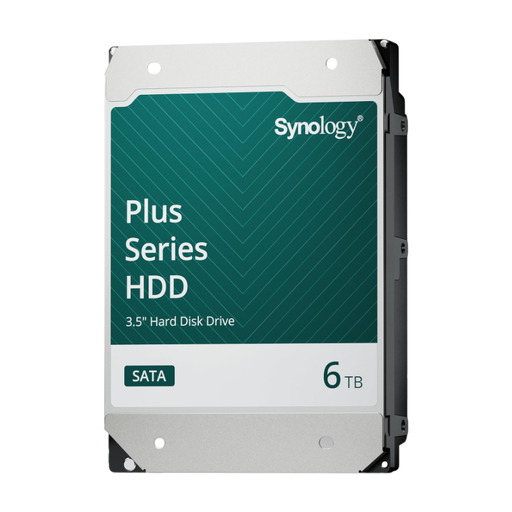
A 6 TB drive for Synology NAS systems if you need extra project storage. Check that your enclosure supports a compatible 3.5-inch SATA drive.
CMR; SATA 6 Gb/s; up to 202 MB/s according to the product description. These drive specifications don’t guarantee the same speed for a network transfer.
Designed for continuous NAS use, according to the product description.
 No image available
A NAS enclosure for central storage and file transfers if you’re considering five bays and two 2.5GbE ports. The rest of your network also affects transfer speeds.
The product description lists five drive bays, file sharing and backup options, with expansion to 15 drives using an expansion unit.
Hard drives aren’t included, according to the product description.
 No image available
A 16 TB drive for a growing NAS archive. Check that your chosen enclosure supports a compatible 3.5-inch SATA drive.
The product description lists CMR, NAS use, 7200 rpm and 512 MB cache. These features don’t guarantee a particular network transfer speed.
 No image available
An eight-bay NAS enclosure for a large project archive. Having more bays doesn’t in itself determine how quickly a single file transfers.
The product description lists two 2.5GbE ports, file sharing and backup options, plus expansion using an expansion unit.
 No image available
An internal NAS drive for adding storage. Check that your enclosure supports a compatible 3.5-inch drive.
CMR; SATA III; up to 180 MB/s according to the product description. This maximum doesn’t guarantee a particular network transfer speed.
The product description lists NAS systems with up to eight bays as a suitable use case.
No, you can’t tell from the NAS specifications alone. Check your DAW’s requirements and test the software with your network setup. Working directly on an active session is different from transferring complete project folders to the NAS.
A DAW project may refer to audio files outside its project folder. Ableton recommends using ‘Collect All and Save’ for Live projects and copying the complete project folder. Apple also warns that externally linked files aren’t automatically moved with a Logic Pro project.
Check access permissions and default settings, change default passwords and arrange separate backups. The Dutch NCSC also recommends thinking carefully before making your NAS accessible over the internet.
According to the Dutch government, consumers in the Netherlands are entitled to a product that meets reasonable expectations, but there is no fixed statutory warranty period. If a product is faulty, the retailer is your point of contact; a manufacturer’s warranty is additional. This applies to consumer purchases and not necessarily to purchases for a business studio.