Choose a NAS based on the usable storage capacity you need for your justified retention period, and who should be able to access the recordings. A compact two-bay NAS may be suitable if its calculated capacity is sufficient; consider a model with more drive bays if your archive needs extra space or room to grow. Also factor in a separate backup and, where personal data is involved, an appropriate lawful basis for processing, retention period and access controls.
Who is this choice relevant to?
Shared archive administrator
Wants authorised colleagues to find recordings in one central location, without giving everyone in the shared workspace the same access. The Dutch Data Protection Authority stresses that organisations must prevent unauthorised access to personal data.
Long-term storage manager
Needs to match storage to the space required and a justified retention period, while considering how to recover lost recordings. The Dutch Data Protection Authority states that the GDPR does not set a general, specific retention period for personal data.
Existing NAS administrator
Primarily looking for a suitable replacement or expansion drive, and matching the exact NAS, drive model and volume configuration. Seagate positions IronWolf Pro as an internal drive range for NAS systems; check compatibility with your enclosure.
Which buying priorities should you consider?
Compact two-bay NAS
Suitable when: the calculated usable capacity fits within two compatible drives. Synology lists two drive bays for the DS225+; QNAP lists two for the TS-264-8G.
Bear in mind: mirroring reduces usable capacity and is no substitute for a separate backup.
NAS with four or more drive bays
Suitable when: your capacity calculations or expected growth justify more drive bays. Synology lists four bays for the DS925+, expandable to nine with a separate expansion unit.
Bear in mind: budget separately for the drives you need and any expansion; more bays do not change the need for access controls or a backup.
Drive for an existing NAS
Suitable when: you already have a NAS enclosure and want to replace a drive or add storage. Seagate describes IronWolf Pro as a NAS drive range.
Bear in mind: an internal drive on its own does not provide shared network storage; check compatibility with your exact NAS model.
| Consideration |
What to look for when buying |
Who is this important for? |
| Shared access |
Check shared folders and individual access permissions; decide who can open or delete recordings. |
If colleagues need recordings from a shared workspace, I want to be able to manage access by user. Around 29% of consumers give shared access top priority. |
| Recovery after loss |
Budget for a separate backup destination and check how you can restore a recording. |
Anyone who wants to recover recordings after deletion or a fault needs more than drive redundancy alone. Around 29% of consumers put recoverability first. |
| Usable capacity |
Estimate the total file size over the retention period and compare usable capacity, not just raw capacity. |
If I want to keep recordings for the intended retention period, usable space must be sufficient even as the archive grows. Around 21% of consumers make capacity their top priority. |
| Compatibility with an existing NAS |
Note the exact NAS model and drive version; check the compatibility information before choosing a drive. |
Anyone who already manages a NAS and wants to replace or add a drive needs to know whether it will fit the enclosure. Around 21% of consumers start by checking compatibility. |
Common pitfalls
-
Treating a mirrored NAS volume as a complete backup
Mirroring can help with certain drive failures, but it does not protect against every cause of data loss. QNAP warns that RAID is not a backup.
Plan a separate recovery option and test that you can restore a recording with it.
Allow for a separate backup destination and the work involved in managing it.
-
Comparing only raw capacity or the enclosure
Usable space depends on the drives and the chosen configuration. For example, QNAP states that the TS-264-8G is supplied without hard drives.
Compare complete setups based on calculated usable space and check which drives are included.
You may need to buy compatible drives separately; an expansion unit or separate backup destination may also be needed.
-
Assuming a faster NAS port guarantees faster transfers
The workspace and the rest of your network connections are also part of the transfer path.
Check the connections between the workspace, network equipment and NAS before choosing a model based on port speed.
-
Setting up an archive without a retention period or access controls
If recordings contain personal data, the organisation must be able to justify the processing and secure access. The Dutch Data Protection Authority says the GDPR does not set a general, specific retention period for personal data.
Before setting up your storage routine, define its purpose, access controls and justified retention period, and assess which lawful basis for processing applies.
Brands and product ranges to consider
Synology
According to Synology’s product specifications, the DS225+ is a compact NAS with two drive bays, while the DS925+ offers four bays and expansion options.
- Synology lists file sharing and one 2.5GbE port for the DS225+. For the DS925+, the manufacturer lists built-in 2.5GbE and expansion to nine drive bays with a separate expansion unit.
- Usable capacity depends on the drives and configuration. Check that your chosen drive is compatible with the exact model; the specifications are not a performance test of your workspace.
QNAP
According to QNAP, the TS-264-8G is a two-bay enclosure for file management, backup and collaboration.
- QNAP specifies two 2.5GbE ports for this version.
- The enclosure is supplied without an HDD. QNAP also stresses that RAID is no substitute for a separate backup.
ASUSTOR
The Drivestor 2 Pro Gen2 AS3302T v2 is a two-bay option for shared folders on a local network.
- ASUSTOR lists SMB file sharing and one 2.5GbE port.
- According to ASUSTOR, the 2 GB of memory cannot be expanded. Bear this in mind if you want to run more demanding applications alongside archiving.
Seagate
IronWolf Pro is an internal NAS drive range, making it an addition to a compatible enclosure rather than standalone network storage.
- Seagate positions the range for multi-drive NAS systems.
- Check the exact drive version and its compatibility with the enclosure. A standalone drive is not a separate backup.
NAS setups and drives on Joybuy
This Joybuy selection includes NAS enclosures for a central recording archive and a standalone internal drive for expansion or replacement in a compatible existing NAS.
 No image available
Synology DiskStation DS1525+
A NAS enclosure for anyone considering a central archive with room to expand. According to the product listing, hard drives are not included, so choose these separately.
View on Joybuy
 No image available
Synology DiskStation DS225+ (Intel Celeron J4125 Q)
A compact two-bay option for a central archive where the calculated usable capacity fits within two compatible drives. Synology lists shared folders and user accounts for this model; check how to set up permissions for your workspace.
View on Joybuy
 No image available
Synology DiskStation DS1825+
A NAS option for anyone considering a setup with multiple drive bays for a growing archive. Before buying, check the capacity, drive compatibility and features of the exact version.
View on Joybuy
 No image available
Synology DiskStation DS925+
A four-bay NAS for an archive that needs more room to grow. Synology lists expansion to nine bays using a separate expansion unit; hard drives are not included.
View on Joybuy
 No image available
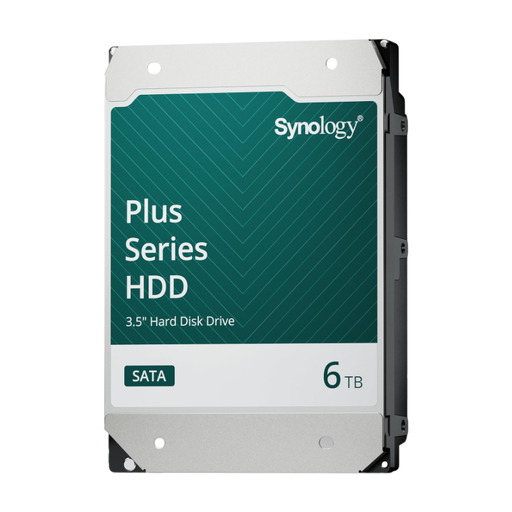
Synology SATA HDD 6TB
A standalone internal 6TB SATA drive for expansion or replacement in a compatible Synology NAS. The drive does not provide shared network storage on its own; check its compatibility with your exact NAS model.
View on Joybuy
Frequently asked questions
How do you work out how much storage space meeting recordings need?
Estimate the size of typical recordings and multiply it by how often you expect to record and how long you intend to keep them. Compare the result with the usable capacity of your chosen drive configuration; raw capacity is not necessarily all available for use.
How do you connect a NAS to a shared workspace?
Connect the NAS to your local network and set up accounts and shared folders for the people who need the recordings. Check that the workspace and other network equipment support the connection you want; a 2.5GbE port on the NAS alone does not guarantee that transfer speed.
Does RAID 1 replace a separate backup?
No. RAID can keep data available in the event of certain drive failures, but it does not protect against every kind of loss, such as accidental deletion or theft. QNAP stresses that RAID is not a backup; make sure you have a separate recovery option and check that you can restore your data.
What else should you factor in besides a NAS enclosure?
Check whether drives are included, how many compatible drives you need and what is required for a separate backup destination. QNAP states that the TS-264-8G is supplied without an HDD; check the included components for each specific product version.
Can an organisation keep meeting recordings that identify people indefinitely?
No. According to the Dutch Data Protection Authority, the GDPR does not set a general, fixed retention period for personal data. The organisation must align the retention period with the purpose and assess an appropriate lawful basis for processing. It must also secure access and check whether sector-specific rules apply.


