
People managing confidential interviews
You store conversations in which people may be identifiable and want to manage access and file transfers carefully.


First, decide how you’ll recover recordings from somewhere other than the NAS, and who is allowed to receive them. Then work out how many drive bays and how much storage you need. A two-bay NAS may suit a defined archive, while four or more bays offer more room to grow, but neither replaces a separate backup. If people can be identified by their voices, make sure access, file transfers and retention periods reflect the purpose and privacy risks.
You store conversations in which people may be identifiable and want to manage access and file transfers carefully.
You want to be able to find and recover original recordings before handing them over to a client.
You share project files with colleagues and expect to need more storage for several assignments.
A good fit when: you want one central location for a defined number of interviews and have arranged a separate backup.
Consider: there’s less room to expand internally. Also check each model’s sharing options and compatible drives.
A good fit when: multiple projects or a growing archive of recordings make extra internal drive bays worthwhile.
Consider: more bays don’t automatically mean better protection against data loss. Plan for suitable drives and a separate backup too.
The Dutch Data Protection Authority says that a recognisable voice may count as personal data. So consider who needs access and how you’ll secure the agreed file transfer.
| What to consider | What should you check? | Who is this important for? |
|---|---|---|
| Access and confidentiality | Check user permissions, account security, and how you grant and revoke client access. | If I store conversations with identifiable voices, I want to decide who can listen to them and when access ends. Around 33% of consumers prioritise confidential access. |
| Recovering recordings | Check how the NAS backs up data to another location or storage device, and test restoring a recording. | I want to be able to recover an original after it’s been deleted or an error has occurred, not just keep files available if a drive fails. Around 27% of consumers prioritise being able to recover recordings. |
| Handing files over to clients | Check whether you can share project folders separately, revoke access and test the transfer in advance. | When delivering my work, I want to share only the agreed project files and be able to end access afterwards. Around 27% of consumers prioritise controlled file handovers to clients. |
| Capacity and drives | Add up your current files, estimate how your projects will grow, and check whether drives are included and compatible. | I want to know in advance how much space my archive will need and which drives will fit. Around 13% of consumers prioritise capacity and a complete setup. |
Drive redundancy can help if a drive fails, but it won’t protect you against every kind of loss, such as accidental deletion. The National Cyber Security Centre stresses that a NAS setup is no substitute for a backup.
Plan a backup outside your primary NAS and try restoring a file before delivery.
Allow for a separate backup destination and time to test recovery.
A link may allow access without a NAS account. The settings and the people you choose to send it to also determine what they can see.
Check the shared folder, recipient and expiry period. Use the available security settings if a link is suitable for the recordings in question.
A NAS supplied without hard drives isn’t yet ready to store your interview archive.
Check drive compatibility and plan how you’ll set up a separate backup.
You’ll need to choose suitable hard drives and arrange a storage destination for your backup too.
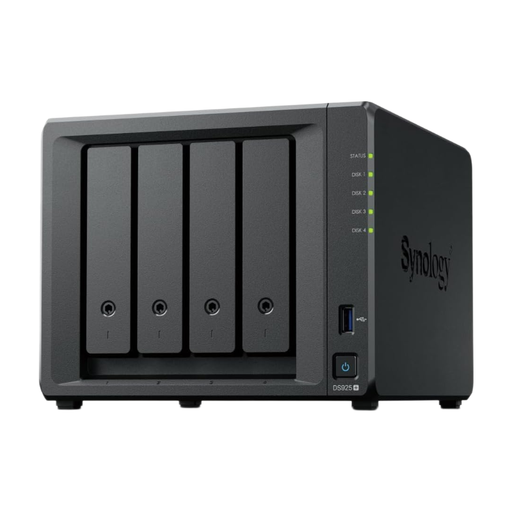
The DS225+ is a two-drive option for central storage and sharing, while the DS925+ has four drive bays for an archive that may grow.
The TS-264 is a two-bay option to compare if you also want to assess sharing settings and network access.
The AS5402T is a two-bay alternative to consider if network connections and expansion options are important to you.
The NASync DXP2800 is a two-bay alternative to compare with other managed NAS systems.
The F2-424 is a two-bay alternative for anyone comparing different backup features.
These models are suited to storing interview files centrally, with options for archives that need more internal drive bays or room to expand.
 No image available
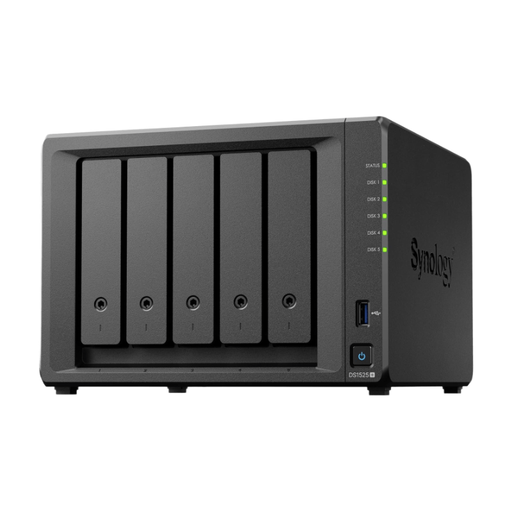
If you need more than four internal drive bays, this model has five and can be expanded with units.
Hard drives aren’t included; check which drives are compatible.
The product description lists DSM applications for file sharing and backup.
 No image available
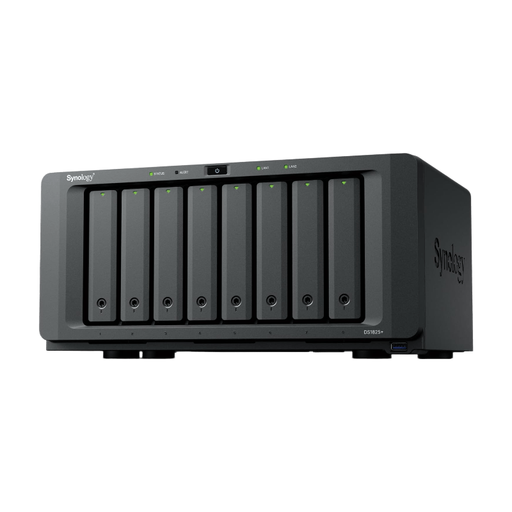
With eight drive bays, this model is worth considering for an archive that needs multiple internal drives.
The product description lists two 2.5GbE ports and DSM sharing and backup features.
 No image available
Its four drive bays offer an option for a growing archive; you can expand to nine bays with an expansion unit.
Hard drives aren’t included. The product description lists file sharing and backup features.
No. The National Cyber Security Centre explains that RAID can help if a drive fails, but it doesn’t replace a backup. Make a separate backup and test whether you can restore a recording.
First, decide who needs access and set the permissions accordingly. Change default settings such as administrator permissions and passwords, then test with the intended recipient to see which files are visible. QNAP lists options for File Station such as HTTPS, an expiry date and a password for sharing links.
The Dutch Data Protection Authority says that a sound recording in which someone is identifiable is personal data. You need an appropriate legal basis and security measures for this type of data; the GDPR doesn’t set one general retention period. Set and document a period that suits your purpose, and consider whether handing the recording over to the client is compatible with it.
The Dutch Data Protection Authority says that a written data processing agreement is needed when one party processes personal data on behalf of a controller. Establish the actual roles involved in your assignment; simply delivering work to a client doesn’t determine those roles.