What should you look for when buying?
First decide how you want to recover your photos. Then work out the usable capacity of your NAS configuration and, finally, check that the drive is compatible with your device.
| What to consider |
What to check when buying |
Who is this important to? |
| Being able to recover photos |
Check whether your backup task copies the photos you want and how to restore a file. Keep a separate copy as well. |
I want to be able to retrieve my photos after a loss or a mistake, without relying on the NAS alone. Around 36% of consumers put recoverability first. |
| Usable storage space |
Compare your current photo archive and expected growth with the capacity of your chosen NAS configuration. With RAID 1, Synology bases the storage capacity on the smaller drive. |
As my photo archive grows, I want enough space for my collection and any older versions. Around 29% of consumers prioritise usable capacity. |
| Choosing a compatible drive model |
Check the full HDD model, connection and compatibility information for your NAS series and firmware. |
I want to choose a drive that suits my existing NAS and storage setup, not just a model from a well-known range. Around 21% of consumers put compatibility first. |
| Overall equipment and management |
Consider what equipment you already have, where you'll keep your separate copy and what maintenance the NAS requires. |
If I mainly want a simple copy of one workstation, I take the additional equipment and management into account. This is the top buying priority for around 14% of consumers. |
NAS drives on Joybuy
These product options are internal NAS HDDs for a NAS with a backup task set up. The drive alone doesn't provide a separate recovery copy.
 No image available
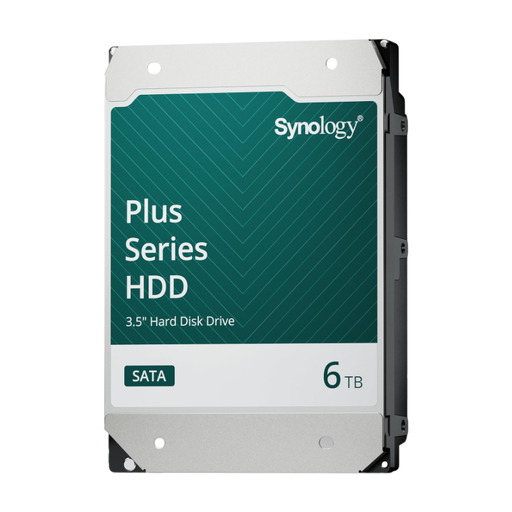
Synology SATA HDD
An internal HDD for storage in a compatible Synology NAS. Before buying, check the exact model and capacity that suit your device.
Requires a suitable NAS with a compatible drive bay.
View on Joybuy
 No image available
WD Red Plus 6TB (256MB cache)
An internal WD Red Plus NAS HDD for anyone looking for storage in a compatible NAS. Check that the drive suits your NAS model.
The product name lists 6 TB and 256 MB cache. Suitable for installation in a compatible 3.5-inch NAS bay.
View on Joybuy
 No image available
Western Digital 8 TB WD Red Plus NAS HDD
This internal drive is an option if your NAS supports the variant you choose and you need the stated capacity.
The product name lists 8 TB, 5640 RPM, SATA 6 Gb/s, CMR and 256 MB cache. Check that the drive suits your NAS bay and connection.
View on Joybuy
Frequently asked questions
Are two drives in RAID 1 enough for a backup?
No, not if that means you won't keep a separate copy. RAID 1 writes the same data to two drives and can protect against one drive failing. You should also set up a backup that lets you recover your photos and keep a separate copy.
How can I check before installation whether a drive will fit my Synology NAS?
Look up the full NAS and drive models, then check the compatibility information and policy for your model series and DSM version. Synology says that, since DSM 7.3, DiskStation Plus models from 2025 offer more freedom to use third-party HDDs; don't assume this applies to every series.
What maintenance does my NAS need once it's up and running?
Check that the backup task has copied your latest photos and try restoring one. Install NAS updates. VeiligInternetten recommends enabling automatic updates where possible and using a strong password instead of the default login details.
Does a manufacturer's warranty entitle me to recover my photos?
Don't assume it does: check the terms of any recovery service separately. If a product is faulty, you have statutory warranty rights against the seller in the Netherlands; the Rijksoverheid states that there is no fixed statutory warranty period of two years.
Does the GDPR apply to my private archive of family photos?
According to the Autoriteit Persoonsgegevens, the exception for personal or household use applies if you keep the photos private or share them with only a very limited group. This exception doesn't apply if you publish them more widely or use them for business; assess any such use separately.


