What should you look for?
An automatic front-loader could be a good option if the machine, the clearance it needs and the connections all fit. If they don’t, a mini washing machine could be the answer, but pay particular attention to its smaller spin capacity and the programmes available.
Narrow automatic front-loader
Choose this option: if there’s room for the machine, its door and hoses, and you have suitable water and waste connections.
Bear in mind: the stated cabinet depth isn’t necessarily the full installation depth required; the measurements vary between the models reviewed.
Compact mini washing machine
Choose this option: if an automatic front-loader won’t fit and you can manage small loads and the water drainage required by your chosen machine.
Bear in mind: according to Salora, the WMR5350 has a washing capacity of 4,6 kg and a spin capacity of 2 kg, plus one wash programme with no adjustable temperature.
| What to consider |
What should you check? |
Who is this important for? |
| Space and positioning |
Measure the accessway and the space where the machine will go, then compare them with its full installation dimensions. Allow room for the door, hoses and connections; cabinet dimensions alone don’t prove that a machine will fit. |
If I have limited space, I want to know whether the machine will still be practical with the door open and the hoses connected. Around 29% of consumers give available space and positioning top priority. |
| Muddy washing and capacity |
Check the care label and the programmes available for the fabrics you usually wash. With a mini washing machine, compare the washing capacity with the spin capacity. |
If you regularly wash garden clothes with soil or mud on them, you’ll want a suitable way to wash them and a capacity that matches your loads. Around 29% of consumers prioritise dealing with this type of washing and the capacity required. |
| Connections in a rented home |
Check that the existing water, waste and electrical connections meet the installation instructions. Discuss any permanent changes with your landlord first. |
If I want to use the machine in a rented home, I want to know whether I can do so using the existing connections without making a permanent change. Around 24% of consumers make suitable connections their main priority. |
| Consumption and maintenance |
Compare energy and water consumption on the same label basis, and check the maintenance instructions too. The energy label is based on eco 40-60, not on every programme individually. |
If I wash regularly, I want to factor in consumption and maintenance, as well as choosing a drum capacity that suits my loads. Around 18% of consumers give running costs and maintenance top priority. |
For garden clothes, brush loose soil off dried mud, read the care label and then choose a suitable programme. The Consumentenbond describes eco 40-60 as intended for normally soiled cotton that can be washed at 40 or 60 °C according to the care label. It’s not a universal choice for every fabric or type of dirt. The energy label helps you compare machines on the same basis, but doesn’t directly tell you how much another programme will use.
Joybuy products
These Joybuy products are automatic front-loaders for anyone looking for a compact fit. Check that the full installation requirements and connections are suitable for your home for each model.
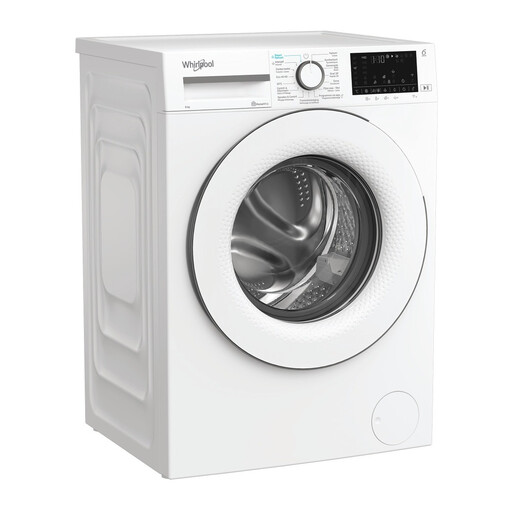 Image unavailable
Whirlpool WAM 87W BE, 7 kg
An automatic front-loader for anyone looking for a 7 kg drum for everyday loads.
The product name specifies 1200 rpm and a freestanding design.
View at Joybuy
 Image unavailable
Comfee CFP01EW70W-JD, 7 kg
For anyone looking for an automatic front-loader with a stated design depth of 400 mm. Check the full installation space required too.
The product name specifies 16 programmes. According to the product information, the 15-minute cycle is intended for small, lightly soiled loads.
View at Joybuy
 Image unavailable
TCL FF1006WB0, 6 kg
An automatic front-loader for anyone looking for a 6 kg drum and a stated depth of 45 cm. Measure the installation space required separately.
The product name specifies steam washing and a 15-minute quick wash programme. Check which programme is suitable for the fabric and how soiled it is.
View at Joybuy
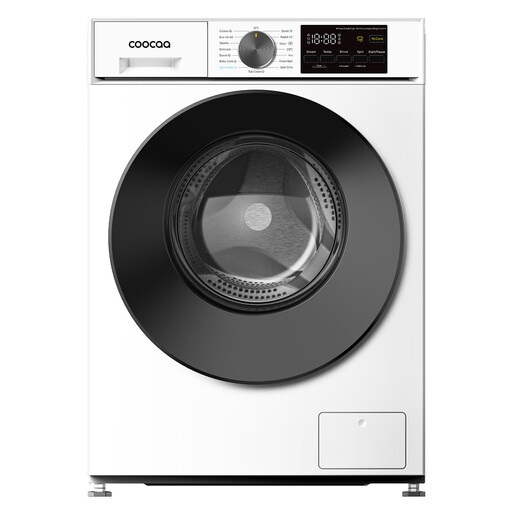 Image unavailable
Coocaa Galaxy A3 Series F702A3AВC0, 7 kg
An automatic front-loader for anyone looking for a washing capacity of 7 kg.
The product name lists 15 programmes. Check the programme descriptions and the care label for your garden clothes.
View at Joybuy
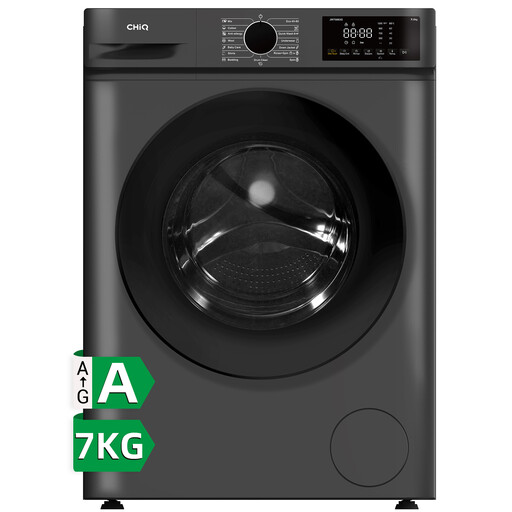 Image unavailable
CHiQ JW75883G, 7 kg
An automatic front-loader for anyone looking for a washing capacity of 7 kg.
The product name specifies 16 programmes and 1200 rpm. Check the programmes available against your laundry and the care label.
View at Joybuy
Frequently asked questions
Which programme should you use for garden clothes with soil or mud on them?
First, check the care label and brush loose soil off dried mud. Then choose a programme that suits the fabric and the permitted temperature. The Consumentenbond describes eco 40-60 as suitable for normally soiled cotton that can be washed at 40 or 60 °C according to the label, not as a solution for every heavily soiled fabric.
Can you alter connections in a rented home?
That depends on the type of alteration. According to the Dutch government, you don’t need permission for a minor alteration that can be reversed without significant cost, but you do need permission for a renovation. Discuss any planned permanent changes to pipes or drainage with your landlord first.
How do you keep your washing machine clean after washing dirty clothes?
Brush off loose soil before washing, and follow your model’s manual to clean the door seal and filter. The Consumentenbond also recommends running a hot wash programme periodically for maintenance.
What does the energy label tell me about my wash programme’s consumption?
Among other things, the label shows energy use per 100 cycles, water use and spin noise, based on eco 40-60. You can’t use it to read off the actual consumption of another programme directly. Compare machines on the same label basis and take your own washing habits into account.
Are washing machines in the Netherlands always covered by exactly two years’ statutory guarantee?
No. The Dutch government states that there is no fixed statutory guarantee period in the Netherlands. What you can expect from a product depends on the circumstances; if a product is faulty, the seller must provide a solution. An additional manufacturer’s or seller’s guarantee doesn’t replace your statutory rights.


