
Vandaag of morgen in huis

Kwaliteit gegarandeerd
Download de app
Categorieën

An unused corner next to the washing machine, that tight space between the fridge and the wall, or a bathroom where every inch counts. Recognising these underutilised spaces is the first step. The second is finding a suitable storage solution without making a purchase you'll regret. It's a common frustration: the narrow storage cabinet that turns out to be too wide upon delivery, or the rolling cart whose wheels jam after just one week.
This article provides a practical guide to selecting a storage cabinet for small spaces. We focus on verifiable facts: dimensions, materials, and functionality, so you can make an informed decision.
Before choosing a model, it's essential to map out your needs and the available space. Pay close attention to the following criteria.
This is the most critical factor. Accurately measure the width, depth, and height of the intended location. Remember to account for baseboards, pipes, or doors that need to open. A cabinet that fits on paper can still present problems in practice. A narrow cabinet is typically less than 45 cm wide, and a true niche cabinet can be even narrower than 25 cm.
The material determines the cabinet's durability and where it can be placed.
Consider how you will use the cabinet.
Check the maximum load capacity per shelf and for the cabinet as a whole. This is a crucial consideration, especially if you plan to store heavier items like pantry jars or cleaning supplies. For taller, narrow cabinets, an anti-tip kit is a valuable safety feature, particularly in households with children or pets.
Based on the criteria above, we have curated a selection of products with clear specifications.
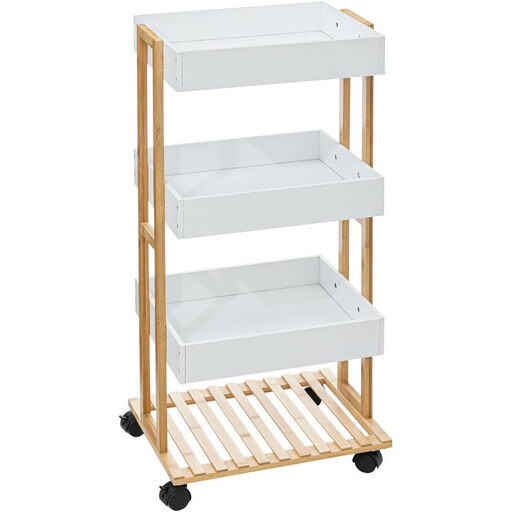
Why We Chose It This storage trolley combines a bamboo frame with white MDF shelves. The mix of materials makes it suitable for various rooms, including the bathroom. Caster wheels provide excellent mobility.
Key Features
Best For Those seeking a flexible storage solution with a natural aesthetic. Practical as a narrow bathroom cabinet for towels and toiletries or as a kitchen trolley for lighter supplies.
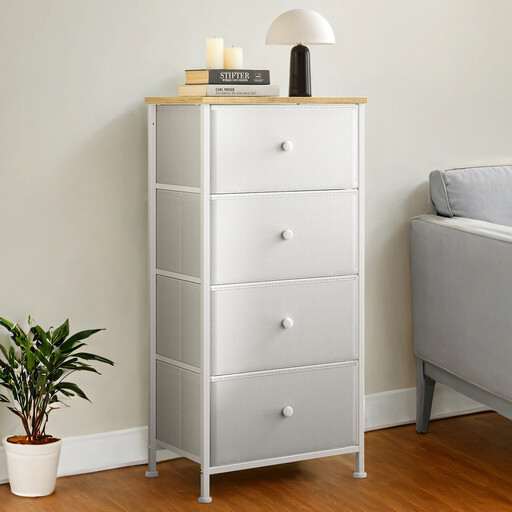
Why We Chose It This dresser offers closed storage in a lightweight design. Its metal frame and fabric drawers make it easy to move and assemble. The included anti-tip kit is a key safety feature.
Key Features
Best For Ideal for a bedroom, hallway, or child's room to store clothing, toys, or accessories. Less suitable for humid environments due to the fabric drawers.
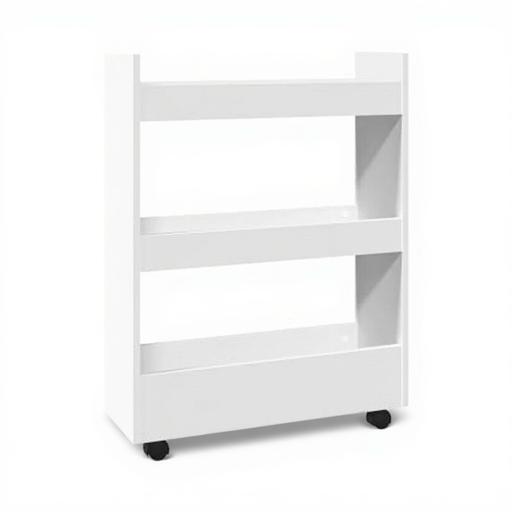
Why We Chose It At just 22 cm wide, this is a true niche cabinet, designed for the tightest of spaces. Its robust material and high load capacity make it exceptionally functional.
Key Features
Best For The perfect solution for utilising a very narrow but deep niche, for example, next to a refrigerator, washing machine, or in a pantry. Suitable for storing heavier items like bottles, detergent, or canned goods.
The products above are flexible, rolling solutions. If you are specifically looking for a stationary cabinet for a humid environment and require a white finish, it may be worthwhile to explore a wider range. For more choices in this area, you can browse our white bathroom furniture category.
1. What exactly is a niche cabinet? A niche cabinet is a very narrow storage unit specifically designed to fit into a niche. A niche is a small, shallow recess in a wall or a tight space between two larger objects, such as a refrigerator and a wall. These cabinets are often taller than they are wide to make optimal use of vertical space.
2. How much weight can a narrow storage cabinet support? The load capacity varies greatly by product and depends on the material and construction. A lightweight trolley made of plastic or bamboo often has a lower load capacity (approx. 10-15 kg total), whereas a sturdier cabinet made of engineered wood or metal can support up to 60 kg or more. Always check the maximum load in the product specifications.
3. Can I use a kitchen trolley in the bathroom? That depends on the material. A trolley made of stainless steel, plastic, bamboo, or treated wood is generally suitable for the humid environment of a bathroom. A model with untreated wood, particleboard, or fabric components is not recommended, as these materials can warp, swell, or develop mould due to moisture.