
Vandaag of morgen in huis

Kwaliteit gegarandeerd

Welkomstaanbiedingen ontgrendelen: GRATIS bezorging | Tot 80% korting | Gratis 30 dagen JoyPlus-proefperiode
Download de app
A hallway can soon fill up with trainers, boots and slippers. A narrow shoe rack may seem like a simple solution, but not every model is a good fit for a Dutch hallway, wardrobe or living room. Some racks are narrower on paper than they are in practice, while others are not stable enough once you add several pairs of shoes.
Look out for these three common pitfalls:
First, measure the space where you plan to put the rack. Note not just the available width, but also the depth, height and clearance needed for doors to open.
These measurements are useful when choosing a shoe rack for a small space:
A black shoe rack with metal tubes often suits a modern or industrial-style interior. However, stability, load capacity and dimensions matter more than colour.
A metal shoe rack usually has an open design. This makes your shoes easy to see and can make cleaning simpler. Metal tubes and plastic connectors are often used in lightweight, portable models. Check that the connections are secure and that the rack doesn’t wobble on a smooth floor.
Wooden or board-material models often have a more enclosed or partly enclosed look. They can also double as general storage units, but are usually heavier and more likely to need assembling from several parts. Check the following:
A brand’s product description is not independent evidence of performance. This article therefore focuses on details you can check, such as dimensions, materials, assembly method and stated load capacity.
Think beyond the number of shoes you own today. A shoe rack for 16 to 20 pairs can be useful for a household with several people, but its actual capacity depends on the type of shoe. Wide trainers take up more room than slim slip-ons, and boots may not fit beneath every shelf.
So, plan a simple layout in advance:
A stackable shoe rack can be a good option if you need more space later. Check that stacking is allowed according to the product instructions and that the structure will remain stable.
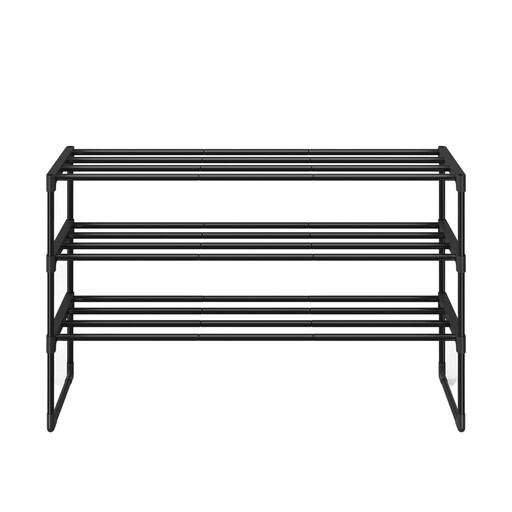
Why it suits this profile: This black metal shoe rack measures 30 x 92 x 55 cm, so it can fit in many hallways, wardrobes and living rooms. According to the product information, it holds 16 to 20 pairs of shoes and is designed for tool-free assembly.
The product details list both a total load capacity of 30 kg and a capacity of 10 kg per tier. This makes it easier to match the load to trainers, shoes and lighter boots.
Metal tubes, three tiers, a low weight of 1.3 kg and a design that can be positioned upright, upside down or stacked, according to the product description.
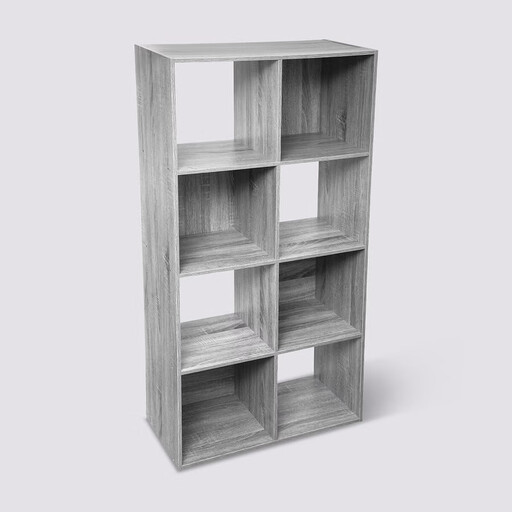
Why it suits this profile: This 67.5 x 32 x 134 cm cabinet is a good choice if you want to combine shoe storage with extra storage space. It is taller, and the product information says it should be assembled by two people.
The stated maximum load of 60 kg gives you a clearer guide than a vague claim such as “spacious”. Put heavy shoes on the bottom and check the available height in each compartment.
A taller cabinet design, a combination of wood-based materials and steel, an FSC reference in the product details and an assembly time of around 30 minutes.
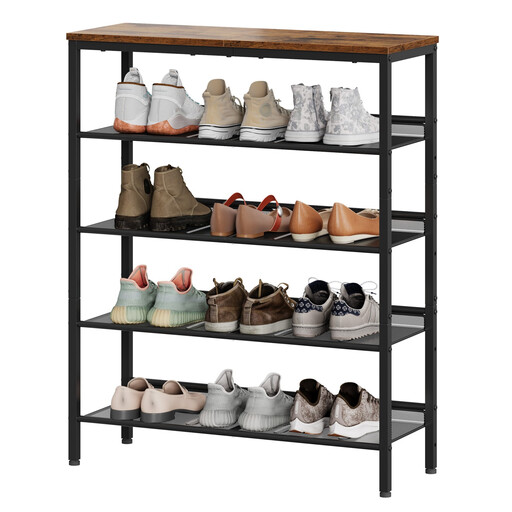
Why it suits this profile: With five tiers, dimensions of 28 x 75 x 93 cm and adjustable shelves, this model is designed for households with different types of shoes.
The product information mentions an anti-tip kit. Use it as instructed, particularly if you’re placing the rack in a walkway or in a home with children.
Each mesh shelf has a stated maximum static load of 11 kg, while the top shelf has a stated maximum of 27 kg. The shelves can be set flat or at an angle.
We’ve put together a complete, up-to-date list of products that meet these strict selection criteria and the applicable European safety regulations.
A shoe rack that assembles without tools sounds simple to put together, but always check that all the connectors are secure. Place the rack on a level surface and distribute the weight evenly. Put heavy shoes on the bottom and avoid placing too much weight on one side of a shelf.
An open rack needs little maintenance: vacuum it or wipe the shelves with a dry or slightly damp cloth. Don’t leave wet shoes against wood-based panels for long periods. With a metal rack, keep an eye out for damage to the finish, especially if you move shoes around often.
It depends on how many shoes you have and how much wall space is available. A width of around 75 to 95 cm often gives you several tiers without taking over the whole hallway. Remember to measure the space around doors and skirting boards too.
It can be, but check the stated load capacity per shelf as well as the total load. A metal frame with plastic connectors can be suitable for everyday use, as long as you keep the weight within the product specifications and place the rack on a stable surface.
Its lifespan depends on the material, load, assembly and how it is used. A rack that isn’t overloaded and is kept in a dry, level spot is generally less likely to bend or develop loose connections. Check the screws, connectors and any wall fixings regularly.
