
Cook with a narrow kitchen
You’re looking for a main fridge and want to know which model will fit in your available space with the door open.


First, measure the available space, including room for the door to open. Then choose a fridge whose temperature you can set to and check at 4 °C. A slim under-counter model without a freezer compartment offers more fridge space for everyday shopping than a small bar fridge; a model with a freezer compartment may suit you if you need that freezer space too.
You’re looking for a main fridge and want to know which model will fit in your available space with the door open.
You want to keep hummus and other perishable foods chilled and be able to check the fridge temperature.
You already have a fridge and are considering a small second appliance; capacity and energy use will help determine whether it’s practical.
First, measure the space and the doorway. Then decide whether you need a main fridge for everyday shopping or just some extra room, and check that you can set and measure the temperature.
| What to consider | What to look for | Who is this important for? |
|---|---|---|
| Dimensions and door clearance | Measure the available width, depth and height, as well as the space the door needs to open. Beko lists the TS190040N as 47,5 cm wide and 50 cm deep; Salora gives the CFB4300WH dimensions as 47,2 cm wide and 45 cm deep. | If space is limited, I want to make sure both the fridge and its door will fit; around 36% of consumers put fit first. |
| Checking the temperature | The Voedingscentrum recommends setting the fridge to 4 °C. After installation, place a fridge thermometer in the middle of the bottom shelf and also follow the storage instructions on the hummus packaging. | I want to keep opened hummus chilled and check that the fridge is cold enough; around 29% of consumers prioritise checking the fridge temperature. |
| Usable fridge space | Compare the fridge compartment’s capacity with what you store every day. Beko lists 88 l for the TS190040N, which has no freezer compartment, and 73 l of fresh food space for the TS190340N, which has a freezer compartment; Salora gives the CFB4300WH a net capacity of 43 l. | If the fridge also needs to hold my everyday shopping, I look at the usable fridge space; around 21% of consumers make capacity their first consideration. |
| Energy use | Compare the annual consumption in kWh on the energy label for the exact models, taking into account how much fridge space you need. Calculate the cost using your own electricity tariff. | If I’m going to use the fridge for a long time, I want to be able to compare its annual consumption using my own tariff; around 14% of consumers prioritise running costs. |
Fridges also vary in depth, and the door needs to be able to open in the position you choose.
Measure the whole space and check the installation instructions for the exact model before ordering.
Salora gives the CFB4300WH a net capacity of 43 l; Beko lists 88 l of fresh food space for the TS190040N. A smaller capacity may be restrictive if you also want to store your everyday shopping in it.
Compare the capacity with what you usually keep chilled, not just a tub of hummus.
A setting doesn’t tell you what temperature the fridge actually reaches where you’ve placed it.
The Voedingscentrum recommends 4 °C. After installation, check the temperature with a fridge thermometer and adjust the fridge if needed.
The energy rating alone doesn’t tell you the exact model’s annual energy consumption.
Compare the annual consumption in kWh on the energy labels of models that offer enough fridge space.
Beko has slim under-counter models with and without a freezer compartment, including options for smaller kitchens.
The CFB4300WH is a small freestanding bar fridge for anyone mainly looking for a little extra chilled storage.
The KK550 is an under-counter model without a freezer compartment, for spaces with 55 cm of available width.
The Rc 1400 Pure is an under-counter model without a freezer compartment, for a space that can accommodate a width of 55 cm.
These are compact fridges for storing hummus and other chilled food in a kitchen where space is limited.
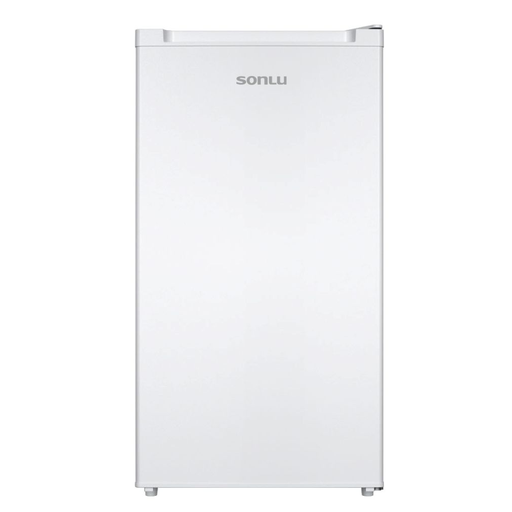 No image available
A freestanding fridge without a freezer compartment for anyone looking for space to chill opened hummus and other food.
82 l usable capacity, mechanical temperature control, adjustable glass shelves, a salad drawer and door shelves.
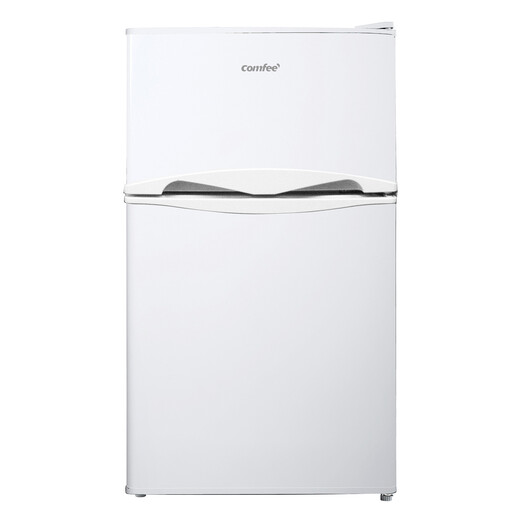 No image available
A compact countertop fridge with an adjustable thermostat for a small kitchen or workspace.
Removable glass shelves, a bottle rack and a reversible door.
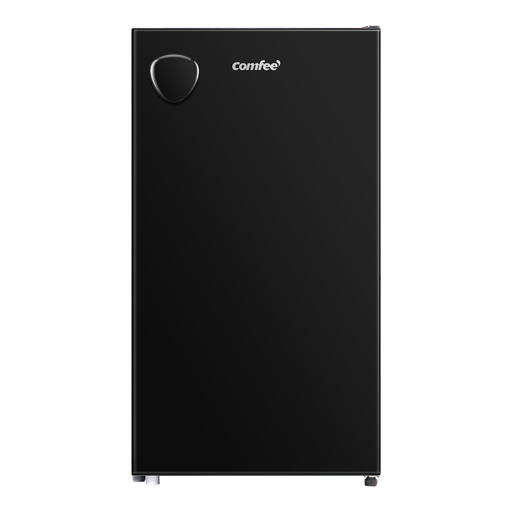 No image available
A compact freestanding fridge for making use of the space under a worktop.
88 l capacity, adjustable thermostat, adjustable glass shelves, a salad drawer and a reversible door. According to the product description, the separate chiller compartment is intended for short-term chilling; don’t store food in it for more than 2 hours.
 No image available
A compact fridge with mechanical controls for a small kitchen or workspace.
90 l capacity, three glass shelves and a stated temperature range of 0–10 °C. The separate chiller compartment is intended for short-term chilling; don’t store food in it for more than 2 hours.
 No image available
A compact fridge for a narrow kitchen, with space for more than just one tub.
92 l fridge capacity, stated width of 47 cm, seven temperature settings, adjustable glass shelves, a salad drawer and a reversible door.
For plain hummus, the Voedingscentrum recommends keeping homemade hummus for 1–3 days after opening and shop-bought hummus for 5–10 days, provided it’s kept in the fridge. Follow the instructions on the packaging too; these storage times don’t guarantee that an individual product will stay fresh.
The Voedingscentrum recommends a fridge temperature of 4 °C. Place a fridge thermometer in the middle of the bottom shelf, leave it there for half a day or overnight, and adjust the fridge if the temperature is too high.
For each exact model, check the annual consumption in kWh on its energy label and multiply it by your own electricity tariff per kWh. Compare the capacity too: the energy rating alone won’t tell you whether a fridge meets your storage needs.
According to the Rijksoverheid, the Netherlands has no fixed statutory warranty period. If a product is faulty under normal use, you can ask the seller for an appropriate solution; normal wear and tear or damage you’ve caused yourself aren’t automatically covered.