
Shoppers with a narrow kitchen
First, decide whether a freestanding or built-in model will work for you. Measure not only the width, but also the height, depth and space needed for connections.


Start by choosing between a freestanding dishwasher and a fully integrated built-in model. Measure the available space and check the connections and installation requirements for the exact model. Then compare the rack layout with your lunchboxes and separate lids. Milieu Centraal points out that a fully loaded standard dishwasher can be more energy-efficient, while Bosch says plastic items may still be damp after a cycle.
First, decide whether a freestanding or built-in model will work for you. Measure not only the width, but also the height, depth and space needed for connections.
If you want to wash containers and separate lids alongside your usual dishes, the rack layout and the care instructions for your own lunchboxes matter more than the number of place settings alone.
If you use your dishwasher regularly, compare the current energy label and consumption per 100 eco cycles. A narrower machine is not automatically the most energy-efficient choice.
First, decide what matters most in your kitchen and for your everyday washing-up: a suitable installation, space for lunchboxes, consumption or ease of use.
| What to consider | What should you check? | Who is this important for? |
|---|---|---|
| Will the machine fit? | Measure the available height, width and depth. Also check the connections and, for a built-in model, the cabinet opening, kitchen door panel and installation requirements for the exact model. | If my kitchen has very little space, I want to know whether the whole appliance will actually fit. Around 36% of consumers say installation space is their top priority. |
| Space for lunchboxes | Compare the dimensions of your containers with the rack heights. Check that the spray arms can rotate freely and follow the instructions for separate lids. | If you want to wash lunchboxes alongside your usual dishes, a layout that suits your own containers is a real advantage. Around 29% of consumers put this first. |
| Consumption | Compare kWh per 100 eco cycles, water consumption per eco cycle and capacity using the same current labelling basis. Also consider how often you can run the machine fully loaded. | If I use the machine regularly, I want to compare electricity and water consumption on a like-for-like basis. Around 21% of consumers say running costs are their top priority. |
| Noise and drying | Compare the noise levels and drying methods of the exact models. Bear in mind that plastic items may still be damp after a cycle. | If the machine is close to my living space or I want to put lunchboxes away quickly, noise and a practical drying routine matter too. Around 14% of consumers prioritise these everyday considerations. |
According to the European Commission, household dishwashers have used an energy label ranging from A to G since 1 March 2021. So compare current labels and eco consumption figures; an old A+++ label is not directly equivalent to a current A rating.
The right width does not guarantee that the height, depth, connections and installation type will also work.
Measure the entire available space and compare it with the dimensions and installation requirements of the exact model.
Place settings refer to standard tableware. Containers and separate lids have different shapes and may fit differently in the racks.
Compare your own lunchboxes, with their lids removed, against the rack layout and check that the spray arms have room to move.
Bosch explains that plastic does not dry as well in a dishwasher because it absorbs less heat. That does not automatically tell you how dry your own lunchbox will be.
Follow the instructions for your lunchbox model and be prepared to leave the container and lid to dry separately if needed.
Since 1 March 2021, the European Commission has used the A–G scale for household dishwashers. An old label is therefore not directly comparable with the current rating system.
Compare current energy labels and consumption figures on the same eco basis.
The features listed apply to the specific models below; they are not a general assessment of the entire brand.
The freestanding slimline VWV147SWIT is an option if you do not have a suitable built-in cabinet opening.
The freestanding VVW4530AW is a 45 cm model with an adjustable upper rack.
The SPS4EMI17E model reviewed is freestanding; the SPV4EMX17E is fully integrated and requires a suitable built-in cabinet opening.
The fully integrated SR65EX09ME is worth considering if it fits your cabinet opening and kitchen door panel.
The freestanding slimline BDFS26046XQ has a cutlery drawer and an adjustable upper rack.
This selection includes a fully integrated narrow dishwasher and compact countertop models as alternatives to a freestanding appliance.
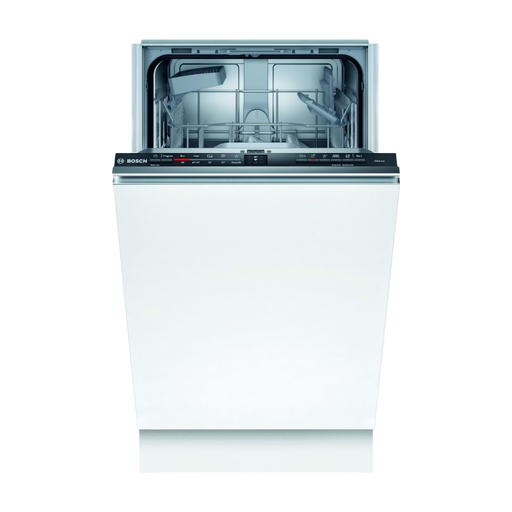 No image available
A fully integrated model to consider if you have a suitable narrow cabinet opening.
45 cm wide. The product information specifies professional installation and a minimum cabinet opening height of 815 mm; check the other installation dimensions and requirements too.
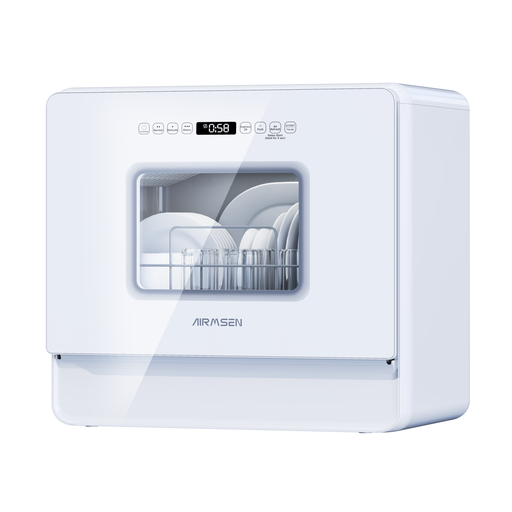 No image available
A countertop model to compare if a freestanding appliance will not fit.
The product name lists a built-in 5 L water tank, a two-level rack and five place settings. Check the temperature instructions for your lunchbox before choosing a programme.
The steam wash described uses 75 °C. Mepal lists a maximum of 65 °C for the Take a Break midi; this limit applies only to that specific model.
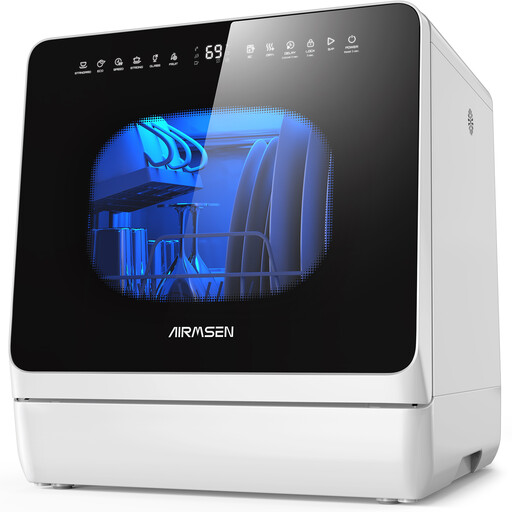
 No image available
A countertop model to consider if you want a compact set-up instead of a narrow freestanding dishwasher.
The product name lists 5+1 wash cycles, a built-in 5 L water tank and no need for a fixed water connection. Check the temperature instructions for your lunchbox before choosing a programme.
The Baby Care mode described uses steam at up to 75 °C. Mepal lists a maximum of 65 °C for the Take a Break midi; this limit applies only to that specific model.
 No image available
A compact countertop model to consider if a narrow freestanding machine is not the right fit for your kitchen.
The product name lists eight wash programmes and an integrated water softener. Check the temperature instructions for your lunchbox before choosing a programme.
The steam cleaning described uses 75 °C. Mepal lists a maximum of 65 °C for the Take a Break midi; this limit applies only to that specific model.
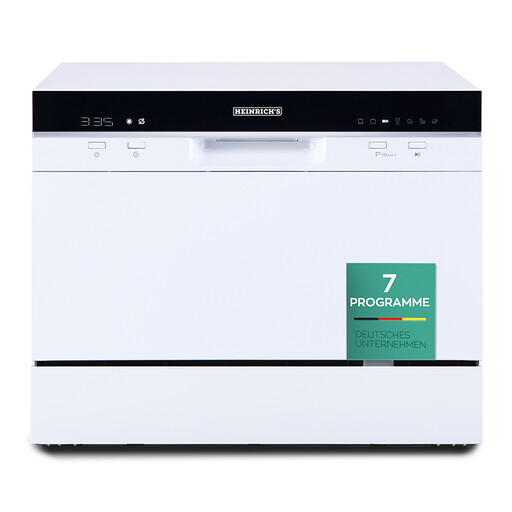 No image available
A countertop model to compare if you have worktop space but nowhere suitable for a freestanding appliance.
The product name lists six place settings, seven programmes, a noise level of 47 dB and automatic door opening for drying. Check that the dimensions and connection will work in your kitchen.
No. Follow the instructions for the exact lunchbox model. Mepal lists a maximum temperature of 65 °C for the Take a Break midi; this does not automatically apply to other lunchboxes. For the on-the-go products mentioned, Mepal advises leaving the lid and container to dry separately.
According to Bosch, plastic does not dry as well in a dishwasher because it absorbs less heat. Check the drying method used by each machine and leave parts to dry separately if needed. A drying function is no guarantee that your lunchbox will come out of the machine dry.
Measure the entire available space and check the installation requirements for the exact model, including its positioning and connections. The Inventum manual for the built-in model reviewed, for example, says not to use an extension lead or multi-socket adaptor; check the instructions for the model you choose.
For new household dishwashers, compare the current A–G energy label, including the energy consumption per 100 eco cycles and water consumption per eco cycle. Your own costs also depend on the number of cycles you run and your tariffs; a label figure is not a measurement of every programme.
Yes. According to the Dutch government, dishwashers must carry an energy label. The European Commission uses the current A to G scale for household dishwashers; do not treat an old A+++ label as a current A rating.