What should you look for when choosing?
First decide which type of appliance will fit the space. Then compare the cutlery layout, and finally weigh up the capacity and eco-mode consumption for the loads you typically wash.
| What to consider |
What to look for when buying |
Who it matters to |
| Space and connections |
Measure the width, height and depth. For an integrated model, also check the niche and door panel. For both types, check the water, drainage and electrical connections against the model’s instructions. Consumentenbond covers these installation considerations. |
If your kitchen space is limited, you’ll want to know whether the appliance can really be installed and connected there. This is a priority for around 33% of consumers looking for a suitable installation space. |
| Cutlery drawer or basket |
Check the layout of the exact model. A drawer frees up space in the lower basket, while a removable basket lets you take the cutlery out all together. |
If you want to take all your cutlery out in one go when unloading, a basket may be practical. If you want to keep space free at the bottom for other items, look for a drawer. Around 27% of consumers prioritise the cutlery layout. |
| Energy and water consumption |
Compare the kWh per 100 eco cycles and litres per eco cycle on the energy label. Also consider how often you’ll actually fill the chosen capacity; the European Commission explains these label values. |
If you use the machine often, you’ll want to weigh its labelled consumption against your usage. Around 20% of consumers consider running costs their main priority. |
| Space for your dishes |
Compare the stated number of place settings and look at the baskets with your usual plates and pans in mind. An adjustable upper basket may be useful, depending on the model; check the product specifications. |
If you also need to wash crockery or cookware after a trip to the market, you’ll want to know whether everything will fit in one load. Around 20% of consumers prioritise capacity for other items. |
Joybuy products
These are freestanding dishwashers for anyone looking for a narrow kitchen fit and a particular cutlery layout. Check the exact dimensions, layout and capacity of each model before choosing.
 No image available
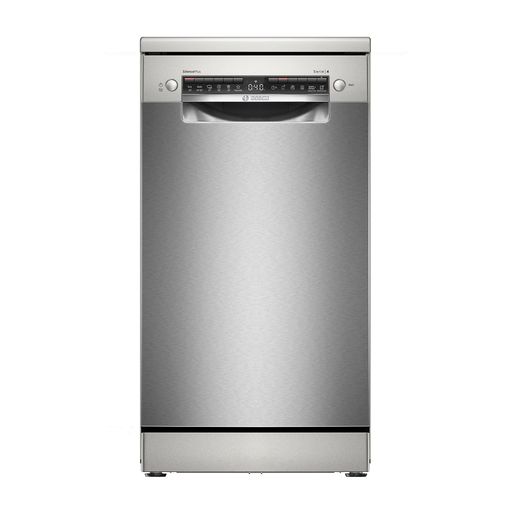
Bosch SPS4EMI17E, freestanding dishwasher, 45 cm
A freestanding model for anyone looking for a narrow installation space. Check the full dimensions and layout against the items you usually wash.
The product listing states 13 place settings. Check this model-specific capacity in the product information sheet before relying on it.
View at Joybuy
 No image available
Bosch SPS4HKW49E Series 4, 45 cm, white
A freestanding model for anyone looking for a narrow kitchen fit. Compare the layout of the exact version with the cutlery and other items you want to wash together.
The product name states a width of 45 cm and a white finish. Check the full dimensions and connections for your kitchen too.
View at Joybuy
Frequently asked questions
Do I need a special programme for dishwasher-safe cutlery?
Not just because you’re washing cutlery. Remove any food scraps and, for a regular load, use the eco programme where possible. For unusual or heavily soiled items, follow the instructions from the cutlery and dishwasher manufacturers.
Can I connect a narrow dishwasher myself?
According to Consumentenbond, you can if the circumstances and the model’s instructions allow it. First check the water supply, drainage and suitable earthed electrical socket. Installing an integrated machine involves more work than connecting a freestanding model. This doesn’t mean every connection is automatically suitable.
What does the energy label tell me about my daily costs?
The EU energy label shows, among other things, energy consumption per 100 eco cycles and water consumption per eco cycle. These figures are based on the eco programme, so they won’t give you your exact costs for other programmes or your energy and water rates.
Who should I contact if my dishwasher develops a fault after purchase in the Netherlands?
Report it to the seller. According to the Dutch government, you’re entitled to a product that works properly, and there is no fixed statutory warranty period in the Netherlands. What you can reasonably expect depends on the product and the circumstances. A manufacturer’s warranty is in addition to your statutory rights.


