
Vandaag of morgen in huis

Kwaliteit gegarandeerd

Welkomstaanbiedingen ontgrendelen: GRATIS bezorging | Tot 80% korting | Gratis 30 dagen JoyPlus-proefperiode
Download de app
Nappy pants are handy when your baby is on the move, your toddler wants to learn to pull them on independently, or your child needs extra protection at night. However, a large pack isn’t automatically the best-value choice. The wrong size, a poor fit or pants that aren’t suitable for overnight use can lead to leaks and waste.
The main pitfalls to avoid when buying nappy pants are:
Start by checking the stated weight range. Examples from the range include:
Pants that are too big may gape around the legs or back. If they’re too small, the elasticated edges may dig in and they may become saturated more quickly. After putting them on, check that the waistband lies flat and the leg cuffs aren’t folded over.
Look for specific product details rather than relying on phrases such as ‘extra dry’ or ‘maximum protection’. Pampers lists an absorbent core, wider leak guards, a 360° waistband and a Stop & Protect pocket at the back for several models. According to Pampers’ product information, these features are designed to absorb moisture and help reduce leaks around the legs or back.
BC Babycare Royal Pants are described as having a core with superabsorbent polymer, a total core weight of 460 g/m² and 14,5 grams of SAP. These are verifiable product specifications, but they can’t fully predict how the pants will perform for every child. Choosing the right size and putting them on correctly are still important.
If you’re looking for leak-proof nappy pants, bear in mind that no disposable pants can prevent leaks in every situation. A child who drinks a lot, sleeps on their tummy or has outgrown their size may need a different solution.
Check whether the packaging includes information about materials, fragrance and certification. The product information for several Pampers models states 0% EU fragrance allergens. OEKO-TEX Standard 100 is also listed for these products. Pampers Harmony Pants are also described as containing 0% perfume and lotion.
These are manufacturer product claims and should be read as they appear on the packaging or product page. They don’t guarantee that every child will tolerate the materials without any problems. If skin irritation occurs, stop using the product and follow the instructions on the packaging.
Practical features include tear-away sides, a fastening tape for rolling the pants up and an elasticated waistband. These are especially useful for active babies, when you’re out and about or when you need to change your baby quickly.

Why it suits this profile: A pack of 38 gives first-time buyers the chance to try the fit without immediately buying a large month’s supply.
The 9–14 kg weight range is clearly stated, so you don’t have to choose based on age alone.
Size 4, 38 pairs per pack and a core described in the product information as absorbent and containing SAP.
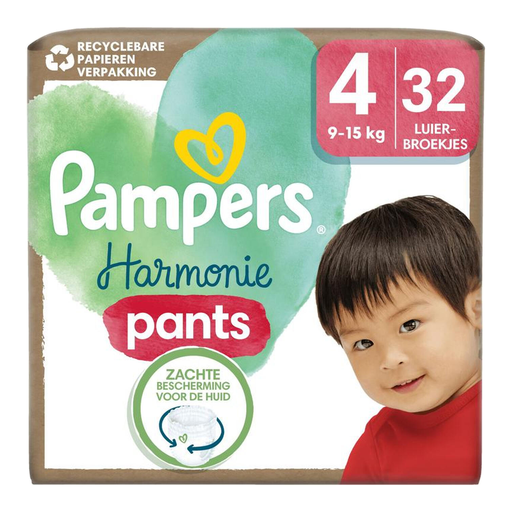
Why it suits this profile: According to Pampers, this model has a perfume- and lotion-free composition and a soft, flexible fit for everyday use.
The product page states the weight range and pack size, and includes specific claims about the materials rather than relying only on general comfort claims.
Size 4 for 9–15 kg, 0% perfume according to the manufacturer and an OEKO-TEX Standard 100 certification claim.
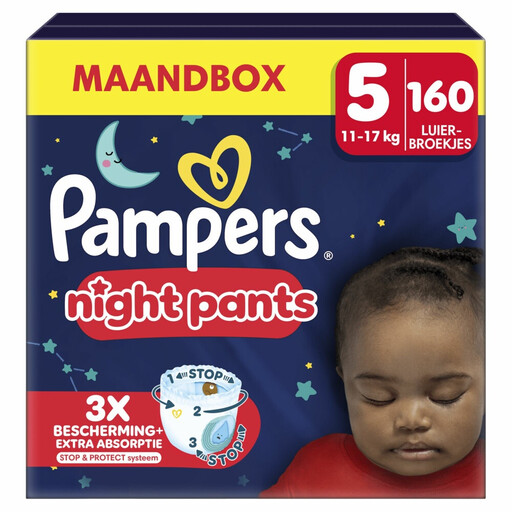
Why it suits this profile: This night-time model is designed for children weighing around 12–17 kg who need longer-lasting protection than during a short daytime activity.
It’s clearly labelled as a night-time nappy pant, so standard daytime pants aren’t automatically used for the whole night.
Size 5, 160 pairs and, according to Pampers, an absorbent core, wider leak guards and a 360° waistband.
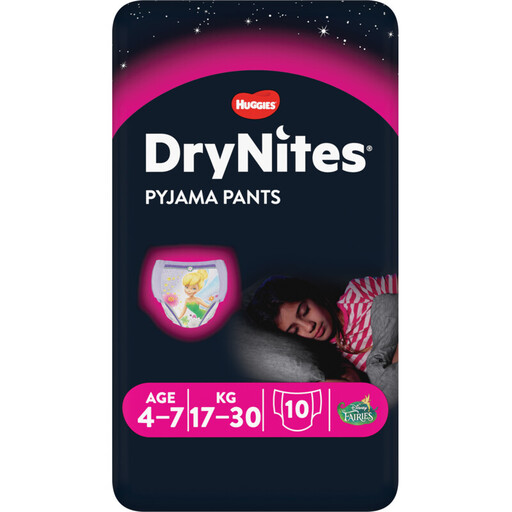
Why it suits this profile: These DryNites night pants are designed for children aged 4–7 who are dry during the day but still need protection at night.
The age and weight range of 4–7 years and 17–30 kg makes it clear that these aren’t baby nappy pants for everyday use.
10 night pants, an elasticated waistband and leak-blocking leg cuffs according to the product description.
We’ve put together a complete, up-to-date list of products that meet these strict selection criteria and the applicable European safety regulations.
It depends on your child’s development and how much they move. Nappy pants are practical once your baby is rolling, crawling or walking a lot, or finds it difficult to lie still during changes. Focus on the weight range and fit rather than a set age.
Change the pants when they’re soiled, feel noticeably saturated or no longer fit properly. Claims such as ‘up to 12 hours’ come from the brand’s product information and aren’t a fixed wear time for every child. A specialist night-time model may be more suitable overnight.
Pampers nappy pants are mainly designed for babies and toddlers, with different sizes for daytime and night-time use. According to the product information, DryNites night pants are designed for children aged around 4–7 who are dry during the day but still need protection at night. For both, always check the weight, size and intended use.
