
Vandaag of morgen in huis

Kwaliteit gegarandeerd

Welkomstaanbiedingen ontgrendelen: GRATIS bezorging | Tot 80% korting | Gratis 30 dagen JoyPlus-proefperiode
Download de app
As a new or expecting parent, the list of baby essentials can be overwhelming. Among all the choices, there is one product you will use time and time again: the muslin cloth. These multi-functional cloths are indispensable for your baby's daily care. But what should you look for when buying them?
This guide has been created to help you choose the right muslin cloths. We focus on practical specifications like material, absorbency, and size, so you can make an informed decision that fits your needs.
Before we look at specific products, here are a few key points to help you select the right muslin cloths.
A baby's skin is delicate, which makes the material of a cloth crucial. Most muslin cloths, also known as muslin squares, are made from 100% cotton. This material is renowned for its softness and breathability. An added benefit of cotton muslin is that the fabric becomes softer with every wash, ensuring an ever-more-comfortable experience for your baby. A soft baby towel made from muslin cotton is therefore a popular choice.
A muslin cloth is used for everything, from drying your baby after a bath to catching milk as burp cloths. Its absorbency is therefore a key feature. This is often determined by the number of cotton layers. A cloth with a 6-layer design offers significantly higher absorbency than a standard single-layer cloth. This makes them ideal for bigger tasks, such as using them as a muslin baby towel after bath time.
Muslin cloths come in various sizes, each with its own purpose:
A good baby layette often includes a mix of different sizes for maximum flexibility.
Based on the criteria above, we have selected a few options that stand out for their specifications and functionality.

Why it stands out This set includes two large muslin towels, made from 100% cotton with a 6-layer structure. The generous 70x140 cm size makes them perfect for completely wrapping a baby after bath time. The cloths are designed to absorb a lot of moisture and dry quickly.
Pros
Who is this for? For parents looking for a set of large, highly absorbent, and soft towels specifically for after bathing or swimming.
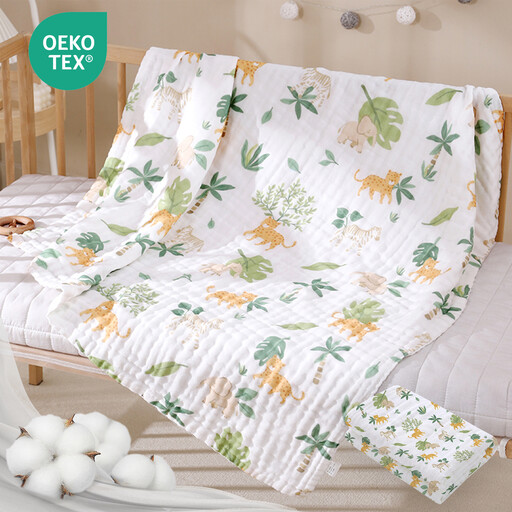
Why it stands out This set offers versatility with two different sizes: a large bath towel and a smaller washcloth. Both are made from 6-layer 100% cotton and feature a subtle pattern. It's a practical starter set that covers various needs.
Pros
Who is this for? For parents who want a convenient, matching set for different care moments, or for those looking to give a practical and complete gift.
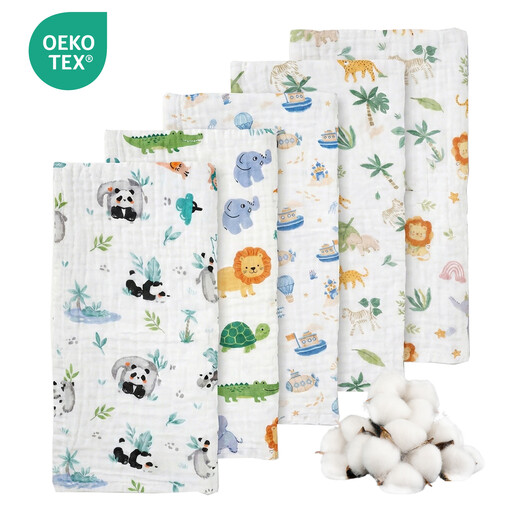
Why it stands out With this value pack of five, you'll always have a clean cloth on hand. The compact 50x25 cm size is perfect for use as burp cloths or baby face cloths. Despite their smaller size, these cloths also feature a 6-layer cotton structure for excellent absorption.
Pros
Who is this for? For parents who need a large supply of smaller cloths for feedings, burps, and quick clean-ups, both at home and on the go.
The right muslin cloth depends on personal preference and what you intend to use it for most. If the options above don't quite match what you're looking for, there are many more possibilities available.
Check out our full range of muslin cloths for more choices in different sizes, colors, and sets.
1. What is the difference between muslin cloths and regular towels? Muslin cloths are made from a finely woven cotton (muslin) that absorbs moisture very well and dries extremely quickly. They are lighter, thinner, and often softer on a baby's sensitive skin than traditional terrycloth towels.
2. How many muslin cloths do you need for a baby layette? This is a personal choice, but many parents find a stock of 10 to 15 cloths to be a good starting point. This gives you enough clean cloths for daily use (drying, burp cloth, changing mat liner) without having to do laundry constantly. A mix of large and small sizes is most convenient.
3. How do you wash muslin cloths to keep them soft? Most muslin cloths can be machine washed at 40°C (104°F). It is often recommended not to put them in the dryer to prevent shrinkage; air drying is better. An important tip is to avoid using fabric softener, as it can reduce absorbency. The cloths will naturally become softer the more you wash them. Always check the care label of the specific product.
