If you want to take close-ups quickly on a walk without changing lenses, look for a robust compact camera with a documented macro mode. A mirrorless camera gives you more choice of lens and magnification, but you’ll need to assess the lens and the protection of the complete setup separately. A short focusing distance alone doesn’t prove greater magnification or better image quality.
Who is this choice for?
Hiker who wants to capture details quickly
You want to photograph small mushrooms on the go with one camera and minimal adjustments. The close-up mode and room to light your subject are key considerations; OM SYSTEM Netherlands and Ricoh Imaging Europe describe macro modes for their compact cameras.
Camper in wet weather
You take your camera on damp woodland walks and compare the protection offered by the whole kit, not just the camera body. Ricoh Imaging Europe describes the WG-8 as a rugged camera; OM SYSTEM lists IP53 for the body of the OM-5 Mark II.
Photographer looking to expand into macro
You want to choose your own lens and magnification, and factor in a separate macro lens. Canon Netherlands lists up to 1:2 magnification for the RF 35mm F1.8 MACRO IS STM and names the EOS R50 as compatible.
What should you look for in a camera for photographing mushrooms?
Rugged compact camera with macro mode
Best for: taking quick close-ups on a walk without changing lenses. For the TG-7 Micro Adventure Kit, OM SYSTEM lists a microscope mode that focuses from 1 cm; Ricoh Imaging Europe lists macro modes for the WG-8 that focus from 10 cm and 1 cm.
Bear in mind: the lens is fixed. When working at close range, there may be less room to get light onto your subject. The stated focusing distances do not compare magnification or image quality.
Mirrorless camera with a separately chosen macro lens
Best for: photographers who want to choose their lens and setup to suit the size of the mushroom. Canon lists up to 1:2 magnification for the RF 35mm F1.8 MACRO IS STM and says it is compatible with the EOS R50.
Bear in mind: the EOS R50 kit reviewed comes with an RF-S 18-45mm lens, not the RF 35mm macro lens. In wet weather, check the protection offered by both the body and your chosen lens; OM SYSTEM’s IP53 rating applies to the body of the OM-5 Mark II.
| What to consider |
What should you check? |
Who is this important for? |
| Small subjects at close range |
Check the focusing distance in the relevant mode. If you’re choosing a separate lens, also check its maximum magnification and mount. |
If I want small mushrooms to be recognisable in the frame, I look at both the focusing distance and the framing. Around 36% of consumers say close focusing is their top priority. |
| Protection in wet weather |
Check the protection rating for the exact camera model. If you have a mirrorless camera, check your chosen lens too. |
If you take your camera on wet walks, compare the protection of every component you use. Around 29% of consumers say protection in wet weather is their top priority. |
| Taking photos in low light |
Check the maximum aperture of the lens you’ll actually use and consider whether you can keep the camera steady. Canon specifies f/1.8 as the maximum aperture for the RF 35mm F1.8 MACRO IS STM. |
In a dark wood, I want a workable setup that avoids unnecessary movement while taking the photo. Around 21% of consumers put low-light photography at the top of their list. |
| Carrying your kit |
Check which lens and accessories are included in the kit. If you have a mirrorless camera, factor in the macro lens you’ll need. |
If I want to carry as few separate items as possible while camping, the kit contents matter a lot. Around 14% of consumers say ease of carrying is their top priority. |
Common buying mistakes
-
Assuming a camera kit is a complete macro setup
The Canon EOS R50 kit reviewed comes with an RF-S 18-45mm lens; the RF 35mm macro lens is sold separately.
Before buying, check exactly what’s included in the kit and whether your chosen lens is compatible with the camera.
-
Mistaking a short focusing distance for a complete measure of quality
The distance at which a camera can focus doesn’t, by itself, tell you how much of the mushroom will fit in the frame or how much room you’ll have to light your subject.
Compare the framing and working space you need. If you’re choosing a separate lens, check its stated magnification too.
-
Assuming the camera body’s protection applies to the whole kit
OM SYSTEM lists IP53 for the body of the OM-5 Mark II. This rating doesn’t automatically describe the protection offered by every lens.
Check the documentation for both the body and the specific lens you want to take with you.
Brands to consider
OM SYSTEM
A compact camera with a built-in microscope mode offers a different approach from a mirrorless camera with a separately chosen lens.
- For the TG-7 Micro Adventure Kit, OM SYSTEM lists focusing from 1 cm in microscope mode.
- OM SYSTEM lists IP53 for the body of the OM-5 Mark II; check the protection of any lens you choose separately.
PENTAX
Ricoh Imaging Europe describes the WG-8 as a rugged compact camera with two macro modes.
- Ricoh Imaging Europe lists focusing from 10 cm in standard macro mode and from 1 cm in 1cm macro mode.
- A short focusing distance alone doesn’t compare magnification or low-light performance.
Canon
The EOS R50 lets you choose an RF or RF-S lens; the RF 35mm F1.8 MACRO IS STM is a separate close-up option.
- Canon lists up to 1:2 magnification for the RF 35mm F1.8 MACRO IS STM and says it is compatible with the EOS R50.
- The EOS R50 kit reviewed comes with an RF-S 18-45mm lens; the RF 35mm macro lens isn’t included as standard.
Products on Joybuy
These product choices are related to the topic. Before buying, check whether the camera is suitable for close-ups of mushrooms and for use on a camping trip.
 No image available
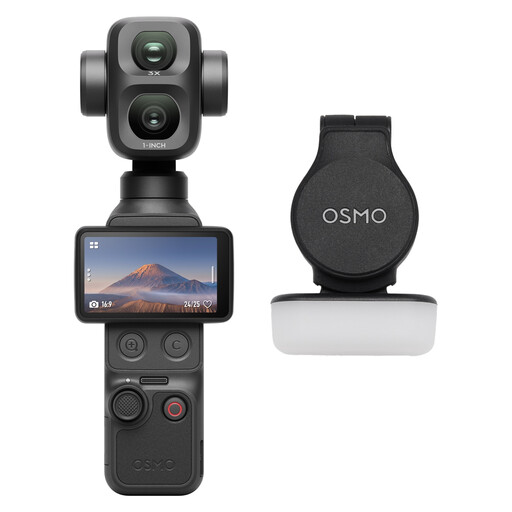
Osmo Pocket 4P Standard Combo, black
The title describes a pocket camera; check whether its close-up capabilities suit small mushrooms. The product information advises keeping the device away from water unless it is labelled as waterproof.
Joybuy
 No image available
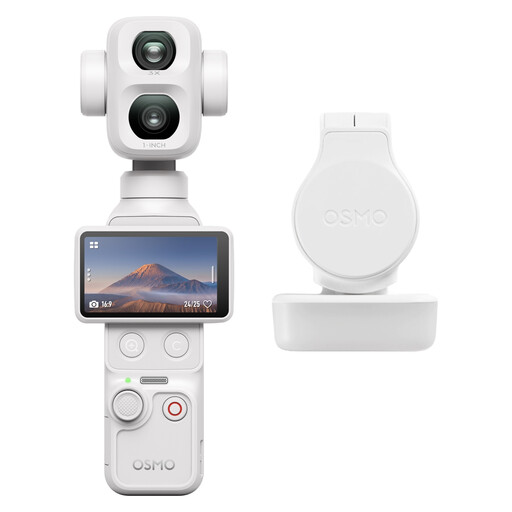
DJI Osmo Pocket 4P Standard Combo, white
The title describes a small camera; check whether its close-up capabilities suit your subject. The product information advises keeping the device away from water unless it is labelled as waterproof.
Joybuy
 No image available
KOMERY G7 5K Digital Camera, white
The product title lists 5K, 80MP and 18X zoom; check whether the camera is also suitable for the close-up distance you need. The product information advises against using it near water or in damp environments.
Joybuy
 No image available
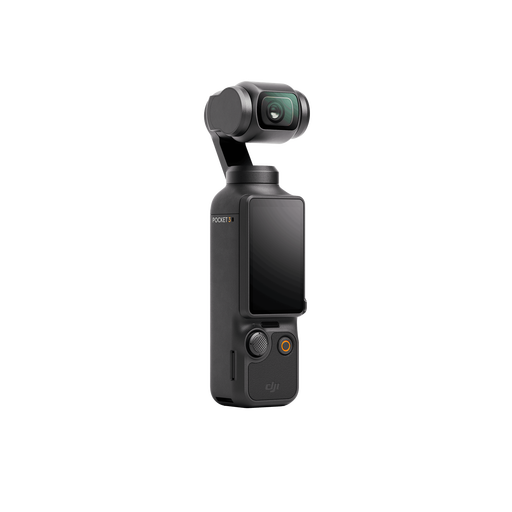
DJI Osmo Pocket 3 Creator Combo
The product title lists a 1-inch CMOS sensor, 4K/120fps video and 3-axis stabilisation; check whether its close-up capabilities suit mushroom photography. The product information advises keeping the device away from water unless it is labelled as waterproof.
Joybuy
 No image available
Sony ZV-E10 with 16-50mm zoom lens, black
The title describes a mirrorless camera with a 16-50mm zoom lens; check whether the included lens gives you the close-up results you want. The product information advises keeping the camera away from moisture.
Joybuy
Frequently asked questions
Do I need a separate macro lens for photographing mushrooms?
Not if your compact camera’s macro mode gives you the framing you want. If you choose a mirrorless camera, check the magnification and mount of the lens you’ll be using. The Canon EOS R50 kit reviewed doesn’t include an RF 35mm macro lens.
How can I photograph mushrooms in low woodland light?
Choose a stable setup and check the maximum aperture of the lens you’re using. Follow the site’s access rules when taking photos, and avoid damaging mushrooms or their surroundings.
What should I check after a wet walk?
Follow the instructions for use and care for your exact camera and lens. Assess protection for each component: OM SYSTEM’s IP53 rating applies to the body of the OM-5 Mark II and doesn’t automatically apply to any lens.
What can I do if my camera turns out to be faulty in the Netherlands?
You’re entitled to a product that meets the standards you can reasonably expect; if it’s faulty, the seller must provide a solution. According to the Dutch government, the Netherlands has no fixed statutory warranty period: what you can reasonably expect depends, among other things, on the product and normal use.
Can I leave the path wherever I like to take a photo?
Don’t assume you have general permission to do so. Natuurmonumenten says that different access rules may apply in its areas, so check the rules for the site where you plan to take photos.


