Which camera is right for you?

If you want to capture small details

You want to capture the texture of small mushrooms clearly, so you’re comparing magnification and the space between the lens and subject. OM SYSTEM describes the Tough TG-7 as having a close-up mode for shooting from as close as 1 cm to the subject.

If you take photos in shaded places

You want to weigh up exposure, focus and stabilisation without assuming that one feature will prevent camera shake. Cameranu points out that mushrooms also grow in dark places, so check what the complete camera and lens combination can do.

If you like to shoot at mushroom height

You want to position the camera low and review the image from that angle. Nikon lists a tilting touchscreen monitor for the Z50II; also check that you can shoot safely at the location and follow its access rules.

What should you look for when choosing?

Compact camera with close-up mode

A good fit if: you want to take one camera on a walk and shoot close-ups without a separate macro lens.

Trade-off: you won’t need to change lenses, but you’ll have less freedom to choose between different lenses.

Mirrorless camera with a macro lens

A good fit if: you want to choose a lens suited to close-ups and take other kinds of photos too.

Trade-off: you’ll need to choose both the camera body and lens; magnification and working distance vary from lens to lens.

What to consider What to look for Who is this important for?
Small details Compare the close-up mode or maximum magnification of the exact camera and lens combination. Distinguish between the focusing distance and the clear working distance. If I want to fill the frame with the tiny structures of mushrooms, I check how much magnification the combination offers. This is a priority for around 31% of consumers who value detail above all.
Shaded light Check the aperture and available stabilisation of the lens you’ve chosen; also consider whether you can support the camera during a longer exposure. In a shady spot, I want to weigh up exposure and sharpness without relying on one feature to solve everything. Around 25% of consumers prioritise low-light performance.
Low-angle shooting Check whether the screen tilts and whether you can position the complete setup close to the ground in an accessible place. If I want to frame a shot from mushroom height, screen controls and space around the camera matter. Around 25% of consumers make a low shooting angle their main priority.
Taking it on a walk Compare the weight of the complete setup and the number of separate parts; assess durability only for the exact model. If I want to take as little equipment as possible on a walk in the park, the whole setup matters, not just the camera body. Around 19% of consumers prioritise portability.

Common buying mistakes

  • Assuming every lens labelled ‘macro’ offers the same magnification

    According to Canon, the Canon RF 35mm F1.8 MACRO IS STM offers up to 0.5× magnification. Nikon lists 1:1 magnification for the NIKKOR Z MC 50mm f/2.8, so the word ‘macro’ alone doesn’t tell you how much detail you’ll be able to capture.

    Compare the maximum magnification of the exact lens with the size of the mushrooms you want to photograph.

  • Comparing only the weight of the mirrorless camera body

    You’ll need to add a suitable lens to the body. A body on its own is therefore not a fair comparison with a compact camera that’s ready to take with you.

    Compare complete, compatible setups and consider how you’ll use them from a low angle.

  • Confusing focusing distance with working distance

    The distance from the camera sensor and the clear space between the front of the lens and the subject are measured from different points. Sony Netherlands and Sony Netherlands Support use different distance descriptions for the SEL30M35, so don’t treat these figures as interchangeable specifications.

    Check which distance a lens specification refers to, and whether you can hold the camera there without touching the mushroom or breaking access rules.

Camera brands to consider

OM SYSTEM

The Tough TG-7 is a compact option if you want to take close-ups on a walk without changing lenses.

  • The manual describes a close-up mode for shooting from as close as 1 cm to the subject, as well as focus functions.
  • The manufacturer describes the body as rugged; this isn’t a comparison with mirrorless cameras and doesn’t, on its own, tell you what your photos will look like.

Canon

The EOS R50 is a mirrorless option if you want to choose a compatible RF lens for close-ups and other types of photography.

  • Canon lists RF compatibility for the EOS R50 and up to 0.5× magnification for the RF 35mm F1.8 MACRO IS STM.
  • The lens mentioned doesn’t offer 1:1 magnification. Canon also states that the EOS R50 doesn’t have sensor-shift image stabilisation.

Nikon

The Z50II with the NIKKOR Z MC 50mm f/2.8 is a mirrorless combination for anyone looking for 1:1 macro and a tilting screen.

  • Nikon lists 1:1 magnification for the lens and a tilting touchscreen monitor for the Z50II.
  • At maximum magnification, Nikon specifies around 5 cm between the front of the lens and the subject. Check whether that working distance is practical where you plan to shoot.

Sony

The E 30mm F3.5 Macro (SEL30M35) is a lens option for owners of a compatible Sony camera with an E-mount.

  • Sony lists 1:1 magnification for this lens.
  • Sony’s product page lists a minimum focusing distance of 2.4 cm; its support article gives 9.5 cm from the sensor and a working distance of around 2 cm. Don’t treat these distances as the same specification.

Joybuy cameras for photography

These Joybuy picks are cameras described in their product names as being for photography or video. Before buying one for close-ups of mushrooms, check its focusing distance, close-up capabilities and how easy it is to frame shots from a low angle.
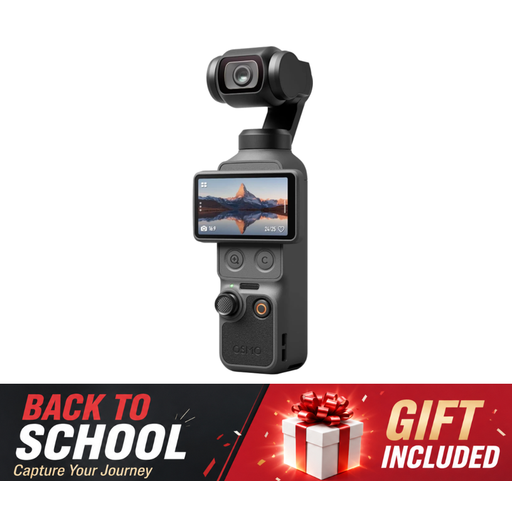
DJI Osmo Pocket 4 Standard Combo

DJI Osmo Pocket 4 Standard Combo

The product name describes it as being for photography and video; check whether its close-up capabilities suit small subjects such as mushrooms.

The product name lists a 1-inch CMOS sensor, 4K/240fps, 3-axis stabilisation, 2× lossless zoom, 107 GB of built-in storage and a 2-inch rotatable screen.

Joybuy
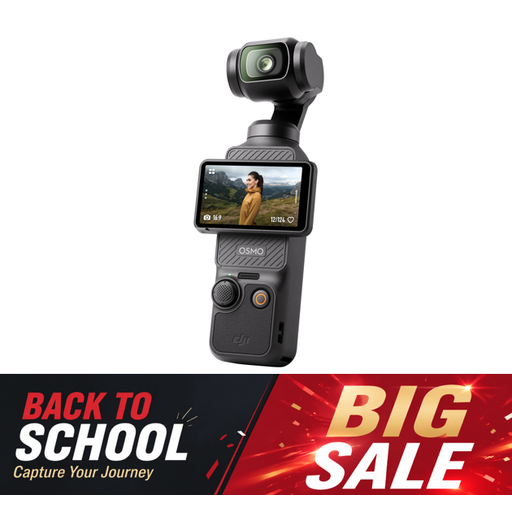
DJI Osmo Pocket 3

DJI Osmo Pocket 3

The product name describes this model as a small video camera for photography; check whether its close-up capabilities suit your subject.

The product name lists a 1-inch CMOS sensor, 4K/120fps, 3-axis stabilisation and a 2-inch rotatable touchscreen.

Joybuy

Songdian digital camera with 8× optical zoom, white

Songdian digital camera, white

The product name describes this model as a digital camera; check its focusing capabilities before choosing it for close-ups.

The product name lists 8× optical zoom, 5K, 64 MP and a dual lens.

Joybuy
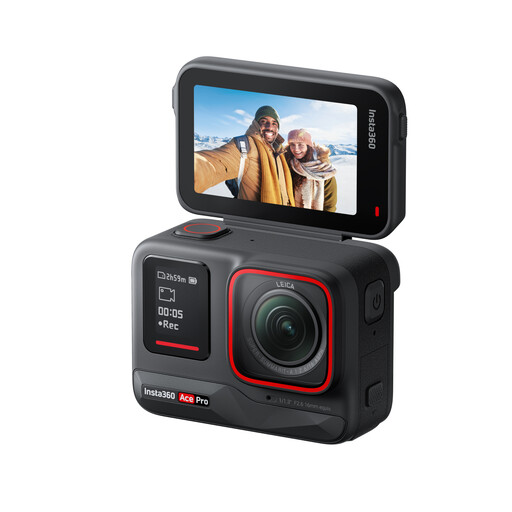
Insta360 Ace Pro action camera

Insta360 Ace Pro

The product name describes this model as an action camera; check separately whether it can focus at the close-up distance you need.

The product name lists a 1/1.3-inch sensor, 4K/120fps and a 2.4-inch flip screen.

Joybuy

Frequently asked questions

Do you always need a separate macro lens for photographing mushrooms?

No, you don’t always need a separate macro lens: the OM SYSTEM Tough TG-7 manual describes a built-in close-up mode. If you choose a mirrorless camera, check the magnification of the individual lens. Canon lists up to 0.5× for the RF 35mm F1.8 MACRO IS STM, while Nikon lists 1:1 for the NIKKOR Z MC 50mm f/2.8.

How can you keep a mushroom close-up in focus?

Support the camera if needed and check the focus area on the screen. The TG-7 manual describes focus stacking, which combines shots taken at different focus points; this feature doesn’t guarantee that every shot will be sharp.

What should you do with your camera after shooting in damp or dirty conditions?

Follow the cleaning and storage instructions for your exact camera and lens. Don’t assume that the durability claims for the OM SYSTEM Tough TG-7 apply if you’re using a different model or lens.

Can you leave the path in a city park to take a photo of a mushroom?

That depends on the park and local rules. Check the signs and information from the park manager; Staatsbosbeheer states that rules can vary between its own sites.

What should you consider if recognisable park visitors appear in a photo you want to share?

According to the Dutch Data Protection Authority, recognisable people in photos are personal data. The regulator describes an exception for private use that remains private or is shared with a very limited group; that exception doesn’t apply to wider publication, which requires a lawful basis under the GDPR. Where possible, frame bystanders out of the shot.
