
For pâté with texture
If you want to keep the mushrooms finely chopped rather than blend them until completely smooth, compare a chopper or food processor.


For mushroom pâté with recognisable pieces, a chopper or food processor is an obvious choice. A food processor is also worth comparing if you want to slice or grate ingredients. For a smoother spread, a stick blender may be suitable, while a jug blender is best suited to a larger, wetter mixture. Check the working capacity of the exact model, and bear in mind that bowl capacity is not the same as chopping capacity.
If you want to keep the mushrooms finely chopped rather than blend them until completely smooth, compare a chopper or food processor.
For a family-sized serving, the actual chopping capacity matters more than the bowl’s total capacity alone; you may need to work in batches.
If you’re after a more even texture, compare blending with a stick blender and a jug blender, taking the quantity and thickness of the mixture into account.
First decide whether you want to keep pieces of mushroom in the pâté or make a smooth spread. Then check whether the working capacity is right for the amount you want to prepare.
| What to consider | What should you check? | Who is this important for? |
|---|---|---|
| Texture | Check whether the model has a chopping blade and, if available, a pulse function, so you can check the consistency as you go. | I want to keep recognisable pieces of mushroom and check the texture while chopping; around 36% of consumers prioritise retaining texture. |
| Family-sized serving | Look up the stated working capacity for the exact model; plan to work in batches if the mixture won’t fit in one go. | For a family meal, I want to know how much the appliance can actually process at a time, so I can plan my batches; around 29% of consumers prioritise the quantity they need. |
| Smooth result | Check the guidance for thick mixtures and whether the appliance is suitable for the quantity you want to blend. | I want an even spread without adding extra liquid that would make the pâté too runny; around 21% of consumers prioritise a smooth result. |
| Cleaning and storage | Compare the included parts and cleaning instructions for the exact model variant. | After cooking, I want to be able to clean and store the parts without keeping more accessories than I use; around 14% of consumers prioritise convenience after cooking. |
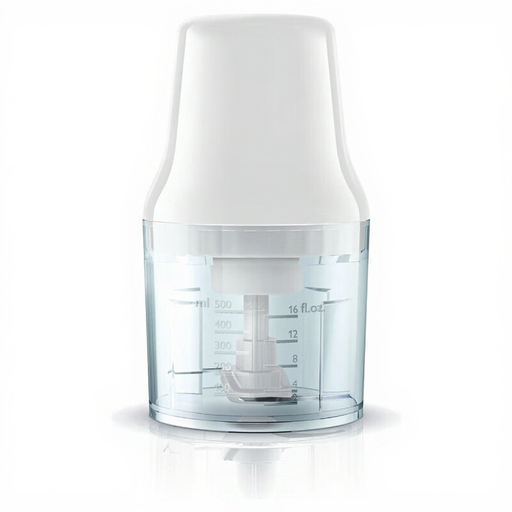
The Philips HR1393/00 has a bowl capacity of 0.7 l, while Philips states a chopping capacity of 0.5 l for this model. A larger batch may therefore need to be processed in several rounds.
Compare the stated working capacity of the exact model with the quantity in your recipe, rather than looking at bowl capacity alone.
Processing several batches takes extra time.
According to the Dutch Consumers’ Association (Consumentenbond), jug blenders are less suitable for thick ingredients and small batches. Adding extra liquid may affect the blending process, but it can also change the firm texture you want.
Decide on your preferred texture first, and also compare a chopper or food processor if you want a firm pâté.
According to the Dutch Government, there is no fixed statutory warranty period in the Netherlands. A manufacturer’s warranty is in addition to your statutory rights.
Read the terms of any additional warranty, and contact the seller if the product is faulty.
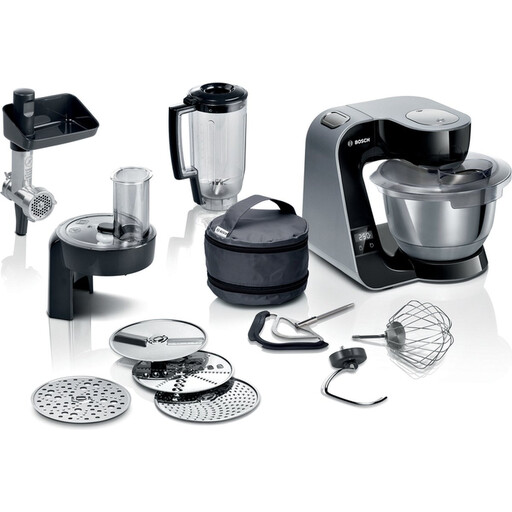
The MultiTalent 3 MCM3100W is a food processor worth comparing if you want to slice and grate as well as chop.
The Daily chopper HR1393/00 is a compact option worth comparing if you mainly want to chop ingredients finely.
According to Tefal, the Optichef HB6418 is a stick blender with a chopper attachment, designed for anyone who wants to do both.
The MultiQuick 5 MQ50236M is a stick blender with a chopper attachment worth comparing for smaller batches.
The Blender Power 3 with mini bowl represents the jug blender option if you also make liquid mixtures.
This selection features choppers and food processors for ingredients and larger batches, as well as a stick blender with a chopper attachment for chopping and blending.
 No image available
Worth comparing if you want to chop mushrooms and are planning a larger batch.
The product title lists 750 W and a 1.8 l bowl; the product description mentions chopping, blending and removable parts. The bowl capacity isn’t a confirmed maximum capacity for pâté.
 No image available
Worth comparing if you want to chop ingredients and also use a stick blender attachment for a smoother result.
The title lists a 500 ml chopping bowl, a 700 ml beaker, up to 1200 W and 15000 rpm. The product description recommends running it for no more than one minute at a time, followed by a one-minute rest.
 No image available
Worth comparing if you’re planning a larger batch and need a chopping disc.
The product information lists a 3.9 l bowl and an included chopping disc. The bowl capacity doesn’t tell you the maximum amount of pâté you can process at a time.
 No image available
Worth comparing if you want to chop mushrooms and check the texture as you go.
The product information lists 800 W, a 2.3 l bowl, two speeds and a pulse function. The bowl capacity isn’t a confirmed working capacity for pâté.
 No image available
Worth comparing if you mainly want to chop mushrooms and flavourings finely.
Philips lists a bowl capacity of 0.7 l and a chopping capacity of 0.5 l for this model. A larger batch may therefore need to be processed in several rounds.
Not without checking the working capacity. Philips lists a bowl capacity of 0.7 l and a chopping capacity of 0.5 l for the HR1393/00; if necessary, process a larger quantity in batches.
That depends on the recipe you’re following. In the Whole Foods Market recipe, the mushrooms are chopped first, then cooked until most of the moisture has evaporated, and finally left to cool. Follow the recipe you’re using for ingredients and food safety.
The Netherlands Nutrition Centre (Voedingscentrum) advises keeping leftovers covered in the fridge at 4 °C for no more than two days, and not leaving perishable food out of the fridge for longer than two hours. Also follow the storage advice for your recipe and ingredients.
No. According to the Dutch Government, there is no fixed statutory warranty period in the Netherlands. If a product is faulty, you can contact the seller; a manufacturer’s warranty is in addition to your statutory rights.
According to the Dutch Government, electrical appliances sold in the EU must carry a CE marking. Check the marking and safety information for the specific appliance; the fact that a product description mentions it doesn’t confirm that the item you receive carries the marking.