For a single mushroom and leek tart, the key things are making sure the tin fits in the oven and that the oven has the setting specified in your recipe, such as conventional top and bottom heat. If you’re baking several tarts, having enough suitable baking positions and choosing the right layout matter more: only then should you decide between a freestanding oven, a built-in model or a professional oven. Before buying, also check the connection requirements and the CE marking on the specific appliance.
Who is this oven guide for?
Workshop host baking several tarts
Match the number of tins and usable oven levels to how many tarts need to go in the oven at once during a baking session. A professional oven with multiple trays is only worth considering if the scale of your workshop and the location justify this type of installation; Unox describes its BAKERLUX range as being for commercial bakery products.
Home baker practising with one tart
Check which oven setting suits your recipe and make sure there’s enough room for your tin. A compact oven may work well for one tin at a time, but check the internal dimensions and tin sizes; the Consumentenbond recommends top and bottom heat for dishes including tarts.
Organiser with limited kitchen space
Compare a freestanding oven that can sit in a suitable spot with a built-in oven that has a suitable housing space and connection available. If using a freestanding model, also check the placement instructions and make sure heat can escape, as advised by the Dutch Fire Service.
What should you look for when choosing?
Start with the baking tin and the number of tarts you want to bake in each batch. Then consider which oven setting and layout suit the recipe and workshop space.
Freestanding domestic oven
A good fit when: there’s no suitable built-in space and your oven tins fit inside the appliance.
Keep in mind: you’ll need a suitable, clear space; according to its manual, the Inventum OV607B is not intended for industrial use.
Built-in oven
A good fit when: you have a suitable housing space and electrical connection.
Keep in mind: check the dimensions required for the specific model; capacity alone doesn’t prove that several filled tins will bake well.
Compact mini oven
A good fit when: you’re baking one tin that fits and want a compact setup.
Keep in mind: check the internal dimensions and the space around the oven; don’t assume it can accommodate several baking positions for a group.
Professional oven with multiple trays
A good fit when: your workshop regularly needs to bake several trays at once and the premises can accommodate the installation.
Keep in mind: tray capacity doesn’t prove that filled savoury tarts will bake evenly on several levels.
Combination microwave oven
A good fit when: saving space or having a microwave is also important.
Keep in mind: some models don’t have bottom heat or have fewer shelf positions; check the features of the exact model.
| What to consider |
What should you check? |
Who is this most important for? |
| Baking several tarts at once |
Measure your tins and check the internal dimensions, tray sizes and usable oven levels. |
If I want to bake several tarts per batch, I need to know how many of my tins will actually fit. Around 33% of consumers prioritise the amount they can bake at once. |
| Oven setting and tart base |
Check for top and bottom heat, separate bottom heat if available, and the instructions in your recipe. |
For one savoury tart, I want to be able to use the setting in my recipe and check the base as it bakes. Around 27% of consumers prioritise the oven setting and control over the tart base. |
| Placement and connection |
For a built-in oven, check the housing dimensions and connection; for freestanding use, follow the placement instructions and keep the heat vents clear. |
If my kitchen has limited space, the oven needs to fit on the worktop or in the existing housing space. Around 20% of consumers prioritise suitable placement and connection. |
| Controls and cleaning |
Compare the timer and controls, included accessories and cleaning method for the specific model. |
When I’m baking repeatedly, I want an oven that’s easy to use and clean afterwards. Around 20% of consumers prioritise ease of use and maintenance. |
Common pitfalls
-
Assuming capacity in litres tells you how many tarts will fit at once
The capacity in litres doesn’t tell you how many of your tins will fit side by side or on different levels.
Measure your tins and compare them with the usable internal space, trays and shelf positions before choosing an oven.
If fewer tins fit than you need, you may have to run extra baking batches during the workshop.
-
Assuming every combination microwave oven has bottom heat
According to the Consumentenbond, some combination microwave ovens only have top heat and fan-assisted heat for oven functions, and may have fewer shelf positions.
Check the features of the exact model if your recipe calls for a specific tart setting.
-
Choosing a domestic oven for intensive commercial use without checking the conditions
The manual for the Inventum OV607B says the appliance is not suitable for industrial use; running a baking workshop does not in itself mean that the use is industrial.
Before choosing a model, compare how often you’ll use it and where it will be installed with the manual and installation documentation.
Oven brands to consider
Inventum
Freestanding domestic ovens, including the OV607B, are an option if you don’t have a suitable built-in space.
- Inventum says the OV607B has a capacity of 60 litres, top and bottom heat, fan-assisted heat, a timer and included baking accessories.
- The manual states that the model is not suitable for industrial use. Capacity alone doesn’t tell you how many tart tins will fit.
Bosch
Built-in ovens such as the HBA534BS0 are worth considering if you have a suitable housing space.
- Bosch lists a capacity of 71 litres, top and bottom heat, bottom heat and 3D Hotair for this model.
- The specified housing dimensions are model-specific; oven capacity doesn’t prove that several filled tins will bake well at the same time.
AEG
The OA5CB42AK built-in oven offers several heating settings.
- AEG lists a capacity of 71 litres, conventional heat, bottom heat and multi-level fan cooking for this model.
- SteamBake is an additional feature; there’s no evidence that steam assistance is necessary or better for this tart. The specified connection rating is 3500 W.
Severin
The compact TO 2068 is an example of an oven for baking one suitable tin at a time.
- Severin lists a capacity of around 20 litres and a power rating of 1500 W for this model, with top and bottom heat and fan-assisted heat that can be used separately or together.
- Check the usable space for your tin; capacity alone doesn’t determine whether it will fit.
Unox
According to Unox, the BAKERLUX SHOP.Pro TOUCH range is designed for commercial bakery products.
- Unox lists four 600 × 400 mm trays for the XEFR-04EU-ETDV.
- Tray capacity doesn’t show how filled savoury tarts will bake on several levels; also check the installation requirements at your premises.
Ovens at Joybuy
This selection includes compact freestanding ovens and built-in ovens for one suitable tin or several baking positions; check the tin dimensions and installation requirements for the specific model.
 No image available
HAUSWIRT C40 Smart convection oven, 35 l
The four-level baking rack could be useful if you’re looking for several baking positions in a compact oven; check that your tins will fit.
The product title lists a capacity of 35 litres, a thermometer and a four-level rack. The product description mentions fan-assisted air circulation and controls via an LED display.
View at Joybuy
 No image available
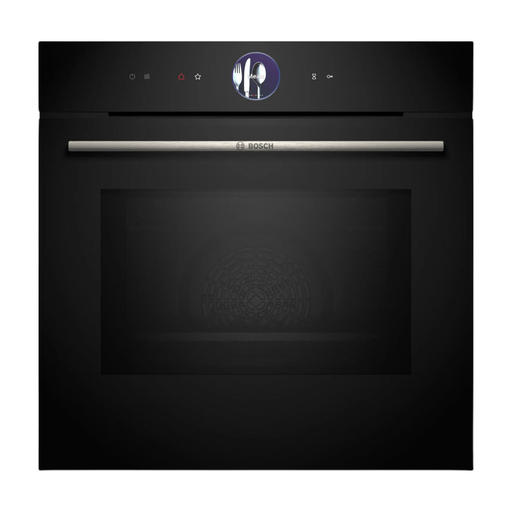
Bosch HMG7361B1, 71 l
This built-in oven could be suitable if the housing space and electrical connection meet its requirements; have these checked against the model’s specifications.
The product information lists a capacity of 71 litres, a temperature range of 30–300 °C, 4D Hotair, five shelf positions and a connection rating of 3,6 kW.
View at Joybuy
 No image available
Bosch HBG536EB4, 71 l
This oven could be suitable if you’re looking for a built-in model and the installation requirements at your premises are compatible with the appliance.
The product information lists a capacity of 71 litres, top and bottom heat, 3D Hotair and baking on up to three levels. The description says installation must be carried out by a qualified electrician.
View at Joybuy
 No image available
Wiggo WMO-E456(W), 45 l
A freestanding mini oven could be suitable if you have a suitable spot and your tins fit inside the oven.
The product title lists a capacity of 45 litres and a power rating of 2000 W. The product information mentions top heat, bottom heat and convection. Place the oven on a stable, heat-resistant surface and keep the ventilation openings clear.
View at Joybuy
 No image available
Rommelsbacher BGS 1400 mini oven
This compact model could suit one tin that falls within the stated maximum diameter.
The product information lists a capacity of 22 litres, top and bottom heat with or without fan-assisted heat, a 60-minute timer and a removable crumb tray. The maximum baking tin diameter is 25 cm.
View at Joybuy
Frequently asked questions
Which oven setting should you use for a mushroom and leek tart?
Follow the recipe you’re using. The Consumentenbond recommends top and bottom heat for dishes including tarts; check the setting, temperature and doneness for your specific recipe.
Should you preheat the oven?
Follow the instructions in your recipe. The Netherlands Nutrition Centre recommends preheating to the stated temperature and notes that this isn’t necessary for every oven dish.
What should you consider when positioning an oven?
For a built-in oven, compare the housing dimensions and connection with the installation instructions. Position a freestanding oven according to its manual and keep the heat vents clear. The Dutch Fire Service points out that electrical appliances need room to release heat.
Does an electric oven in the Netherlands need a CE marking?
Electrical equipment that falls within the scope of Directive 2014/35/EU must have a CE marking when placed on the EU market. The directive covers equipment with a rated AC voltage of 50–1.000 V or a rated DC voltage of 75–1.500 V; check the marking and product information for the specific appliance.
Do food safety rules apply to a baking workshop?
If the organiser sells food or drink to consumers, the Netherlands Food and Consumer Product Safety Authority says that food safety rules also apply to occasional sales by private individuals. Holding a workshop alone doesn’t indicate whether food is being sold.


