
Baking for a group
You need enough usable baking space and a realistic plan if you’re making more than one tart. The Consumers’ Association recommends checking the internal dimensions and measuring your largest oven dish.


First, measure your tart tin and decide how many tarts you want to bake for your coffee morning. The capacity in litres won’t tell you whether your tin will fit, the Consumers’ Association points out. A built-in oven with suitable settings and several shelf levels can be useful for larger batches. If you don’t have a suitable housing unit, a freestanding oven or combination microwave may be a better fit. With a combination microwave, also check that it has an oven function and that your tin can rotate freely.
You need enough usable baking space and a realistic plan if you’re making more than one tart. The Consumers’ Association recommends checking the internal dimensions and measuring your largest oven dish.
You want to know in advance whether your tin will fit and which oven setting to use for the pastry base. The Consumers’ Association says conventional top and bottom heat is suitable for dishes including tarts.
You’re looking for a freestanding appliance and weighing up the worktop space available against the baking capacity and any microwave functions. The Consumers’ Association and Inventum stress the importance of the tin’s size and the usable internal space.
Start by checking the size of your tin and how many tarts you need to make. Then compare the oven settings and where the appliance will go.
| What to consider | What should you check? | Who is this important for? |
|---|---|---|
| Baking capacity for your group | Measure your largest tin and compare it with the internal dimensions and usable shelf levels. Plan extra batches if your oven isn’t suitable for baking everything at once. | If I’m baking for several people, I want to know how many tins will fit in practice and how to plan the batches. Around 36% of consumers say baking capacity is their top priority. |
| Setting for the tart base | Check whether the model has conventional top and bottom heat or a separate bottom-heat setting. Follow your recipe and the oven manual. | For a savoury tart, I want to choose settings that suit my recipe, with particular attention to the base. Around 29% of consumers prioritise suitable baking settings and the base. |
| Positioning and fit | For a built-in oven, measure the housing unit and check the connection requirements. For a freestanding model, also measure the space where it will stand and the internal dimensions. | If my kitchen doesn’t have a suitable housing unit, the appliance needs to fit in the space available. With a built-in oven, I want to know in advance whether the housing unit and connection are suitable. Around 21% of consumers start by considering where the oven will go. |
| Extra features and maintenance | Check whether there’s a separate oven function, compare energy consumption on the same basis and find out how much cleaning is still needed after using a cleaning function. | If I also want to use the appliance for reheating, or need to factor in cleaning and running costs, I want to know what those extra features involve in practice. Around 14% of consumers prioritise multi-purpose use and maintenance. |
The usable internal space may be smaller than you’d expect from the stated capacity. In a combination microwave, the turntable can also affect which tins will fit.
Measure your tin and compare its dimensions with the internal space. If the appliance has a turntable, check that the tin can rotate freely.
If your tin doesn’t fit, you may need a different one or have to bake the tart in extra batches.
A microwave function on its own isn’t suitable for baking. The Consumers’ Association describes baking using the oven or fan-oven function.
Before buying and using the appliance, check which separate oven settings it has.
External dimensions alone don’t tell you everything you need to know about installing a built-in oven. The connection requirements may also matter.
Measure the housing unit and compare the connection requirements with the installation manual before choosing a model.
Depending on your kitchen, you may also need to adapt the connection or get help with installation.
The Consumers’ Association notes that pyrolytic cleaning uses a lot of electricity, while after hydrolytic cleaning you still need to wipe away the loosened dirt with a cloth.
Compare the cleaning method with how often you bake and how much manual cleaning you’re prepared to do.
Built-in ovens for comparing different baking settings and multiple shelf levels; the HBA514BB3 is one specific model to consider.
Built-in ovens for comparing a spacious interior and a range of conventional and fan settings; the OM470ZT is a specific model example.
Freestanding ovens and combination microwaves for those without a built-in housing unit, with different features available on different models.
Compact freestanding mini ovens, such as the Optimo OF444834, for those looking for a small footprint.
This selection includes freestanding ovens and built-in ovens to help you plan batches of tarts. The stated internal dimensions and settings don’t replace checking that your tin will fit.
 No image available
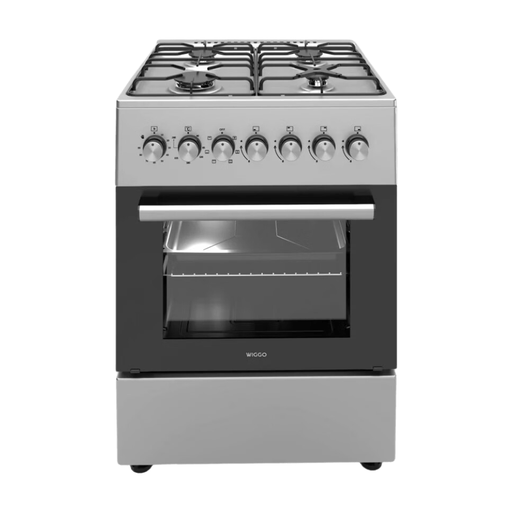
A freestanding gas oven to consider if you don’t have a built-in housing unit. First, check that its internal space will accommodate your tart tin.
The product information lists a capacity of 66 l and six cooking programmes. Installation and connection to the gas supply must be carried out by a professional installer.
 No image available
A freestanding model to compare if you’re planning to bake in several batches. Measure your tin and the space available before you buy.
The product information lists a capacity of 65 l, a turbo fan and four shelf positions.
 No image available
A built-in model to consider if you have a suitable housing unit and want to plan baking across multiple shelf levels.
The product information lists a 66 l capacity, 3D hot air and conventional top and bottom heat. It also mentions baking on three shelf levels at once; check that your tin and preferred arrangement will fit.
 No image available
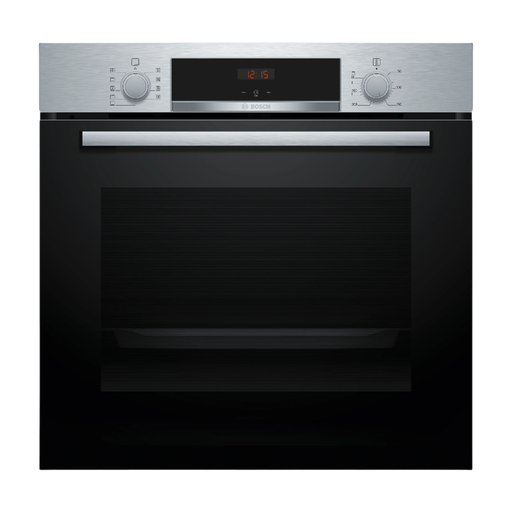
A built-in oven to compare for planned baking batches, provided the housing unit, connection and tin are suitable for the set-up.
The product information lists a 71 l capacity, 3D hot air and separate top- and bottom-heat settings. It also states that you can bake on up to three shelf levels at once.
 No image available
A built-in model to compare if you have a suitable housing unit and want to consider baking on multiple shelf levels.
The product name lists a 71 l capacity. The product information mentions 3D hot air for baking on up to three shelf levels at once; measure your tin and check the installation requirements too.
No. Compare the dimensions of your tin with the internal measurements, and allow for racks and other parts that reduce the usable space. The Consumers’ Association advises that, if you have a combination microwave with a turntable, your tin must be able to rotate freely when using a setting that turns the plate.
The Consumers’ Association says conventional top and bottom heat is a common setting for tarts; a separate bottom-heat setting gives you another option. Follow your recipe and the manual for the selected model when it comes to temperature, shelf position and baking time.
For savoury puff pastry tart, the Netherlands Nutrition Centre recommends storing it in the fridge for no more than two days. Don’t leave leftovers out of the fridge for more than two hours, and reheat them thoroughly until piping hot. For other recipes or products, check the relevant storage advice too.
A manufacturer’s warranty doesn’t replace your statutory rights. ACM ConsuWijzer explains that, for a consumer purchase, the retailer is responsible for offering an appropriate solution if the product doesn’t meet what you could reasonably expect from it.
That depends on how the gathering is organised and how the tart is served. The NVWA says that food businesses must have a food safety plan based on HACCP, and that allergen information is required for non-prepacked foods served in catering businesses and institutions. The NVWA also lists obligations for individuals selling food at markets and events. The description ‘shared coffee morning’ alone doesn’t make it clear which situation applies, so establish the exact arrangements. Safe preparation and storage are always important.