Brands to compare
The features mentioned apply to the specific models and product ranges below, not automatically to every appliance from the same brand.
Bosch
The HBA534BB3 built-in oven is an example of a model to consider if you want to compare different oven settings.
- Bosch lists a capacity of 71 l, top and bottom heat, separate bottom heat and 3D Hot Air for the HBA534BB3.
- The stated capacity doesn’t confirm that your baking tin will fit; compare the internal and housing unit dimensions of your chosen model with your kitchen and tin.
Inventum
The freestanding OV457B is a specific model to consider if you’re not looking for a built-in oven.
- Inventum lists a capacity of 45 l, a maximum temperature of 230 °C, fan-assisted cooking and top and bottom heat for the OV457B.
- Measure your baking tin and follow the model’s installation and safety instructions; capacity alone doesn’t tell you whether the tin will fit.
Panasonic
The NN-CD88 is an example of a combination microwave with microwave, grill and convection functions.
- Panasonic lists a capacity of 34 l, a 360 mm turntable and convection from 100 to 220 °C for the NN-CD88.
- Panasonic lists this model as unavailable. Don’t treat it as a confirmed purchase option; for another model, check the oven settings and dimensions again.
Siemens
The HB278GEB7F built-in oven is a model-specific example to consider if you’re comparing heating settings and cleaning options.
- Siemens lists top and bottom heat, 3D Hot Air and pyrolytic cleaning for this model.
- According to Siemens, some additional settings are only available through Home Connect. Check this requirement if one of those settings is important to you.
AEG
The TU5PB40NCK is an example of a built-in oven with fan-assisted cooking and pyrolytic cleaning.
- AEG describes air circulation and multi-level cooking as benefits of this model.
- These are manufacturer claims, not an independent test of a mushroom and leek tart. Check the oven settings you need and the internal dimensions before choosing.
Joybuy product picks
These product picks focus on built-in ovens and built-in combination ovens. Before buying, check that you have a suitable housing unit and that the internal dimensions and functions work for your tart tin and recipe.
 No image available
Bosch HBA514BB3 built-in oven, 71 l
An option if you’re looking for a built-in oven. Measure your tart tin and check the housing unit before choosing.
The product name lists a capacity of 71 l and 3D Hot Air. The capacity alone doesn’t confirm that your tin will fit.
Joybuy
 No image available
Bosch HMG7361B1 built-in oven, 71 l
An option if you’re looking for a built-in appliance that combines microwave use with baking. Check that its functions suit your recipe.
The product name lists a capacity of 71 l, 3D Hot Air, pyrolytic cleaning and Home Connect. Check the internal dimensions against your tart tin.
Joybuy
 No image available
Bosch HBF133BR0 electric built-in oven, 66 l
An option if you’re looking for an electric built-in oven. Measure your baking tin and check the space available in the housing unit.
The product name lists a capacity of 66 l and five cooking programmes. Compare the settings you need with your recipe instructions.
Joybuy
 No image available
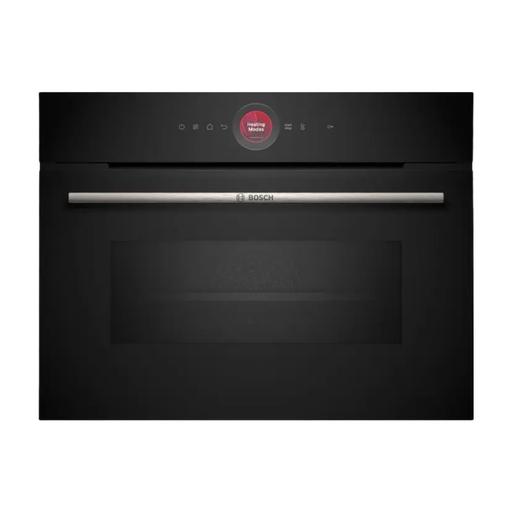
Bosch CMG7241B1 built-in combination oven, 45 l
An option if you want to combine microwave use and baking in one built-in appliance. Check which oven settings are available for your recipe.
The product name lists a capacity of 45 l and a microwave power of 900 W. Compare the internal dimensions with your tart tin.
Joybuy
 No image available
Bosch HBA534BB3 Serie 4 built-in oven, 71 l
An option if you’re looking for a built-in oven with several oven settings. Check the housing unit dimensions and compare the internal space with your tart tin.
For the HBA534BB3, Bosch lists a capacity of 71 l, top and bottom heat, separate bottom heat and 3D Hot Air. The stated capacity doesn’t confirm that your tin will fit.
Joybuy
Frequently asked questions
Does an oven need a fan setting for this tart?
Not necessarily: first check which setting the recipe calls for. According to the Netherlands Nutrition Centre, many recipes assume a conventional oven with top and bottom heat. Fan-assisted cooking is another option, but it doesn’t automatically replace the setting specified in the recipe.
How can I stop the base of a savoury tart from being undercooked?
Follow the method in the recipe you’ve chosen and check that your oven has the required setting. For example, the Netherlands Nutrition Centre explains that one particular vegetable tart recipe starts by baking the base for five minutes and cooking the vegetables in a pan first. Those instructions won’t necessarily apply to another mushroom and leek tart.
What should I consider when positioning and cleaning a freestanding oven?
Follow the installation, safety and cleaning instructions for the exact model. The Inventum OV457B manual, for example, warns that parts can get hot and specifies the use of oven gloves. Don’t use that model’s instructions as a guide to the dimensions of other ovens.
Does a two-year manufacturer’s warranty mean I have no rights after that?
No. According to ACM ConsuWijzer, your statutory rights exist alongside any guarantee from the retailer or manufacturer. If a product doesn’t perform as you could reasonably expect under normal use, the retailer is responsible for offering an appropriate solution. There isn’t a fixed duration that applies to every appliance.
Does every oven or combination microwave have the same European energy label?
No. The European Commission sets out energy labelling rules for ovens under the applicable legislation, with some exceptions, including appliances with a microwave heating function and small ovens. So don’t automatically compare an appliance without a label with a labelled built-in oven.


