
Narrators recording in an echoey room
Recording museum commentary in a rehearsal room, where the distance from the microphone and sound reflections can affect clarity.


Want to record a single narrator in a noisy or echoey rehearsal room? A directional dynamic microphone positioned close to the speaker is a sensible first choice, but no microphone can eliminate echo completely. Choose USB for a straightforward computer setup, XLR if you already have a suitable audio interface, or USB/XLR if you want the flexibility to use both; always make a test recording in the room first.
Recording museum commentary in a rehearsal room, where the distance from the microphone and sound reflections can affect clarity.
Want to record without a separate audio interface and need to work out the connection, positioning and monitoring in a practical way.
Already have XLR recording equipment or want the option to switch between direct USB recording and an XLR setup.
Start with the room’s acoustics and the distance from the speaker. Then choose the connection and check how you can monitor the recording as you speak.
| What to consider | What should you check? | Who is this important for? |
|---|---|---|
| Clarity in the room | Listen for echo and distracting noise where you plan to record; check the pickup pattern and whether the speaker can stay close to the microphone. | If I want my commentary to remain clear despite the echo, I prioritise the room and microphone positioning. Around 36% of consumers put clarity first. |
| Connection | Check the port on your recording device, which cables you need and whether you’ll need an audio interface. | If I want to record directly to a computer without a separate interface, I look for a suitable USB connection. Around 29% of consumers prioritise ease of connection. |
| Monitoring while recording | Check whether the microphone has a headphone output or another suitable monitoring feature, and whether it can be positioned securely. | For long spoken passages, I want to check that my voice and distance from the microphone stay consistent. Around 21% of consumers prioritise monitoring while recording. |
| Switching between setups | Decide whether you’ll actually use USB, XLR or both, and check which features are available with each connection. | If I want to switch between computer recording and an audio interface, now or in the future, I look for both connection options. Around 14% of consumers prioritise this flexibility. |
Reflections will still be audible in the recording; Shure explains that a microphone cannot improve the room’s acoustics.
Make a test recording in the intended location and keep the microphone a practical distance from the narrator.
Finding another recording location or doing extra takes can take more time.
The Audio-Technica AT2040 and AT2040USB have different connection options. One model cannot automatically be used in the same way as the other.
Check the full model number and the recording equipment you have before choosing.
To record with an XLR microphone on a computer, you’ll need a suitable audio interface or mixer.
A manufacturer’s warranty does not, by itself, determine your statutory rights. ACM ConsuWijzer explains that your statutory guarantee also depends on what you can reasonably expect from the product with normal use.
Check the seller’s terms and, if something goes wrong, distinguish between the manufacturer’s warranty and your statutory rights.
The AT2040USB offers a USB option for a single narrator, while the separate AT2040 is designed for an XLR setup.
The PodMic USB offers a dynamic USB/XLR option, while the NT-USB Mini is a compact USB condenser microphone for a more controlled space.
The MV7+ is a dynamic USB/XLR option for anyone who wants flexibility to adapt their recording setup.
This selection includes portable wireless lavalier microphones and USB microphones for spoken-word recordings. Check that the connection and wearing style suit your recording location, and make a test recording first if the room is echoey.
 No image available
A wireless lavalier setup is an option if you want to record commentary while wearing the microphone.
The product name specifies a Type-C interface; check that it’s compatible with your recording device.
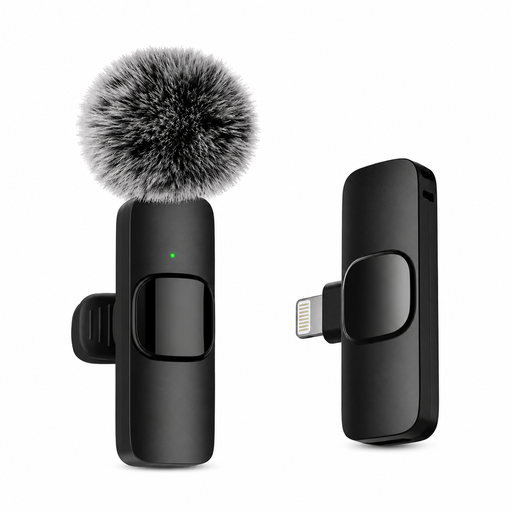 No image available
This wireless clip-on microphone may suit portable recordings of commentary or interviews.
The product name specifies an iOS interface; check that it’s compatible with your recording device.
 No image available
A USB condenser microphone may suit spoken-word recordings if the room is sufficiently controlled.
The product name specifies USB and a cardioid pickup pattern. Focusrite generally describes condenser microphones as more sensitive to ambient noise than dynamic models, so test the room first.
 No image available
The USB connection and cardioid pickup pattern may be useful for spoken-word recordings; assess the recording in your own space.
The product information specifies a condenser capsule. According to Focusrite, condenser microphones generally pick up more ambient noise than dynamic models.
 No image available
The USB connection and stated supercardioid pickup pattern may suit a computer setup for spoken-word recordings.
The product name specifies tap-to-mute control. The description lists compatibility with PC and Mac; check that it works with your recording setup.
No, a microphone won’t improve the room’s acoustics. Shure recommends keeping the microphone a practical distance from the speaker; make a test recording in the intended location to hear the effect of echo and other sounds.
To record on a computer, you’ll need a suitable connection route, such as an audio interface or mixer. Audio-Technica specifies XLR for the AT2040; a USB model can connect directly to a compatible computer.
First, record a short sample in the intended location and listen back through headphones. Audio-Technica lists direct headphone monitoring for the AT2040USB, and RØDE does the same for the NT-USB Mini. As you record, also keep an eye on your distance from the microphone.
According to the Rijksoverheid, when you buy from a business online, you’ll often have a 14-day cooling-off period. ACM ConsuWijzer also explains statutory guarantee rights, which apply when a product doesn’t offer what you could reasonably expect with normal use. This is separate from a fixed manufacturer’s warranty period.
According to the Autoriteit Persoonsgegevens, a sound recording that makes someone recognisable may count as personal data. If an organisation collects and uses this kind of data, it needs a lawful basis under the GDPR; consent is one possible basis. If you’re only recording your own commentary, don’t assume that this gives you general permission to include recognisable voices of other people.