Who is this relevant for?

Visitors who struggle to hear the audio tour

If you want to follow Dutch-language commentary while people are talking in the gallery, focus on fit, noise isolation and speech clarity. Blocking out everything around you doesn’t necessarily need to be the goal.

Visitors exploring together

If you want to respond easily to a companion while listening, compare open-ear models with headphones that have an ambient or conversation mode.

Visitors listening for a long time or in several museums

Fit and controls matter during a longer visit. Do check with each museum whether the audio tour works with your own device and headphones.

What should you consider when choosing?

Closed-back model with ANC

Choose this if: you want to prioritise the audio tour in a noisy gallery and sometimes talk to someone.

Trade-off: ambient mode will let distracting conversations back in, and ANC does not guarantee that voices will be reduced.

Open-ear earbuds

Choose this if: you want to stay aware of your group or hear instructions around you, and the tour is already clear at a modest volume.

Trade-off: the open design lets background conversations through too, which can be a problem if they drown out the recording.

Your own headphones or the museum’s equipment

Choose this if: you want to check first whether the tour works on your own device. The Rijksmuseum recommends bringing your own headphones for its app or buying a pair at the museum; the Van Gogh Museum describes an audio tour that you collect from the audio desk.

Trade-off: the arrangements differ from one museum to another, so check the audio source and connection before buying anything.

What to consider What to look for when buying Who is this important for?
Speech clarity Compare the fit, ANC on and off, and speech clarity at a modest volume. If conversations drown out the Dutch-language commentary, I want to follow the words without continually turning up the volume. Around 36% of consumers give speech clarity top priority in this situation.
Staying connected with others Decide whether you want an open design or an easy-to-reach button for switching between ANC and ambient sound. If I want to respond easily to my group during the tour, being able to hear others matters more to me than blocking out conversations. Around 29% of consumers prioritise staying connected with others.
Comfort Consider pressure on your ears or ear canals, how securely the headphones stay in place as you move, and how easy they are to carry. For a long visit, I want a comfortable model that stays in place as I walk around. Around 21% of consumers give comfort and portability top priority.
Connection and controls Check the museum’s audio source and connection, and try pausing or switching listening modes. If I want to know in advance whether my headphones work with the tour I’ve chosen and are easy to use, I start by checking these things. Around 14% of consumers prioritise connection and controls.

Common buying mistakes

  • Assuming ANC will make voices disappear

    ANC tests don’t always use conversations as background noise. The Dutch Consumers’ Association, for example, refers to engine noise; research testing word recognition used white noise, not people talking in a museum.

    Try spoken audio in a similar environment and compare the fit and ANC settings. Don’t treat laboratory results or brand claims as a guarantee of performance in a museum gallery.

  • Buying an open-ear design to block out conversations

    Open-ear earbuds let ambient sound through. This can help you stay connected with others, but it also lets distracting conversations in.

    Choose open-ear if staying connected comes first; consider a closed-back model if you want to hear the audio tour more clearly.

  • Assuming your own headphones will connect to every museum audio player

    Museums may offer different ways to listen to their audio tours. Headphones that work with one tour won’t necessarily work with another.

    Before buying, check with the museum which audio source and connection you’ll need.

Brands to consider

Sony

The WH-CH720N is an over-ear model with ANC and an ambient sound mode; the LinkBuds Open has an open ring design.

  • Sony lists an ambient sound mode for the WH-CH720N and describes the open design of the LinkBuds Open.
  • The open ring lets conversations through; the presence of ANC doesn’t tell you how much speech in a museum the WH-CH720N will reduce.

JBL

According to JBL, the Tune 770NC has adaptive ANC and Ambient Aware and TalkThru modes.

  • These features are designed to let you switch between listening and hearing ambient sound.
  • JBL’s product description isn’t a measure of speech clarity in a museum; JBL says to use the Headphones app for the modes mentioned.

Shokz

The OpenFit 2 is an open-ear model with ear hooks and physical buttons.

  • Shokz describes the model as having an open design and physical button controls.
  • Open-ear designs let ambient sound through, including when background conversations are making the audio tour hard to hear.

soundcore

The Space One is a closed-back, over-ear model with ANC and, according to soundcore, five adjustable transparency levels.

  • The adjustable levels give you several transparency options.
  • Claims about voice reduction and ANC are based on soundcore’s own comparison and laboratory conditions, not an independent museum test.

Philips

The TAA6709BK/00 is an open-ear model with an ear hook and air conduction.

  • Philips describes the open design as a way to stay aware of ambient sound.
  • That may suit you if you want to stay connected with others, but it doesn’t mean background conversations will be reduced.

Headphones and earbuds at Joybuy

These Joybuy products include wireless ANC earbuds and closed-back over-ear headphones for listening to museum audio on your own device. ANC is a listed feature, not a guarantee that speech will be clearer in a museum.
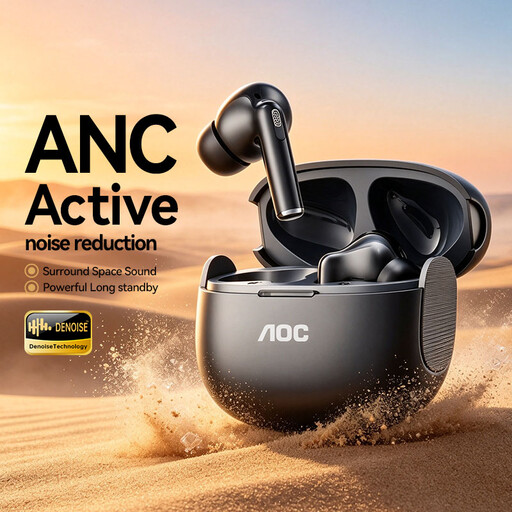
AOC ACT2615 ANC wireless earbuds with charging case

AOC ACT2615 ANC Wireless Earbuds

The listed ANC feature may be useful if conversations are making the audio tour hard to hear, but it doesn’t tell you how much speech in a museum will be reduced.

Bluetooth 6.0, touch controls and a charging case with a digital display are listed.

View at Joybuy

Samsung Galaxy Buds4 Pro True Wireless, black

Samsung Galaxy Buds4 Pro True Wireless, Black

This closed-back in-ear model lists ANC for personal listening; the specification doesn’t guarantee that it will reduce conversations in a museum.

The product description lists up to 6 hours of playback with ANC on and 26 hours in total with the charging case.

View at Joybuy
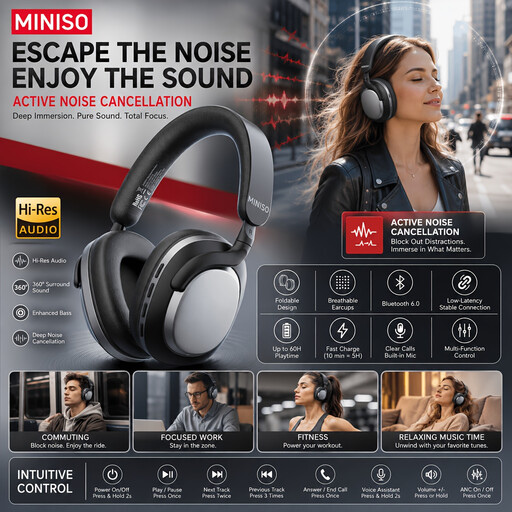
MINISO MG210 wireless over-ear noise-cancelling headphones

MINISO MG210 Wireless Noise-Cancelling Over-Ear Headphones

The over-ear design and noise cancelling may suit anyone looking for a closed-back model; the listed feature doesn’t prove it will reduce conversations in a museum.

The title lists 24 hours of battery life and the colour Black.

View at Joybuy
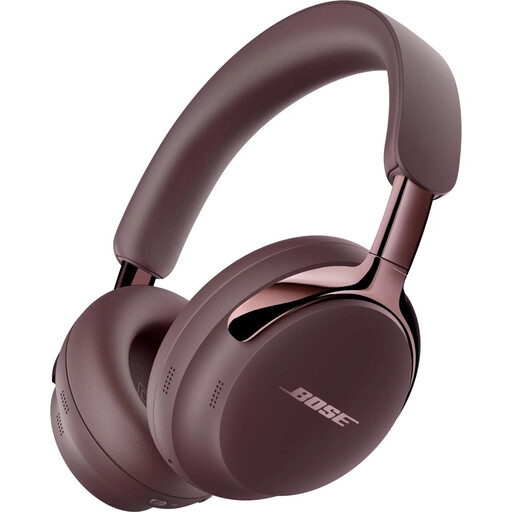
Bose QuietComfort Ultra Headphones (2nd Gen), Cherry Chocolate

Bose QuietComfort Ultra Headphones (2nd Gen), Cherry Chocolate

These over-ear headphones list active noise cancelling for personal listening, but don’t guarantee any specific reduction in museum speech.

The product description mentions Bluetooth 5.4 and a detachable cable with USB-C and 3.5mm connections.

View at Joybuy
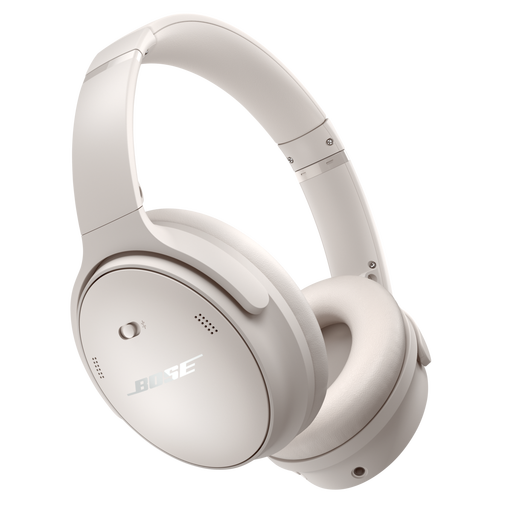
Bose QuietComfort Wireless Bluetooth Noise Cancelling Headphones, white

Bose QuietComfort Wireless Bluetooth Noise Cancelling Headphones, White

This over-ear model lists active noise cancelling and a transparency mode for switching between listening and ambient sound.

The product description mentions on-earcup controls and comfort for longer listening sessions.

View at Joybuy

Frequently asked questions

Can I use my own headphones with every Dutch museum audio tour?

Don’t assume so. The Rijksmuseum recommends using your own headphones with its app; the Van Gogh Museum describes an audio tour that you collect from the audio desk. Check with the museum which audio source you’ll be given and which connection you’ll need.

How should I set up my headphones if conversations are still distracting?

Start with a good fit and a modest volume. With a closed-back model, compare ANC on and off, and switch on an ambient or conversation mode when you want to hear someone. The World Health Organization advises keeping the volume below 60% of the maximum when listening to personal audio regularly; this is listening advice, not a legal product limit.

What should I do if my product is faulty, and do I need an extended warranty?

If a product doesn’t meet expectations, the seller must provide a solution, according to the Dutch government. An extended warranty may be worthwhile if its terms offer more than your statutory rights, so check exactly what the additional cover includes.

What product rule applies to wireless headphones sold in the Netherlands?

For radio equipment covered by European requirements, the manufacturer must affix the CE marking after the conformity assessment, according to the Dutch Authority for Digital Infrastructure. Check the marking on the specific product; a CE logo doesn’t prove that ANC works well or that the headphones are suitable for a particular museum audio tour.

How do I look after open-ear headphones?

Follow the instructions for your chosen model when cleaning and charging it. Guidance may differ depending on the design, so don’t use general care advice instead of the model-specific instructions.
