
Vandaag of morgen in huis

Kwaliteit gegarandeerd

Welkomstaanbiedingen ontgrendelen: GRATIS bezorging | Tot 80% korting | Gratis 30 dagen JoyPlus-proefperiode
Download de app
A tub of children's multivitamin gummies can look appealing at first glance. Bright packaging, a fruity flavour and terms such as “immune support”, “energy” or “growth” can make the choice seem easy. However, children's vitamins vary considerably in recommended age, dosage, sugar content and ingredients.
The key question is not which tub looks the most appealing, but which formulation suits your child and their everyday diet. Always use a supplement as an addition, not a substitute for a varied diet. If you are unsure, or your child takes medication or has a medical condition, check the information with a GP or pharmacist.
“For children” does not mean that a product is suitable for all ages. Some vitamins are intended for children aged 3 and over, while others are only suitable from the age of 5 or 6. The recommended amount can also vary, from one gummy a day to two chewable tablets.
Always check the exact wording on the label:
Sugar-free children's vitamins often contain sweeteners such as maltitol, sorbitol, xylitol or sucralose. When consumed in excess, polyols can have a laxative effect. Gummies containing sugar or glucose syrup also require extra attention to daily oral care.
Check the full ingredients list, not just the front of the packaging. Also check for:
For example, a product containing pectin may be suitable for vegetarians, whereas a gummy containing gelatine is not. “Vegan children's vitamins” and “vegetarian children's vitamins” are therefore not the same thing.
According to information provided by brands, vitamin C, vitamin D, zinc or B vitamins may support certain normal bodily functions. This does not mean that a supplement prevents illness, improves learning performance or solves sleep problems.
Look at the amount per daily dose. A high value on the packaging is not automatically more useful. Pay particular attention to how it combines with other supplements, such as separate vitamin D for children, vitamin C or omega 3 for children. Taking the same nutrients twice may be unnecessary.
Do not compare only the number of gummies or tablets. Work out how many days a pack will last:
Always follow the dosage on the current label. Product information may vary between versions.
Vitamin D is included in many formulations. According to the product descriptions of various brands, a daily dose may contain, for example, 5 or 10 micrograms of vitamin D3. UK recommendations may vary depending on age and circumstances. Check whether you are already giving your child a separate vitamin D supplement.
For vitamin C and zinc, brands often state that these contribute to the normal function of the immune system. Treat this as an authorised nutrition claim for the nutrient concerned, not as a promise that your child will get ill less often.
Iodine, iron, selenium and calcium may also be included in a multivitamin. The amount is often intended as a supplement and does not automatically cover the full requirement. A multivitamin is not a replacement for dairy products, fish, vegetables, fruit or other foods either.
Choose a format that your child can take safely:
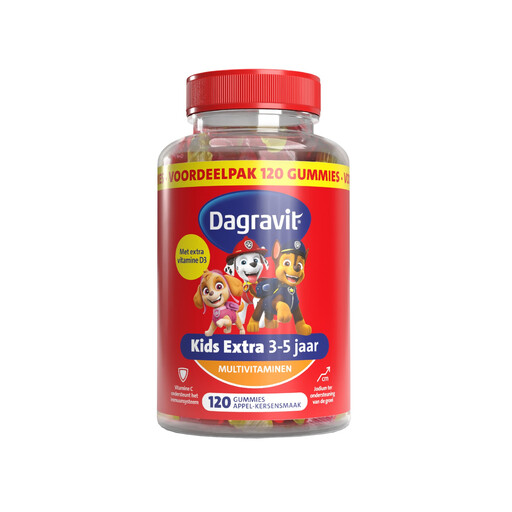
Why it suits this profile: The dosage is intended for children aged 3 and over, and the pack contains 120 gummies. This makes it easy to compare for parents looking for a straightforward starting point.
The product description states an age limit, daily dosage and ingredients list. According to the label, the daily dose of 2 gummies contains 10 micrograms of vitamin D and no artificial colours or flavourings.
Apple and cherry flavour, 120 pieces, plus vitamin C, zinc and iodine listed in the formulation.
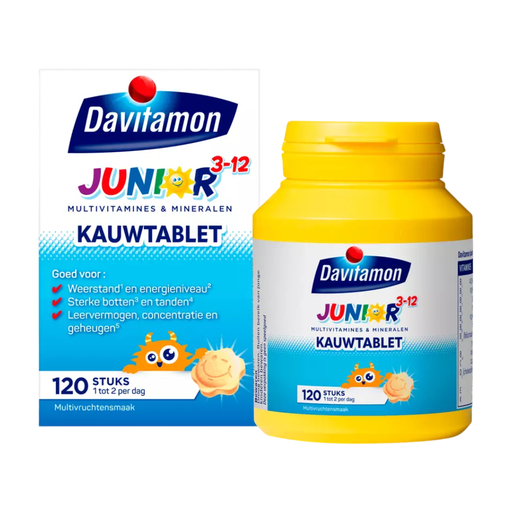
Why it suits this profile: Suitable for parents looking for a broad mix of vitamins and minerals in a sugar-free chewable tablet for children aged 3 and over.
The product information specifies 1–2 tablets per day, an age limit and use under supervision. The formulation uses sweeteners instead of sugar; excessive intake may have a laxative effect.
120 chewable tablets, sugar-free according to the product description, with a formulation containing vitamin D3, C, B vitamins and minerals, among other nutrients.
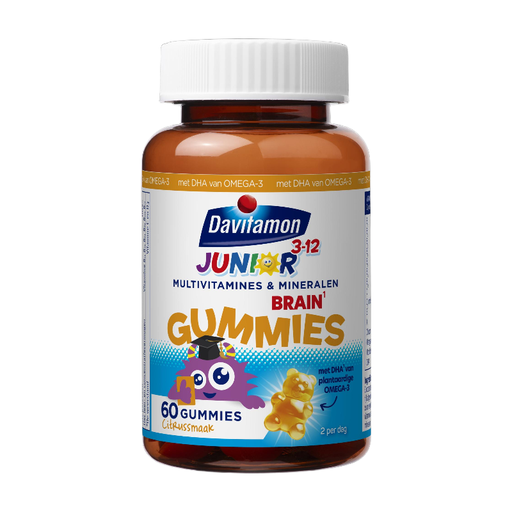
Why it suits this profile: An option for parents who want to include plant-based omega 3 in gummy form alongside a multivitamin for children aged 3 to 12.
The product description states a fixed daily dose of 2 gummies and explicitly lists milk as an ingredient. This makes it easier to assess the formulation alongside allergies and other supplements.
According to the label, contains 55 mg DHA from algal oil per 2 gummies, plus vitamin D3, vitamin C and B vitamins. Does not contain gelatine; the description states that it is suitable for vegetarians.
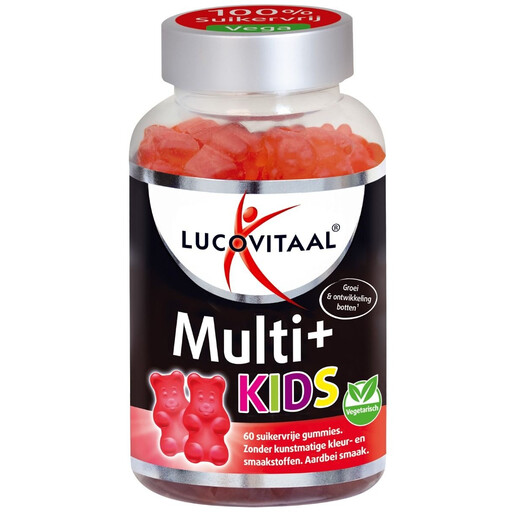
Why it suits this profile: This option is intended for children aged 5 and over and suits parents looking for a vegetarian, sugar-free strawberry-flavoured gummy.
The packaging states one gummy per day, 60 pieces and an age limit of 5 and over. According to the product information, the sweetener maltitol may crystallise; the description states that this does not affect the quality.
Sugar-free according to the product description, vegetarian, with natural strawberry flavour and vitamins C, D3, E, K and B vitamins.
We have put together a complete, up-to-date list of products that fully meet these strict selection criteria and the applicable European safety regulations.
Not every child needs a multivitamin as a matter of course. A varied diet is the foundation. There is specific UK advice on vitamin D for certain ages and circumstances. Discuss additional supplements with a GP or pharmacist if your child has a limited diet, an allergy, takes medication or is already taking several supplements.
This varies from product to product. Some packs, for example, state that they should be used within 60 days of opening, while others specify a shorter period. Store gummies and chewable tablets in a dry, dark place at room temperature. Keep the tub tightly closed and out of the reach of children.
Compare the price per daily dose, not just the price per pack. Divide the purchase price by the number of days of use. Also check whether one or two pieces per day are recommended. A larger pack is not automatically better value when the dosage is higher or the shelf life after opening is limited.
