What should you look for when choosing?
First, decide what matters most to you when adding multiseed rusks to your shop. Then compare the ingredients and nutritional information of the varieties that fit the bill, using the same per-100 g basis each time.
| What to consider |
What should you check? |
Who is this most important to? |
| Wholemeal flour and fibre |
Check whether wholemeal flour appears first in the ingredients list and compare the fibre per 100 g. |
If I regularly eat rusks for breakfast or lunch, I want to know what flour they contain and how much fibre the variety lists. Around 40% of shoppers prioritise this combination. |
| Seeds and kernels |
Compare the types of seeds listed and their stated percentages; ‘multiseed’ doesn’t indicate a set quantity. |
For the texture, I’d rather choose based on the specific mix than the name on the front of the pack. For around 40% of shoppers, the types and quantities of seeds are the main reason for choosing. |
| Ingredients and allergens |
Read the current ingredients and allergen information, especially for sesame, egg and cereals containing gluten. |
If I need to avoid certain ingredients, checking these comes before my preference for a particular seed mix. For around 20% of shoppers, this is their top priority when buying. |
Products can differ even within the same category. Albert Heijn lists wholemeal wheat flour in its AH Biologisch Volkoren multiseed rusks, with 11 g of fibre per 100 g. In the Bolletje Vezelrijk Beschuit Meerzaden variety described by Jumbo, wheat flour appears first, despite the seeds listed. If you also want to compare protein or salt, you can check those values on the packs without using them to draw conclusions about the overall nutritional value.
Multiseed rusks at Joybuy
These two rusks are worth considering if you’re looking for seeds in the ingredients when doing a top-up shop. Choose between the packs based on your preference for the seed mix and the nutritional information on the current label; the stated quantities and weights refer to different pack sizes.
 Image unavailable
Bolletje Multiseed rusks, 10 pieces
A pack of 10 to consider if you’re looking for rusks with seeds. Check the current packaging for the seeds, flour types and allergens listed for this variety; don’t assume it’s wholemeal based on the name.
View at Joybuy
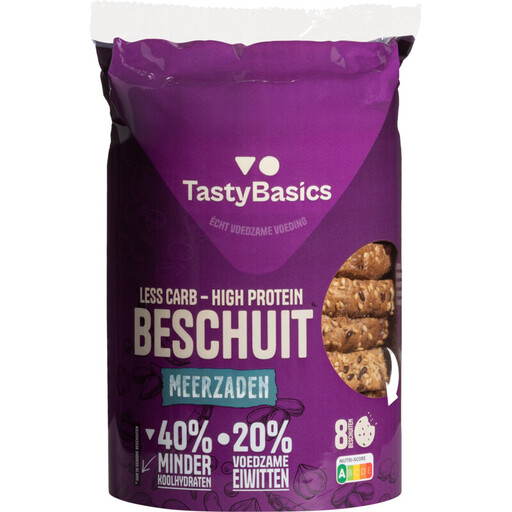 Image unavailable
TastyBasics Multiseed rusks, 184 g
A 184 g pack to compare if you want to look at protein and fibre as well as the seeds in multiseed rusks. Read the nutritional information per 100 g and check the current ingredients and allergen information before choosing.
View at Joybuy
Frequently asked questions
Are multiseed rusks always wholemeal?
No. Seeds don’t automatically make rusks wholemeal: Albert Heijn lists wholemeal wheat flour for the AH Biologisch variety examined, while wheat flour appears first in the Bolletje Vezelrijk Meerzaden variety examined, according to Jumbo. So check the flour on the pack you choose.
Which allergens should I check in rusks with seeds?
At the very least, check the current information for sesame, egg and cereals containing gluten if these ingredients are relevant to you. The varieties examined differ in whether they contain egg, among other things, so don’t rely on the product name alone.
Does ‘salt’ on the label mean the rusks contain iodine?
No. The word ‘salt’ alone doesn’t confirm that the product contains iodine. Check the pack for further information or ask the manufacturer to confirm if this affects your choice.
How should I store an opened pack of rusks?
Store opened rusks in a dry, airtight container and follow the storage instructions on the pack you’ve chosen. This helps limit exposure to moisture, which can affect their crispness.


