
Parents comparing seed rusks
You’re looking for a crunchy lunch base with seeds and want to compare fibre, protein, salt and portion size on the label.


For a school lunch, first choose a multiseed rusk whose allergens are suitable for your child and comply with the school’s rules. Then compare the nutritional information and portion size, and assess chocolate sprinkles separately as a sweet topping. The three rusks discussed here list cereals containing gluten and sesame, while the Albert Heijn and TastyBasics varieties discussed also list egg.
You’re looking for a crunchy lunch base with seeds and want to compare fibre, protein, salt and portion size on the label.
If your child needs to avoid an allergen or the school has rules about food brought in from home, the current ingredients list matters more than the words ‘multiseed’. For the varieties discussed, pay particular attention to wheat, sesame and egg.
You want to know how rusks with a sweet topping fit in with the rest of the packed lunch. The Netherlands Nutrition Centre recommends wholegrain products for primary school lunches, among other things, so consider your choice of topping separately.
Start with allergens and school rules. If the rusk is suitable, you can then weigh up the topping, nutritional information and how to pack it.
| What to consider | What to check when buying | Who it matters to |
|---|---|---|
| Allergens and school rules | Check the allergen information for the exact variety on the current packaging and ask what rules the school follows. | If your child or their class needs to avoid certain ingredients, you’ll want to know whether the rusk can go in the lunchbox before packing it. This is the first thing around 36% of consumers consider. |
| Chocolate sprinkles in the lunchbox | Decide how much sweet topping to pack and consider the other food and drink in the lunchbox. | If you want to pack chocolate sprinkles, you’ll want to weigh that choice against the rest of the lunch. Around 29% of consumers put this consideration first. |
| Nutritional information | Compare fibre and protein per 100 g on a like-for-like basis, then check how much one rusk weighs. | When choosing between different seed rusks, you’ll want to compare their nutritional values without confusing portion sizes. This is the main question for around 21% of consumers. |
| Keeping them whole and crunchy | Check whether the rusk fits in the lunchbox and how you can protect it from breakage and moisture. | If the lunch is carried in a bag, you’ll want the rusk to still be easy to top and eat at school. This practical concern comes first for around 14% of consumers. |
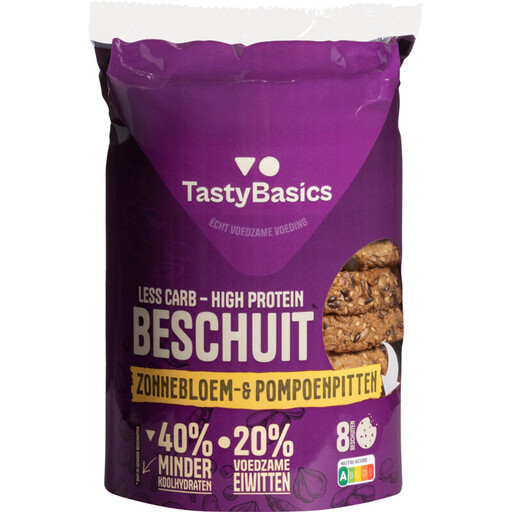
A higher fibre content doesn’t answer the question about allergens. TastyBasics lists 11 g of fibre per 100 g for its rusks with sunflower and pumpkin seeds; Jumbo lists 10 g for Bolletje Vezelrijk Beschuit Meerzaden, and Albert Heijn lists 7 g per 100 g for AH Meerzadenbeschuit. Compare these figures only once you’ve checked that the ingredients on your chosen pack are suitable.
The rusks discussed list wheat or other cereals containing gluten and sesame; some also list egg. The product name doesn’t tell you whether a variety is suitable for an allergy or a class rule.
Check the current packaging for the exact variety and ask the school which ingredients or warnings its rules cover.
The topping and the rest of the lunchbox are separate choices. The Netherlands Nutrition Centre’s list of foods for school lunches classifies chocolate sprinkles as an occasional choice.
Compare the rusk using its own nutritional information, then decide separately whether to pack chocolate sprinkles and how much. Also consider the rest of the lunch, such as fruit or vegetables and an unsweetened drink.
The Netherlands Food and Consumer Product Safety Authority sets out the conditions under which iodine compounds may be added to these bakery products through baker’s salt. This doesn’t mean every multiseed rusk contains iodised baker’s salt.
Don’t base your decision on an assumed iodine content; use product-specific information only.
Rusks can break or lose their crunch when exposed to moisture, particularly if they’re in a lunchbox for a while.
Use a sturdy compartment or small container, and keep moist toppings separate if you want the rusk to stay crunchy.
AH Meerzadenbeschuit is a specific option for comparing the ingredients and nutritional information of seed rusks.
The rusks with sunflower and pumpkin seeds are a specific variety in the TastyBasics range.
According to the product information, Bolletje Vezelrijk Beschuit Meerzaden is a larger-sized rusk.
De Ruijter is relevant here as a separate choice of chocolate sprinkles, not as a rusk base.
These Joybuy products are seed-based rusk options for anyone choosing a base for lunch. Chocolate sprinkles are a separate topping; check the packaging and any school rules before packing them.
 No image available
A rusk option if you’re looking for sunflower seeds in your lunch base. Check the allergens on the current packaging and choose your topping separately.
 No image available
An option if you want to compare multiseed rusks by nutritional value and size. Jumbo lists 10 g of fibre and 17 g of protein per 100 g for this variety; the product information lists wheat or gluten and sesame. Check the current packaging and make sure the rusk fits in the lunchbox.
 No image available
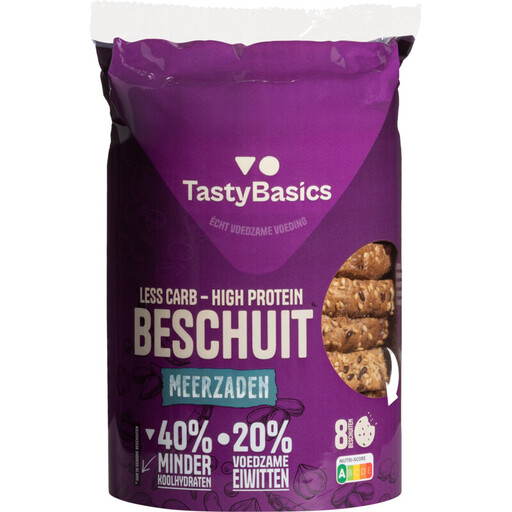
A multiseed rusk to consider as a seed-based lunch option. The pack contains 184 g; to compare per rusk, check the portion size, nutritional information and allergens on the packaging of your chosen product.
Don’t assume they’re suitable: the three varieties discussed list cereals containing gluten and sesame. The Albert Heijn and TastyBasics varieties discussed also list egg. Check the allergen information on the current packaging for the exact product and follow the school’s rules.
Chocolate sprinkles are a choice of topping; they don’t affect the nutritional value of the rusk. The Netherlands Nutrition Centre classifies chocolate sprinkles or chocolate flakes as an occasional choice on its list of foods for school lunches. Also check what rules the school has for food brought in from home.
No, the fibre in the rusk doesn’t change the composition of the chocolate sprinkles. Compare the rusk and topping separately, and consider the other foods and drinks in the lunch when putting it together.
No, you can’t assume that just because they’re Dutch bakery products. The Netherlands Food and Consumer Product Safety Authority sets out the conditions for adding iodine compounds to this product group through baker’s salt; that doesn’t mean every variety uses that salt. Base your choice on product-specific information.