
Stocking-up shopper who looks at fibre
You buy rusks for several breakfasts or lunches and compare fibre per 100 g, rather than relying on the front of the pack.


When adding multi-seed rusks to your weekly shop, choose based on what matters most to you: fibre or wholegrain, protein and carbohydrates, pack size or relevant allergens. Compare nutritional values per 100 g and check the number of rusks, ingredients and storage advice. Visible seeds alone won’t answer these questions.
You buy rusks for several breakfasts or lunches and compare fibre per 100 g, rather than relying on the front of the pack.
You want to compare the nutritional values of multi-seed rusks, while also checking the ingredients and pack size.
If wheat or other gluten-containing cereals, sesame or egg are relevant in your household, check the current ingredients every time you buy.
First decide which feature matters most for your weekly stock-up. Then compare the nutritional information on the same basis and check whether the pack suits the number of times you plan to eat it.
| What to look for | What to check when buying | Who is it important to? |
|---|---|---|
| Fibre and wholegrain | Compare fibre per 100 g; check separately whether the product is wholegrain. | When I buy rusks for several days, I want to be able to compare fibre and, if I choose, pick a wholegrain option. Around 33% of consumers make this their priority when choosing. |
| Protein and carbohydrates | Check both values per 100 g in the nutrition table. | I’m looking for rusks where these two nutritional values are what determine my choice. For around 25% of consumers, protein and carbohydrates come first. |
| Weekly stock-up | Check the weight, number of rusks and storage advice once opened. | I want to know how many of my planned breakfasts and lunches one pack will cover. This is the main consideration for around 25% of consumers. |
| Allergens | Read the current ingredients and the separate information about possible traces. | If someone at home needs to avoid a relevant allergen, I want to check the recipe before serving the rusks. Around 17% of consumers make this check their priority. |
Fibre content varies between multi-seed rusks. The number of seeds you can see is no substitute for checking the nutrition table.
Compare fibre per 100 g and check separately whether wholegrain is one of your buying criteria.
A pack of eight rusks may cover fewer eating occasions than a pack of ten, depending on how many you have at a time.
Compare the number of rusks, pack weight and how much you plan to use over the week.
The varieties reviewed include sesame and gluten-containing cereals; some also contain egg. Recipes can change.
Check the current allergen information on the pack when you buy and before you eat the rusks, even if you’ve bought them before.
The presence of seeds or a mention of salt doesn’t tell you which salt was used in a particular rusk. According to the Netherlands Nutrition Centre, baker’s salt is not compulsory in bread.
If the type of salt used matters to you, check the product-specific ingredient information or ask the manufacturer.
The Vezelrijk Beschuit Meerzaden reviewed here is an option to compare for fibre when shopping for breakfast and lunch.
The range reviewed includes a standard multi-seed rusk and an organic wholegrain variety.
The multi-seed rusks reviewed offer shoppers comparing protein and carbohydrates a different combination of nutritional values to consider.
The Robuust Beschuit Spelt reviewed combines a spelt base with seeds and kernels.
The Beschuit luxe naturel met zaden reviewed is another type of rusk with seeds to compare when doing your weekly shop.
These two packs suit different priorities when stocking up for the week: the number of rusks and comparing nutritional values. Always check the current product packaging for precise nutritional and allergen information.
 Image unavailable
For anyone who wants to factor the number of rusks into their breakfast or lunch plans. This pack contains 10 pieces; check the current ingredients if allergens are relevant to your household.
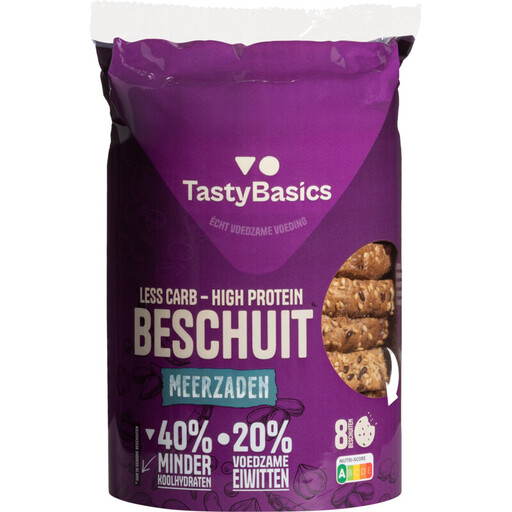 Image unavailable
For anyone who wants to compare protein and carbohydrates in multi-seed rusks. The pack contains 184 g; check the current nutrition table and ingredients before choosing this variety.
No. Seeds and wholegrain are different product characteristics. If you’re looking for wholegrain rusks, check the product description and ingredients; also compare the fibre per 100 g.
For the varieties reviewed, gluten-containing cereals and sesame are the main allergens to look out for; several also contain egg. Check the current packaging, including any information about possible traces, for the specific product you’re buying.
Seal the pack securely after opening and follow the storage advice on it. The products reviewed recommend storing them in a cool, dark and dry place.
No, you can’t tell from the seeds or a mention of salt. The Netherlands Nutrition Centre says baker’s salt is not compulsory in bread; for a particular rusk, check the ingredient information or ask the manufacturer which salt was used.