
Parents looking for a crunchy snack base
Rusks can make a good base for a snack during the autumn half-term. The Netherlands Nutrition Centre also lists fruit, vegetables and wholegrain products as snack options for children.


Choose multiseed rusks if you’re looking for a crunchy snack base with seeds. If wholemeal flour or fibre matters to you, compare the ingredients and fibre per 100 g for the specific variety. For an autumn half-term snack, think about the topping too, and check the allergens on the packaging.
Rusks can make a good base for a snack during the autumn half-term. The Netherlands Nutrition Centre also lists fruit, vegetables and wholegrain products as snack options for children.
If you’re looking for rusks with seeds and keeping an eye on fibre, compare the ingredients list with the nutritional information per 100 g. Albert Heijn’s product information shows that multiseed varieties can have different fibre contents.
With multiseed rusks, sesame, egg and cereals containing gluten are among the allergens to look out for. The allergens vary by product, so always check the packaging for the specific variety.
First decide which feature matters most for your snack occasion. Then compare the specific products by checking their labels, rather than relying only on words such as ‘multiseed’ or ‘wholemeal’ on the front of the pack.
| What to consider | What to check when buying | Who is this most important for? |
|---|---|---|
| Fibre and wholemeal flour | Compare fibre per 100 g and check whether wholemeal flour is listed in the ingredients. | If I’m looking for seeded rusks for a snack, I want to know how much fibre the variety I’ve chosen contains. This comparison is the top priority for around 42% of consumers. |
| Allergens and ingredients | Read the latest allergen information on the packaging for the specific product, including any warnings about cross-contamination. | If I need to avoid an ingredient, I need to check whether these particular rusks are suitable. This is the first priority for around 33% of consumers. |
| The snack as a whole | Think about what you’ll serve with the rusks and when; once opened, follow the storage advice. | For a snack with children, I want to choose more than just the rusks: I also need to think about what they’ll eat with them. Around 25% of consumers give priority to the occasion when they’ll be eaten. |
According to Albert Heijn, AH Multiseed Rusks contain 7 g of fibre per 100 g, while AH Organic Wholemeal Multiseed Rusks contain 11 g per 100 g. So the product name doesn’t tell you how much fibre a variety contains.
Compare the figures per 100 g and check separately whether wholemeal flour is listed in the ingredients.
The multiseed varieties described contain ingredients including sesame, egg and cereals containing gluten. Similar product names don’t mean the ingredients are the same.
If you have a food allergy, check the latest packaging, including any warnings about cross-contamination. Don’t rely solely on a product photo or a label you’ve read before.
The topping and anything else you eat also matter when it comes to a snack. The Netherlands Nutrition Centre lists fruit, vegetables and wholegrain products, among other things, as snack options for children.
Choose the rusks as a base, then decide what to serve with them and how the snack fits into the day.
The fact that a product is a rusk doesn’t tell you which type of salt a particular variety contains. So don’t assume it contains iodised baker’s salt when making your choice.
If this matters to you, check the ingredients list on the packaging for the specific product.
Bolletje offers Vezelrijk Multiseed Rusks, among other products, a variety made with different seeds.
The range includes both Multiseed Rusks and Organic Wholemeal Multiseed Rusks, so compare the varieties individually.
TastyBasics offers multiseed rusks whose nutritional information and ingredients can be compared by specific variety.
These wholemeal and multiseed rusks can make a crunchy base for a snack during the autumn half-term. If these features affect your choice, compare the ingredients, fibre and allergens for the specific variety.
 Image unavailable
For anyone looking for wholemeal rusks as a crunchy snack base. The pack contains 10 pieces; check the ingredients and allergens on the packaging if you want to avoid seeds or certain types of grain.
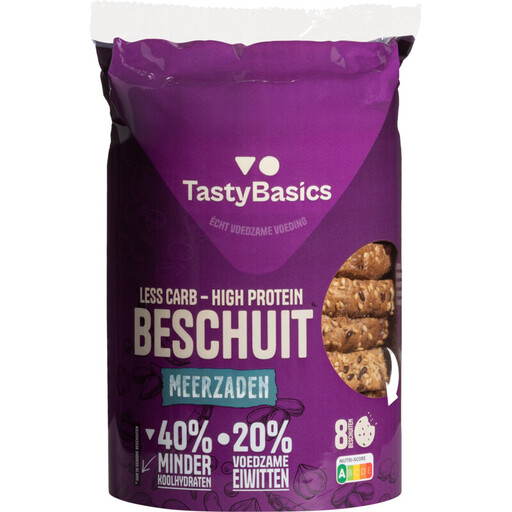 Image unavailable
For anyone looking to compare multiseed rusks as a base for a snack. The pack contains 184 g; if you have an allergy, check the ingredients and allergens for this variety.
 Image unavailable
For anyone looking for rusks made with several seeds as a crunchy snack base. The pack contains 10 pieces; compare the fibre per 100 g and check the allergens on the packaging.
Think of multiseed rusks as part of the whole snack, rather than focusing only on the seeds. Consider the portion and the topping too; the Netherlands Nutrition Centre lists fruit, vegetables and wholegrain products, among other things, as snack options for children.
At the very least, check whether your chosen variety contains sesame, egg or cereals containing gluten, as these are found in the multiseed products described. Read the latest ingredients list and any warnings about cross-contamination on the packaging.
Check the ingredients list for the specific rusks you’re buying. Don’t assume they contain iodised baker’s salt just because they belong to this product category or were made in the Netherlands.
Follow the storage advice on the packaging. For the Bolletje Vezelrijk multiseed variety described, the advice is to store it in a cool, dry place, away from light, and keep it sealed.