Who is this TV guide for?

A group on a wide sofa

If not everyone playing or watching is sitting directly in front of the TV, viewing angles and visibility from the seats at either end matter. RTINGS.com highlights the importance of wide viewing angles in a spacious seating arrangement.

Players sitting further from the screen

If you want to follow the game clearly from your seat, start by comparing the screen size and position with your viewing distance. Consumentenbond also lists refresh rate as a factor to consider when choosing a TV, alongside screen size.

Players in a bright room

When there’s plenty of daylight or you play for long sessions, reflections and the picture from the side are worth considering. If you’re thinking about OLED, also take the risk of leaving the same static image on screen for a long time into account; RTINGS.com discusses this risk with OLED TVs.

What should you look for?

What to consider What should you check? Who should prioritise this?
Viewing angles for multiple seats Compare the viewing angles of the exact model and check the picture from the seats at either end. When we’re spread out along a wide sofa, I want to be able to follow the game clearly from the side too. Around 36% of consumers put viewing angles first.
Screen size for your set-up Measure your viewing distances and the available wall or furniture space before choosing a size. When we’re sitting at different distances, I want a screen that’s easy for everyone to see and fits the room. Screen size is the main reason for buying for around 29% of consumers.
Responsiveness while playing Compare input lag in Game Mode using the signal setting you’ll use; also check your console’s connections. When I need to react to what’s happening in the game, I look at responsiveness and what my equipment can actually deliver. Fast gaming response is the top priority for around 21% of consumers.
Daylight and prolonged gameplay Assess reflections and the picture from the side in similar lighting; with OLED, also consider prolonged static images. When playing during the day or for long sessions, I want to know how the screen performs in my room. Lighting conditions or having the same game image on screen for a long time are the main reason for buying for around 14% of consumers.

Common buying mistakes

  • Judging picture quality only from directly in front of the TV

    With a wide seating arrangement, people sitting at the sides may see a different picture. RTINGS.com points out that wide viewing angles are important when people watch from different parts of the room.

    Check the viewing angles of the exact model and view the picture from the seats at either end.

  • Assuming a high stated Hz rate means better co-op gameplay

    Refresh rate and input lag are different features. RTINGS.com explains that Game Mode can reduce input lag by skipping certain types of image processing.

    Check what your connected gaming equipment can deliver and compare input lag using the signal setting you’ll use.

  • Choosing OLED or mini-LED based on a single brightness claim

    A stated HDR peak brightness doesn’t tell you everything about how the picture looks in daylight. Tweakers considers the tested LG C6 and Samsung S90H less suitable for brightly lit living rooms; that assessment applies to those tested models. Prolonged static images are also a consideration with OLED, as RTINGS.com explains.

    Compare reflections and viewing angles for each model, and factor in your lighting and playing time. Don’t treat manufacturers’ brightness claims as a complete assessment of picture quality.

  • Assuming you know the warranty or energy consumption from the sales copy alone

    The EU energy label shows consumption on a standardised basis. The Dutch government distinguishes between the statutory guarantee and any additional guarantees.

    Compare the label for the exact model and check the terms of any separately offered services. If there’s a fault, contact the seller about your statutory guarantee.

Brands to compare

LG

The 55-inch OLED55C68LA and 77-inch OLED77B68LA are two OLED options for different viewing distances.

  • LG lists gaming up to 4K/165 Hz for the OLED55C68LA and 4K/144 Hz for the OLED77B68LA. These are manufacturer claims; they don’t mean a particular cooking game will use that refresh rate.
  • The risk of OLED burn-in is worth considering if the same game image stays on screen for a long time. Tweakers also considers the tested LG C6 less suitable for a brightly lit living room.

Samsung

The QE55S90HAEXXN is a 55-inch OLED TV with a finish Samsung describes as Glare Free.

  • Glare Free is a Samsung claim and may be a reason to assess reflections in your own lighting conditions.
  • Tweakers considers the tested S90H less suitable for brightly lit living rooms. So compare how the picture looks in the room where you plan to put the TV.

TCL

The 55C89L is a mini-LED LCD option to compare if daylight or having the same game image on screen for a long time is a key consideration.

  • TCL lists 1,008 dimming zones and HDR peak brightness of up to 3,000 nits for the 55C89L. These are manufacturer claims.
  • These figures don’t tell you how the screen looks from the side or what input lag you’ll experience in your set-up. Assess the specific model from your seats.

Philips

The 55OLED761/12 is a 55-inch OLED option with Ambilight, if you also enjoy this ambient lighting when you’re not gaming.

  • Philips lists 120 Hz and Ambilight for this model.
  • Ambilight is a matter of personal preference, not proof of better gaming responsiveness. With OLED, also bear in mind the risk of prolonged static images.

Joybuy TVs for this set-up

This selection includes 55, 65, 75 and 77-inch OLED and LCD TVs, including mini-LED models. Compare screen size with your seating positions and check which gaming features suit your console and how you use it.

LG OLED55C68LA, 55-inch 4K OLED TV

LG OLED55C68LA, 55-inch 4K OLED TV

A 55-inch option to compare with your viewing distance and players’ seating positions.

The product title lists 120 Hz native and VRR up to 165 Hz. A high refresh rate doesn’t mean every game can take advantage of it.

Consider the risk of OLED burn-in if the same game image stays on screen for a long time.

View at Joybuy

Hisense 65A6S, 65-inch 4K UHD TV

Hisense 65A6S, 65-inch 4K UHD TV

A 65-inch screen size to weigh up against your viewing distance and available space.

The product title lists Game Mode Plus with VRR 60 Hz.

Check the viewing angles of the exact model from the seats at the sides.

View at Joybuy

TCL 75T8D, 75-inch QD mini-LED TV

TCL 75T8D, 75-inch QD mini-LED TV

A 75-inch option to compare with the distance and space available for your group set-up.

The product title lists 4K and 144 Hz VRR. Check which signals your console and game can actually deliver.

View at Joybuy
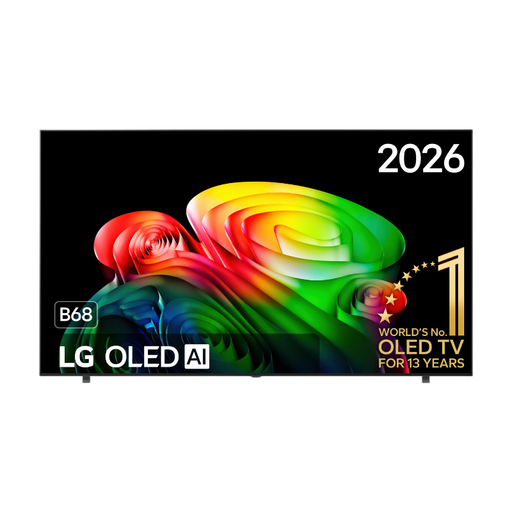
LG OLED77B68LA, 77-inch 4K OLED TV

LG OLED77B68LA, 77-inch 4K OLED TV

The 77-inch size is an option to compare if players sit further from the screen; also measure the available space.

The product title lists 120 Hz and 144 Hz VRR.

Consider the risk of OLED burn-in if the same game image stays on screen for a long time.

View at Joybuy

TCL 75Q7C, 75-inch 4K mini-LED TV

TCL 75Q7C, 75-inch 4K mini-LED TV

A 75-inch mini-LED option to compare for a group set-up; check that the size suits your viewing distance and room.

The product title lists 144 Hz.

View at Joybuy

Frequently asked questions

Do you need a 120 Hz TV for a multiplayer cooking game?

No. Start by checking the signals your console and game can actually deliver. Then compare input lag in Game Mode and viewing angles; a high TV specification doesn’t mean every game can take advantage of it.

How do you connect a Nintendo Switch to play on a TV?

Nintendo explains how to connect the dock to an HDMI port on the TV and select that HDMI input. According to Nintendo, the Nintendo Switch Lite doesn’t support TV mode, so these connection instructions don’t apply to that model.

What can you do if lines or marks appear on an LG OLED TV?

According to LG, first rule out external connections as the cause and consult the instructions for your exact model. LG says Pixel Cleaning runs automatically when the TV is switched off and remains connected to the power supply; this isn’t a promise that permanent burn-in will disappear.

How do you compare the power consumption of two TVs?

Compare the EU energy labels for the exact models: they show screen energy consumption in kWh per 1,000 hours. To estimate your own costs, you’ll also need your hours of use and electricity tariff.

Does only the manufacturer’s guarantee apply in the Netherlands?

No. The Dutch government states that your statutory guarantee entitles you to a product that works properly; a manufacturer’s or seller’s guarantee may be available in addition. If there’s a fault, contact the seller about their statutory obligations.

Is an EU energy label for TVs compulsory or just a recommendation?

Energy labels are covered by EU rules for electronic displays, including TVs. The scale runs from A to G; compare the label for the exact model rather than relying only on a general description of a TV range.
