Start by checking which characters and input method your catalogue system accepts: different key labels don’t guarantee that characters will be entered or validated correctly. Microsoft explains how to manage separate input layouts, while OCLC has its own rules for Connexion. Then choose a keyboard based on your number entry, repeated commands, workspace and preferred hand position.
Which keyboard is right for you?
Cataloguer who enters lots of special characters
If you enter names and titles in several languages, you’ll benefit most from a way of working that matches both your selected input layout and your catalogue system’s rules. Microsoft explains how to manage input layouts, while OCLC Support covers character entry in Connexion.
Cataloguer with long typing sessions
If you type for long periods, consider the keyboard shape and the position of your keyboard, screen and mouse as a whole. Arboportaal describes repetitive hand movements and static strain during screen-based work; the shape of a keyboard alone can’t guarantee a particular result.
Cataloguer who enters lots of numbers and repeats tasks
If you regularly use dates, navigation keys or standard catalogue commands, you may value an integrated number pad or customisable keys. The right choice depends on the tasks you perform and the features available in your software.
What should you look for when cataloguing in multiple languages?
Flat, full-size keyboard
Best for: regularly entering numbers and keeping an integrated number pad.
Keep in mind: a full-size model takes up more space than a TKL model. If you want customisable features, check software support too.
Compact, wired keyboard
Best for: mainly entering text and freeing up space beside your keyboard.
Keep in mind: the CHERRY STREAM KEYBOARD TKL has no number pad and connects by cable.
Curved, split keyboard frame
Best for: trying a different fixed position for your hands and forearms during longer typing sessions.
Keep in mind: the two halves can’t be positioned separately. Logitech’s claims about posture don’t guarantee a particular result for you.
Programmable mechanical keyboard
Best for: regularly using the same catalogue commands supported by your software, and being happy to customise the keys yourself.
Keep in mind: choose the right ISO version and check the key layout; an ISO variant doesn’t automatically have Dutch key labels.
Basic wireless keyboard
Best for: prioritising a separate USB receiver over extensive programmable features.
Keep in mind: ‘quiet’ is the manufacturer’s description, not the result of a comparative sound test. Check the connection and layout too.
Try the characters you actually need in your own catalogue system. Key labels, the selected input layout and character acceptance are separate things; OCLC Support, for example, describes specific input rules for Connexion.
| What to consider |
What should you check? |
Who should give this more weight? |
| Characters in multiple languages |
Check your catalogue software’s input layout, required characters and character-entry method. |
If I enter titles in several languages, I want to know whether my catalogue accepts the characters I’ve chosen. Around 29% of consumers therefore prioritise reliable character entry. |
| Repeated commands |
Check whether the software supports the command and whether the key function works with it. |
If I use the same catalogue command often, I only want to set it up if my software runs it correctly. For around 23% of consumers, this is the main reason to buy. |
| Hand position |
Assess the keyboard shape at your workstation, and consider the position of your screen and mouse too. |
During long typing sessions, I want to assess whether my hand position suits my workstation. Around 18% of consumers prioritise hand position. |
| Numbers and navigation |
Consider how often you use the number pad, arrow keys and other navigation keys. |
If I regularly enter dates or other numbers, an integrated number pad can be useful. Around 18% of consumers choose mainly based on number entry and navigation. |
| A quiet workspace and desk space |
Check whether you can use a cable or USB receiver, and whether you need a number pad. |
At a shared workstation, I want to take noise into account and leave enough space for books and a mouse. Around 12% of consumers prioritise a quiet workspace and desk space. |
Common buying pitfalls
-
Assuming key labels guarantee correct character entry
A character shown on a key isn’t automatically accepted by your catalogue. OCLC Support specifically warns that some characters pasted into Connexion may appear correctly but fail validation.
Before buying, try a small selection of the characters you actually need in your own catalogue.
Correcting rejected or incorrectly entered characters can take extra time.
-
Choosing a compact model without checking how often you enter numbers
The CHERRY STREAM KEYBOARD TKL doesn’t have a number pad. That can be inconvenient if you use one often to enter numbers.
Run through a few typical tasks and check how you use numbers, arrow keys and other navigation keys before choosing a size.
-
Treating manufacturers’ claims about ergonomics or quietness as guaranteed results
Logitech makes model-specific claims about posture for the ERGO K860. CHERRY and Trust describe certain models as quiet, but these descriptions can’t predict how the shape or sound will work for you at your workstation.
Assess the keyboard as part of your workstation. Comparing sound levels requires measurements taken under the same conditions.
-
Confusing a keyboard and mouse set with a standalone keyboard
A set and a standalone keyboard are different purchases, even if they belong to the same product range.
Check the full product name and what’s included with the version you’ve chosen.
A set may also include a mouse you don’t need.
Relevant brands to consider
The features below apply to the product lines and versions mentioned, not to the brand as a whole.
Logitech
The models reviewed have different shapes: the MX Keys S is flat, while the ERGO K860 has a fixed, curved, split frame.
- Logitech lists Smart Actions and switching between devices for the MX Keys S; the features available depend on the software and application you use.
- The ERGO K860 has a fixed shape. Logitech’s claims about posture don’t guarantee a particular result for you; check the layout of the version you choose.
CHERRY
The wired STREAM KEYBOARD and STREAM KEYBOARD TKL let you choose between a full-size model and one without a number pad.
- CHERRY lists SX scissor keys for both versions and describes the typing action as quiet.
- The TKL version has no number pad and is wired. ‘Quiet’ is a description, not a comparison based on sound measurements.
Keychron
The Q1 Pro ISO is a compact mechanical option for anyone who wants to customise their own key functions.
- Keychron lists key remapping and macros for the Q1 Pro.
- The ISO versions listed have different language layouts. Check the exact version and key labels, as they won’t automatically be Dutch.
Trust
The standalone Ody II is a basic wireless model with a USB receiver.
- Trust describes the keys as quiet and lists a storage space for the USB receiver.
- ‘Quiet’ is the manufacturer’s description, not an independent comparative sound measurement. The standalone Ody II and a keyboard and mouse set are different products.
Keyboards on Joybuy
This product selection includes keyboards for different needs around number entry, desk space and key layout. Check separately whether the layout and character-entry method suit your catalogue system.
 No image available
Wired full-size QWERTY keyboard with number pad
A good fit for frequent number entry if you’re looking for a wired keyboard with an integrated number pad.
Specifications: QWERTY layout, full-size and plug-and-play. The key layout alone doesn’t guarantee that your catalogue system accepts the characters you need.
View on Joybuy
 No image available
AJAZZ AK820 Pro 75% mechanical keyboard, US QWERTY
A good fit if you want a more compact layout with arrow keys and function keys.
Specifications: 82 keys, US QWERTY and connection via cable, Bluetooth or 2.4G. The product information lists support for Windows and macOS. Check that the US layout suits your input needs.
View on Joybuy
 No image available
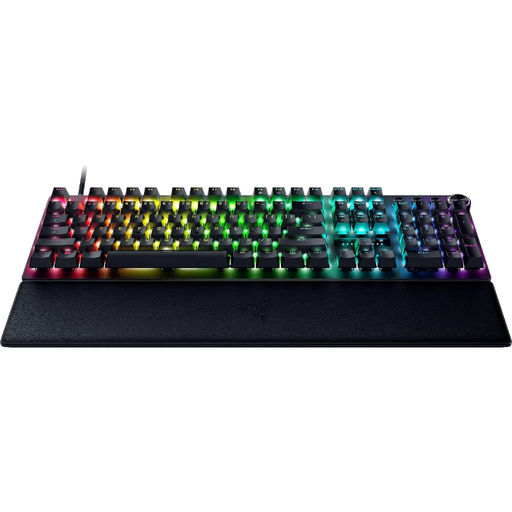
Razer Huntsman V3 Pro, US QWERTY
Could be a good fit if you want a full-size keyboard and the US QWERTY layout suits your work.
Specifications: full-size and USB-A connection. Check in advance that the physical layout matches your catalogue system’s input method.
View on Joybuy
 No image available
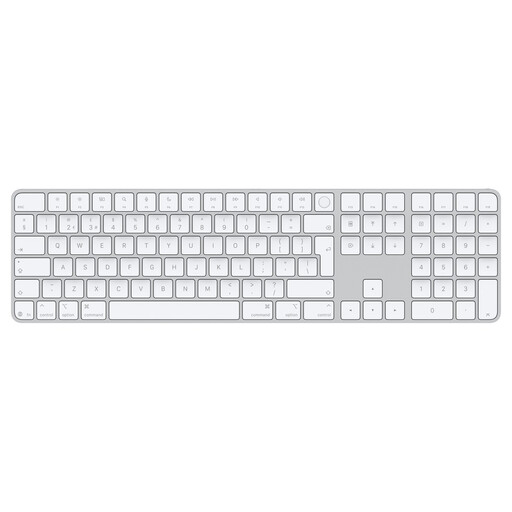
Apple Magic Keyboard with Touch ID and number pad, Dutch, White Keys
A good fit for frequent number entry if you want Dutch key labels and use a Mac with Apple silicon.
Specifications: Bluetooth, rechargeable battery and USB-C connection. This version is designed for Mac models with Apple silicon; Dutch key labels don’t guarantee that your catalogue accepts all the characters you need.
View on Joybuy
 No image available
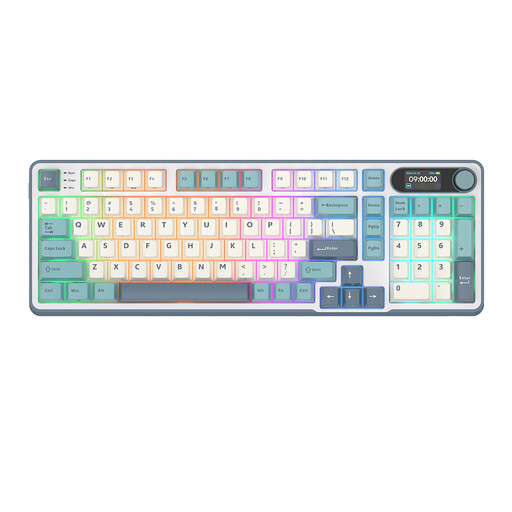
RK ROYAL KLUDGE S98, 96%, Light Cloud, Snow Emperor Switch
A good fit if you want a compact layout with a display and control knob.
Specifications: mechanical keyboard with 98 keys and connection via Bluetooth, 2.4G or USB-C; the product name lists hot-swappable keys. According to the product information, it doesn’t have a number pad, which may make it less suitable for frequent number entry.
View on Joybuy
Frequently asked questions
Will different key labels give you access to all the accents you need?
No, not by themselves. Check both your selected input layout and your catalogue’s character-entry method. Microsoft explains how to add input layouts in Windows; OCLC Connexion also has its own methods and rules, which don’t automatically apply to other catalogue systems.
How can you assess a programmable keyboard for catalogue work?
Start by trying a frequently used command supported by your catalogue software, then check the result in a test record. Logitech lists Smart Actions for the MX Keys S; Keychron describes key remapping and macros for the Q1 Pro. Also check that the required software works with the version you’ve chosen.
Should you buy a split keyboard for long typing sessions?
No particular keyboard model is required based on this information, and none can guarantee a particular result for you. Assess the shape alongside your workstation setup and how you vary your screen-based tasks; the ERGO K860, for example, has a fixed, curved, split frame.
Which Dutch workplace rule might apply if an employee spends a long time cataloguing on a laptop?
According to Arboportaal, employees who spend more than 2 hours a day doing screen-based work must use a screen and keyboard that aren’t attached to each other. This workplace rule applies in certain circumstances and doesn’t prescribe a specific keyboard model.


