Which bread format is right for you?
The most practical format depends on when you plan to serve it: do you want to bake it just before drinks, slice it yourself or check the ingredients first?
For hosts who want to serve warm bread
If you want to bake the bread shortly before serving, demi-baguettes or a bake-off baguette are an option, provided you can allow time for preparation and have an oven or air fryer. PLUS provides instructions for both appliances for its multigrain sourdough demi-baguettes.
For sharing-board makers who want to slice their own
A whole loaf gives you the freedom to choose the thickness of the slices for a larger board with cheese, spreads or charcuterie. Bear in mind that you’ll need to slice it, and decide in advance what to do with any leftovers.
For hosts who put the label first
If you need to check ingredients or allergens for your guests, the information for the exact loaf is more useful than words such as ‘rustic’ or ‘sourdough’. Also check the current packaging for any ‘may contain’ statements.
Brands to consider
These examples show the types of bread you can compare. Ingredients, preparation and availability depend on the specific product or range mentioned.
Albert Heijn
AH Biologisch OerDesem bio meergranen heel gesneden is an 800 g loaf for anyone looking for a larger, sliced base for a sharing board.
- Albert Heijn states that this loaf has a 56-hour proving process and is made with natural sourdough.
- The product also contains baker’s yeast and gluten-containing grains, so the sourdough name does not mean it is yeast-free or gluten-free.
Jumbo
Jumbo describes sourdough loaves baked in store and a 250 g par-baked multigrain sourdough baguette as different options for drinks.
- According to Jumbo, the sourdough loaves baked in store are proved for more than 24 hours with fresh sourdough; the baguette offers a smaller format.
- Jumbo states that its sourdough loaves baked in store cannot be ordered online. The baguette described also contains yeast and gluten-containing grains.
PLUS
PLUS offers both a whole Korenlanders Desem Meergranen Boekweit and multigrain sourdough demi-baguettes for baking at home.
- For the demi-baguettes, PLUS gives baking times of 8–10 minutes at 220 °C in the oven or 5–6 minutes at 200 °C in the air fryer.
- The buckwheat bread described contains several gluten-containing grains and may also contain oats, soya, sesame and lupin, among other ingredients.
Lidl
Lidl describes a 600 g organic brown multigrain sourdough loaf with seeds as an in-store option.
- The loaf comes whole, making it suitable for anyone who wants to slice it themselves for a sharing board.
- Check the packaging or in-store information if ingredients, allergens, wholemeal flour or salt will influence your choice.
ALDI
ALDI Boeren volkoren meergranen Half is a sliced multigrain option if sourdough is not essential.
- The product description specifies sliced wholemeal bread in a half-size pack.
- Don’t choose this product on the assumption that it contains sourdough; check the ingredients if sourdough matters for your gathering.
Dirk
Dirk lists a whole multigrain hearth loaf and a bake-off rustic multigrain baguette as options for toppings or dips.
- These examples let you choose between a whole loaf to slice and a baguette that still needs baking.
- Don’t assume the bake-off baguette is sourdough without checking the ingredients for that product.
Joybuy products for drinks
These baguettes are intended to be baked after thawing, so you can serve warm bread with drinks. Check the packaging for the grains, allergens and preparation instructions: the word ‘Multigrain’ in a product name does not, by itself, confirm that the bread meets the Dutch definition of multigrain bread.
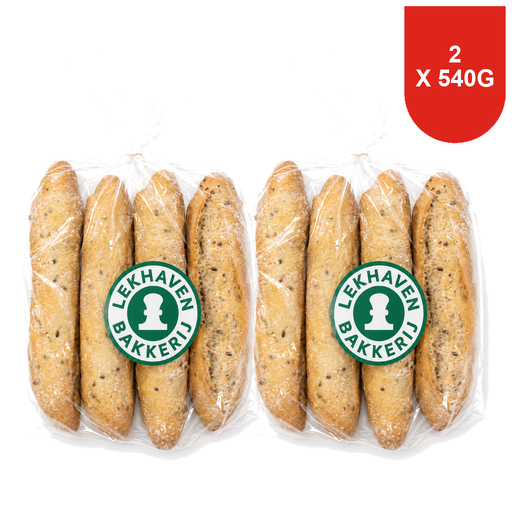 Image unavailable
Lekhaven Bakkerij Multigrain Rustic Baguette 4 × 135 g × 2
For anyone who can allow time to thaw and bake the baguettes before drinks. The product information states that they should be baked for 5–7 minutes at 220 °C after thawing.
Check the total pack contents when buying: the title specifies a × 2 variant, while the description mentions four baguettes.
The listed ingredients include sourdough as well as yeast, and mention wheat, barley and sesame. Check the current label for the grains and allergens.
View at Joybuy
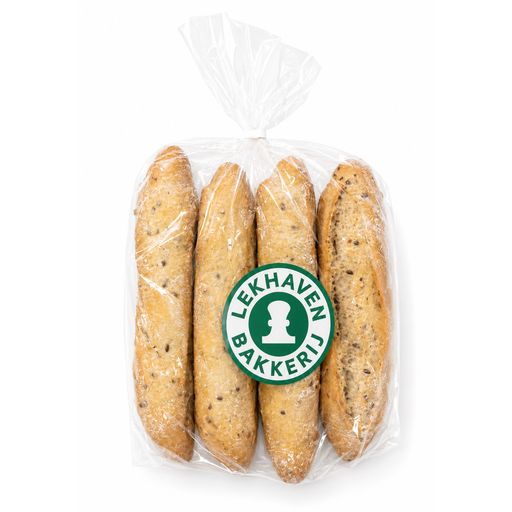 Image unavailable
Lekhaven Bakkerij Multigrain Rustic Baguette 4 × 135 g
For anyone who wants to bake small baguettes and share them in pieces. The product information says to thaw them and bake at 220 °C.
Check the baking time on the packaging before you start: the product information gives both 5–7 and 6–8 minutes.
The listed ingredients include sourdough and yeast, and mention wheat, barley and sesame. Check the current label if the grains or allergens will influence your choice.
View at Joybuy
Frequently asked questions
Is multigrain bread automatically wholemeal?
No. According to the Netherlands Nutrition Centre, multigrain bread contains at least three different types of grain, but the name does not tell you how much wholemeal flour it contains. Check the ingredients list for the loaf you want to buy.
Is multigrain sourdough always yeast-free?
No. The multigrain sourdough products described by Albert Heijn, Jumbo and PLUS list yeast or baker’s yeast as well as sourdough. Check the ingredients for the exact loaf; sourdough does not mean it is gluten-free either.
Does all Dutch sourdough bread contain iodised baker’s salt?
Don’t assume it does. Check the packaging to see whether iodised salt or baker’s salt is listed in the ingredients. If you need to monitor your iodine intake because of individual medical advice, follow your healthcare professional’s guidance when assessing a product.
How can I check for allergens when guests are coming?
Read the current packaging for each loaf and check the highlighted allergens, specific grains and any ‘may contain’ statements. For unpackaged bread, ask the seller for allergen information before choosing it for a guest with an allergy.
What should I do with sourdough bread left over after drinks?
Freeze any bread you won’t use soon in portions, and follow the product’s storage instructions. The Netherlands Nutrition Centre recommends keeping opened wholemeal sourdough bread for 2–4 days in a kitchen cupboard or 1–3 months in the freezer; these timeframes are no substitute for checking the condition of your own bread.


