Choose a whole, sliced multigrain sourdough loaf if you’re serving filled slices to several people. A small loaf means there’s less to go round, while bake-at-home bread is ideal if you want to serve it warm just before your Mother’s Day brunch. Remember to allow time for preparation, and check the ingredients, allergens and whether baker’s salt is used for each loaf: the words ‘multigrain’ and ‘sourdough’ don’t tell you everything.
Which type of bread is right for you?
Brunch hosts who want to serve warm bread
Bake-at-home baguettes are a good option if you want to finish preparing the bread just before you eat. Make sure you have enough time and space in the oven or air fryer, as cooking instructions vary by product. Jumbo also sells a multigrain sourdough loaf that’s baked fresh in store.
Groups who want plenty of slices to fill
A whole, sliced loaf is easy to share when you’re serving several people. Albert Heijn lists AH OerDesem dark multigrain as a whole, sliced 800 g loaf. That size may be more than you need for a small brunch.
Shoppers who read labels carefully
If you’re keeping an eye on grains, allergens, fibre or salt, compare the nutritional information and ingredients for each loaf. The Netherlands Nutrition Centre says baker’s salt is not compulsory, so check the packaging to see whether iodised salt or baker’s salt has been used.
What should you look for when choosing?
First, decide how much bread you want to serve at your Mother’s Day table and whether you want to bake it just before the meal. Then compare the ingredients and nutritional information for the specific loaves you’re considering.
| What to consider |
What to check |
Who this matters most to |
| Serving it warm |
Check whether the bread is ready to serve or needs to be defrosted or baked first, and look at the cooking time on the packaging. |
I want to serve the bread warm just before brunch and can set aside time to prepare it. An estimated 36% of consumers prioritise serving it this way. |
| Quantity and size |
Compare the weight and choose between a whole, sliced loaf, a small loaf or individual rolls. |
If several people are eating, I want enough slices to fill and share. For around 29% of consumers, this is the main consideration. |
| Ingredients and nutritional information |
Read the ingredients and allergen information. Compare fibre and salt on the same basis, for example per 100 g, and check whether baker’s salt is listed if needed. |
I need to know which grains and allergens the bread contains before serving it. This is the main concern for an estimated 21% of consumers. |
| Minimal preparation |
Check whether you’ll need to visit a shop or bake the bread at home, and read the storage and preparation instructions. |
I want to keep serving the bread simple and have as little to do as possible on the morning itself. Around 14% of consumers prioritise keeping preparation to a minimum. |
Common mistakes
-
Assuming sourdough means there’s no added yeast
Bread can contain both sourdough and baker’s yeast. The ingredient information for multigrain sourdough products from Jumbo and PLUS, among others, shows that they can be used together.
Read the full ingredients list if the method of preparation or a particular ingredient is important to your choice.
-
Assuming baker’s salt always contains iodine
According to the Netherlands Nutrition Centre, bakers aren’t required to use baker’s salt. You can’t tell which salt has been added just from the type of bread.
For packaged bread, look for ‘baker’s salt’ or ‘iodised salt’ on the label. For unpackaged bread, ask the shop or baker about the ingredients.
-
Confusing fresh in-store bread with bread you can order online
Jumbo says its fresh sourdough loaves are baked in store and aren’t available to order online. That means a visit to the shop needs to be part of your preparations.
Before brunch, check how you can buy the bread you’ve chosen. Choose bake-at-home bread if that works better with your plans.
-
Assuming multigrain means wholegrain or gluten-free
‘Multigrain’ doesn’t tell you whether all the grains used are wholegrain. The multigrain sourdough products mentioned may contain wheat, rye, barley, spelt or other allergens.
Check the grains and allergens for each product, and look for an explicit wholegrain or gluten-free claim if that’s important to you.
Supermarket brands to consider
Bread types, preparation methods and ingredients vary between these brands, so choose based on the specific product and its current packaging.
Albert Heijn
Offers whole, sliced multigrain sourdough loaves, ideal for preparing slices to serve at a larger brunch.
- AH OerDesem dark multigrain weighs 800 g and lists 6,6 g of fibre per 100 g and iodised salt.
- The organic OerDesem multigrain version lists 5,6 g of fibre per 100 g. Check which version and ingredients you’re choosing.
Jumbo
Offers both a fresh in-store brown multigrain sourdough loaf and pre-baked multigrain rolls and a baguette.
- Jumbo says its fresh sourdough loaves mature for more than 24 hours with fresh sourdough starter. The packaged rolls and baguette offer another way to prepare bread for brunch.
- Jumbo’s fresh in-store sourdough loaves aren’t available to order online. Check the ingredients and cooking instructions for each packaged product separately.
PLUS
Lists multigrain sourdough in various sizes, including a small pre-baked loaf and demi baguettes.
- PLUS provides oven and air fryer instructions for its Korenlanders Desem multigrain demi baguettes. The small multigrain sourdough loaf weighs 300 g.
- Allow time to prepare pre-baked products, and check the grains and allergens for each version.
Lidl
Lists a 600 g organic rustic multigrain sourdough loaf with seeds.
- The whole loaf is a good option if you want to cut and share the slices yourself.
- Lidl says this loaf is only available in store. Check the packaging or in-store information for the latest details on ingredients and allergens.
Dirk
Lists multigrain bread and sourdough as bread categories, and offers a 440 g rustic multigrain bake-at-home baguette.
- The bake-at-home baguette is a good size for sharing at the table.
- Check the label if you’re specifically looking for multigrain sourdough; the product name of this bake-at-home baguette doesn’t confirm that it’s sourdough.
ALDI
Lists fresh daily multigrain bread and Boeren wholemeal multigrain as regular multigrain options.
- Regular multigrain bread may be a good fit if you don’t want to bake your bread at home.
- Check the product name and ingredients in store if sourdough is a must for your brunch.
Multigrain bake-at-home baguettes on Joybuy
These two Lekhaven Bakkerij options are ideal if you want to bake multigrain baguettes at home for your Mother’s Day brunch. They’re not a substitute for choosing a whole or small loaf that’s ready to serve, and you’ll also need to allow time to defrost these baguettes.
 Image unavailable
Lekhaven Bakkerij Multigrain Rustic Baguette 4 x 135 g
For anyone who wants to bake individual multigrain baguettes for brunch; the product name lists four baguettes weighing 135 g each.
Allow around four hours to defrost at room temperature before baking, or put the bread in the fridge the night before. The ingredients list wheat, barley, sesame and yeast. Check the label if allergens or the type of salt used are important to you.
View on Joybuy
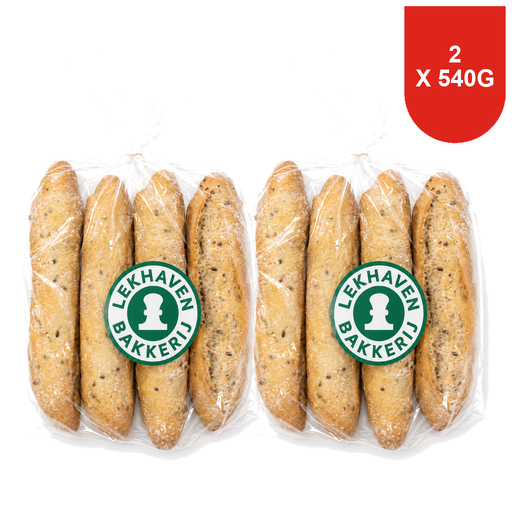 Image unavailable
Lekhaven Bakkerij Multigrain Rustic Baguette 4 x 135 g x 2
For anyone who wants to bake multigrain baguettes at home for brunch. Check how many baguettes are in each pack before buying, as the quantities in the product title and description differ.
Allow around four hours to defrost at room temperature, or put the bread in the fridge the night before. The ingredients list wheat, barley, sesame and yeast. Check the label if allergens or the type of salt used are important to you.
View on Joybuy
Frequently asked questions
Does sourdough mean the bread contains no baker’s yeast?
No. Sourdough bread may also contain baker’s yeast; this is shown in the ingredients information for multigrain sourdough products from Jumbo and PLUS, for example. Read the ingredients list if you’re looking for a specific method of preparation.
Does Dutch bread always contain iodised baker’s salt?
No. According to the Netherlands Nutrition Centre, bakers aren’t required to use baker’s salt. For packaged bread, check the ingredients list for ‘baker’s salt’ or ‘iodised salt’. For unpackaged bread, ask which salt has been used.
Is multigrain sourdough automatically gluten-free?
No. The multigrain sourdough products mentioned contain wheat, rye or other gluten-containing grains, among other ingredients. If gluten-free bread is essential for your group, choose a loaf that’s explicitly labelled gluten-free and check the allergen information on the packaging.
How should I store the bread until Mother’s Day brunch?
Follow the storage instructions for the product you choose, especially if it still needs to be defrosted or baked. According to the Netherlands Nutrition Centre, ordinary bread goes stale more quickly in the fridge. Throw away any mouldy bread.


