
For hosts who want to serve quickly
If you’re making sandwiches for several guests, a whole loaf that’s already sliced means less work at the table. Albert Heijn lists this style of loaf for AH OerDesem donker meergranen.


Choose a whole, pre-sliced multigrain sourdough loaf if you’re making sandwiches for several guests and want to serve them without baking. If you’d rather serve warm bread, fresh bakery bread or bake-at-home rolls are a better fit, but you’ll need to visit a shop or allow time for preparation. Check the ingredients, allergens and nutritional information for each loaf individually: the words ‘multigrain’ and ‘sourdough’ don’t tell you whether the bread is wholemeal or contains iodised salt.
If you’re making sandwiches for several guests, a whole loaf that’s already sliced means less work at the table. Albert Heijn lists this style of loaf for AH OerDesem donker meergranen.
If you want to bake rolls just before serving, you’ll need time and oven space. PLUS gives baking instructions for its Korenlanders Desem demi-baguettes meergranen; the fresh sourdough loaves described by Jumbo, on the other hand, require a trip to the shop.
If wholemeal ingredients, fibre, allergens or iodised salt matter to you, compare the packaging of the specific loaf. According to the Netherlands Nutrition Centre, baker’s salt isn’t compulsory, so the name of the bread alone won’t tell you whether it contains it.
First decide whether you need bread that’s ready to serve straight away, or whether you have time to visit a shop or bake it at home. Then use the label to compare loaves and find one with the ingredients you want.
| What to consider | What to check when buying | Who is this important for? |
|---|---|---|
| Serving quickly | Check whether the loaf is whole and pre-sliced, and can be served without baking. | If I’m making sandwiches for several guests, I don’t want to have to slice or bake the bread first. For around 31% of consumers, serving convenience comes first. |
| Warm bread and crust | Compare fresh bakery bread with bake-at-home bread; if baking, check the time, temperature and oven space required. | I’m happy to make time for warm rolls just before serving, but the preparation needs to fit into my brunch plans. Around 31% of consumers prioritise this freshly baked result. |
| Ingredients | Read the ingredients and allergen information; compare wholemeal flour, fibre and salt per 100 g, and check whether iodised salt is listed. | When I’m choosing bread for guests with different dietary needs, I want to be able to check the ingredients for each product. For around 23% of consumers, checking the label is the top priority. |
| Local availability | Check whether your preferred sourdough option is available at your shop and whether you’ll need to visit in person. | If I want to pick up the bread shortly before brunch, buying it needs to fit into my plans. For an estimated 15% of consumers, local availability matters most. |
Bread made with several types of grain can also contain refined flour. According to the Netherlands Nutrition Centre, wholemeal bread is made from the whole grain; the term ‘multigrain’ doesn’t tell you how much wholemeal flour has been used.
Look for wholemeal ingredients on the packaging and compare the fibre per 100 g if that matters to your choice.
According to the Netherlands Nutrition Centre, using baker’s salt isn’t compulsory. And even with organic bread, you can’t tell which salt has been used from the product style alone.
Check the ingredients list for baker’s salt or iodised salt if you’re looking for that information.
Bake-at-home rolls need to be prepared just before serving. PLUS gives a baking time of 8–10 minutes at 220 °C for its Korenlanders Desem demi-baguettes meergranen; these instructions apply to that product, not to all bake-at-home bread.
Read the instructions on your packaging and make sure you have enough oven space. If baking won’t fit into your brunch plans, choose bread that’s ready to serve.
Multigrain sourdough can contain different gluten-containing grains and other allergens. ‘Sourdough’ doesn’t mean that a loaf is gluten-free.
Check the latest ingredients and allergen information for each loaf, even if you’ve previously bought a different version from the same brand.
These brands offer different types of bread for an Easter brunch. Compare the specific product: multigrain bread without a confirmed sourdough description isn’t the same as multigrain sourdough.
For anyone who wants to serve a whole, sliced sourdough loaf straight away or explore an organic option.
For anyone choosing between individual multigrain sourdough rolls and rustic sourdough loaves from the shop.
For anyone who wants to bake multigrain sourdough demi-baguettes at home or is looking for a whole multigrain sourdough loaf.
For anyone looking for an organic brown multigrain sourdough loaf with seeds and kernels.
An option to compare if you’re also considering a whole multigrain loaf baked on the oven floor.
An in-store option to compare if you’re also considering multigrain baguettes with seeds and kernels.
These two Lekhaven Bakkerij options are multigrain sourdough baguettes for baking at home. They’re ideal for warm, individual portions at Easter brunch; if you want a whole loaf that’s ready to serve, choose a different type of bread.
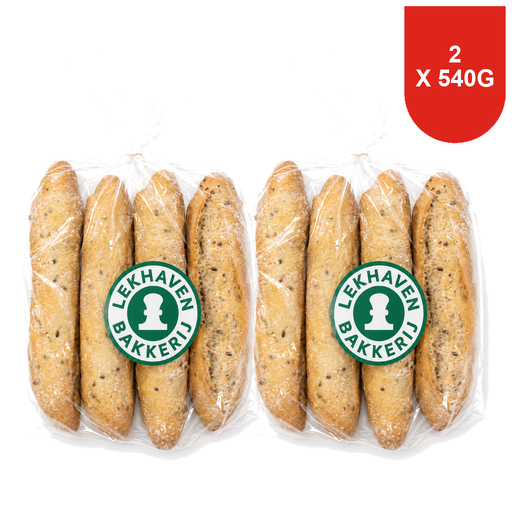 Image unavailable
For anyone who wants to serve warm multigrain sourdough baguettes and has time to defrost and bake them beforehand.
The ingredients information lists homemade sourdough and sunflower, sesame and linseeds. The preparation information recommends defrosting for around 4 hours, or overnight in the fridge, then baking for 5–7 minutes at 220 °C.
Before buying, check the packaging for the proportion of wholemeal ingredients, the type of salt used and any allergens that matter for your brunch.
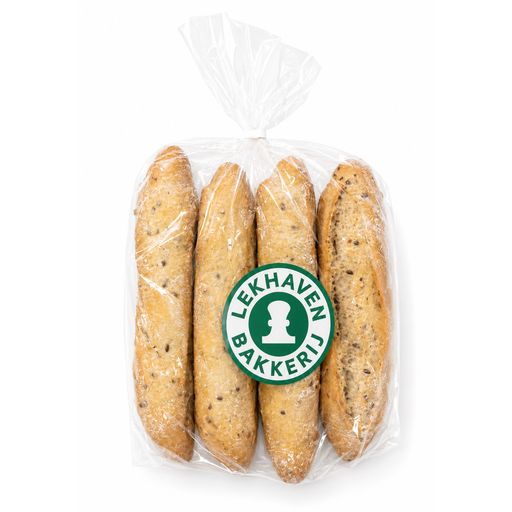 Image unavailable
For anyone who wants to bake four individual multigrain sourdough baguettes for Easter brunch.
The ingredients information lists homemade sourdough and sunflower, sesame and linseeds. Allow around 4 hours to defrost, or leave overnight in the fridge, and check the baking instructions on the packaging: the product descriptions give different baking times.
When buying, also compare the wholemeal ingredients, the type of salt used and any allergens that may affect your choice of bread.
No. ‘Multigrain’ and ‘sourdough’ don’t, on their own, confirm that a loaf is wholemeal. According to the Netherlands Nutrition Centre, wholemeal bread is made from the whole grain; check the packaging to see which wholemeal ingredients the specific loaf contains.
The term ‘sourdough’ doesn’t, by itself, tell you the nutritional value of the bread. Before buying, compare the ingredients and nutritional information per 100 g for the loaves you’re considering.
No. According to the Netherlands Nutrition Centre, using baker’s salt isn’t compulsory. Check the ingredients list for the loaf you’ve chosen to see whether it lists baker’s salt or iodised salt; you can’t tell from the product name alone, even with organic bread.
Read the latest allergen information for the specific loaf. Multigrain sourdough can contain gluten-containing grains and other allergens; the words ‘multigrain’ and ‘sourdough’ don’t replace the ingredients and allergen information.
For an unopened pack, follow the date and storage advice on the product. For opened wholemeal sourdough bread, the Netherlands Nutrition Centre’s Storage Guide recommends 2–4 days in a kitchen cupboard or 1–3 months in the freezer; time your purchase according to the bread you actually choose.