
Hosts who want to share bread
When you’re serving a range of dishes and dips, you want a type of bread that’s easy to put on the table. You’ll also want to decide whether the flavour of sourdough will go well with the dishes.


Start with how you plan to serve it: a whole or sliced loaf lets guests help themselves, while a baguette is easy to divide into pieces. Choose a bake-at-home option only if you have oven space and time just before the meal. Then check separately whether the bread is sourdough and, if you want it to be, made with wholemeal grains. Read the product label for ingredients and allergens.
When you’re serving a range of dishes and dips, you want a type of bread that’s easy to put on the table. You’ll also want to decide whether the flavour of sourdough will go well with the dishes.
Having several grains isn’t enough for you: you’re looking for a product that’s explicitly labelled wholemeal. According to the Voedingscentrum, wholegrain products contain more fibre and other important nutrients than white grain products.
Before serving bread, you want to be able to check the current ingredients, allergens, or information about salt and iodised baker’s salt. The bread’s name alone doesn’t give you enough information.
First decide what role the bread will play at the table, then choose its shape. Assess sourdough, wholemeal content and ingredients separately as product features.
| What to consider | What to check when buying | Who it matters to |
|---|---|---|
| Flavour and bread shape | Check whether it’s labelled sourdough, then choose between a whole loaf, sliced bread and baguettes based on how you want to serve it. | When I’m serving several dips and dishes, I want to share bread with a flavour that suits the meal. For around 37% of consumers, that combination would be their top priority when buying. |
| Wholemeal content and fibre | Look for an explicit wholemeal label and read the ingredients list; don’t rely on the name ‘multigrain’ alone. | When I’m mainly looking for wholemeal bread, I give the type of grain more weight than the sourdough method. Around 36% of consumers would make wholemeal content their main reason for buying. |
| Up-to-date product information | Read the ingredients and allergen information on the packaging, and check details about salt or iodised baker’s salt if they’re relevant to your choice. | Before putting bread out for guests, I want to know which ingredients the specific product contains. For around 27% of consumers, checking the label would come first. |
Bread can contain several grains without being the wholemeal option you’re looking for. According to the Voedingscentrum, wholegrain products are made using the entire grain.
Look for an explicit wholemeal label and check the ingredients list, even if you can see grains or seeds on the bread.
Sourdough refers to how the bread is fermented; on its own, it doesn’t tell you whether the grains used are wholemeal.
Choose sourdough if you like the method and flavour. If wholemeal content is essential for you, check for it separately.
A rule about how iodine compounds may be present in bread through baker’s salt doesn’t confirm that a specific loaf contains iodised baker’s salt.
Check the ingredients on the current packaging if the presence of iodised baker’s salt matters to your choice.
A bake-at-home option needs oven space at a time when you may also be cooking hot dishes. PLUS says its multigrain sourdough demi-baguettes take 8–10 minutes in a preheated oven at 220 °C.
Check the baking instructions for your bread and plan its baking around the rest of the meal.
Remember to allow time for the oven to preheat, too.
Compare the specific bread shape and product information for each range: a multigrain baguette, for example, isn’t automatically a sourdough bread.
Albert Heijn lists AH OerDesem donker meergranen heel gesneden for anyone looking for a sliced loaf to serve at the table.
Jumbo lists packaged multigrain sourdough rolls and a multigrain sourdough baguette, as well as rustic sourdough loaves from its in-store range.
PLUS lists a small brown multigrain sourdough loaf and bake-at-home multigrain sourdough demi-baguettes.
Lidl lists an organic rustic multigrain sourdough loaf and has a separate overview of ingredients and allergens for oven-fresh bread.
Dirk lists a 250 g bake-at-home rustic multigrain baguette that you can serve with a shared meal.
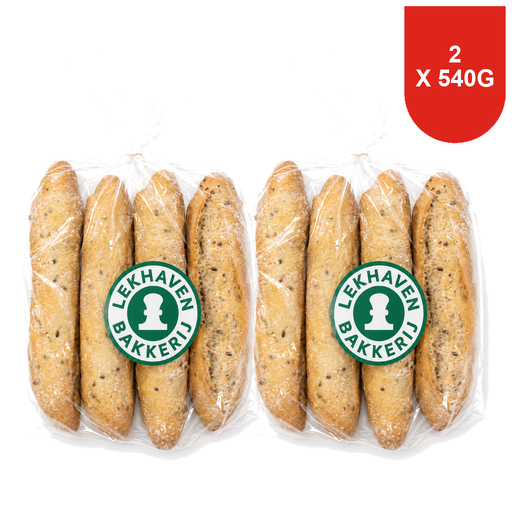
These two Lekhaven Bakkerij options are multigrain baguettes that you can cut into pieces to serve with dips and small dishes. Allow time to defrost and bake them, and check the packaging for the ingredients, baking instructions and contents of the option you choose.
 No image available
The baguette shape is ideal for a table where guests can share bread alongside dips and small dishes.
The product name states 4 × 135 g × 2. Allow time to defrost and bake, and follow the baking instructions on the packaging for the cooking time.
Before buying, check the contents of this option and read the current label if sourdough, wholemeal grains, allergens or iodised baker’s salt are important to your choice.
 No image available
The baguette shape is easy to divide when you’re serving bread with several dishes and dips.
The product name states 4 × 135 g. Allow time to defrost and bake, and check the baking instructions and actual pack contents before planning your meal.
Read the current label if the sourdough used, wholemeal content, allergens or iodised baker’s salt are important to your choice.
No, the name ‘multigrain’ doesn’t, by itself, mean that a product is wholemeal. Look for ‘wholemeal’ on the specific loaf and read the ingredients list. According to the Voedingscentrum, wholegrain products contain more fibre and other important nutrients than white grain products.
No, choose sourdough if you want to serve that flavour with your dishes, not because the method automatically tells you whether it’s wholemeal. If you’re mainly looking for wholemeal bread, check this separately from whether it’s sourdough and its shape.
You can’t tell from the name of the bread. The Netherlands Food and Consumer Product Safety Authority explains the conditions under which iodine compounds may be present in bread through baker’s salt; this doesn’t confirm that they’re in every loaf. Check the ingredients for the specific product if this matters to your choice.
Use the online information to compare products, but also check the current packaging of the bread you buy. Albert Heijn warns that ingredients and allergen information may change.
A whole or sliced loaf lets guests help themselves to slices, while a baguette can be cut into pieces in advance. If you choose a bake-at-home option, set aside oven space and follow the product’s baking instructions. PLUS says its multigrain sourdough demi-baguettes take 8–10 minutes at 220 °C.