Which bread is right for you?
The most convenient type of bread depends mainly on when you buy it and how you want to serve it at Easter.
Brunch host who wants to serve fresh bread
Would you like to put bread on the table with no preparation, buy it fresh from the bakery or bake it shortly before eating? Choose the type of bread to suit when you plan to serve it and the space you have for baking during your Easter brunch.
Shopper comparing labels
Look beyond a dark crust or the name ‘multigrain’. Compare the ingredients and nutritional information per 100 g, including fibre and salt, and check whether iodised salt or baker’s salt is listed if that matters to you.
Shopper checking allergens
Sourdough doesn’t mean gluten-free. If you need to avoid gluten or other allergens, check the ingredients and allergen information for the exact loaf you plan to buy.
What should you look for when choosing?
First, decide whether you want bread that’s ready to serve, fresh from the in-store bakery or baked at home. Then compare the labels of products that suit your plan.
| What to consider |
What to check when buying |
Who it matters to |
| Nutritional information and ingredients |
Compare the proportion of wholemeal flour, and the fibre and salt per 100 g. If you want to check the type of salt, look for iodised salt or baker’s salt in the ingredients. |
If I’m choosing carefully based on wholemeal flour, fibre, salt and allergens, the name ‘multigrain’ isn’t enough. Around 36% of consumers put checking the label first. |
| Crust and presentation |
Choose between a whole sliced loaf and an unwrapped loaf from the bakery. If you’re buying fresh bakery bread, check the ingredients and allergens in store. |
For an Easter brunch, I want bread that suits the way I set the table and serve the slices. For around 29% of consumers, presentation is the most important factor. |
| Baking at home |
Check the storage advice and the defrosting and baking instructions on the pack, including what equipment you’ll need. |
I do my shopping in advance and want to bake the bread just before serving, as long as I have time. For around 21% of consumers, this is the main consideration. |
| In-store availability |
Check whether you can order your chosen bread online or whether it’s only available in store. If necessary, check availability at your local branch. |
I need my Easter shopping to fit into one planned visit, so where I can buy the bread helps determine my choice. Around 14% of consumers prioritise this practical consideration. |
Brands to consider
These examples show the different types of bread you could compare. Always check the latest information for the specific product before you buy.
Albert Heijn
AH OerDesem donker meergranen is a whole, sliced loaf for anyone who wants to serve sandwiches straight away.
- Albert Heijn lists 44% wholemeal wheat flour, 7.1% wholemeal wheat sourdough, iodised salt, 6.6 g of fibre and 0.85 g of salt per 100 g for this loaf.
- Check the latest packaging if the ingredients or nutritional values are important to your choice.
Jumbo
Jumbo has a brown multigrain option in its range of sourdough loaves baked in store.
- Jumbo says this range is proved for more than 24 hours with fresh sourdough starter, and describes the crust as crisp.
- According to Jumbo, these sourdough loaves are only available in store. Check the variety, ingredients and allergens there.
PLUS
PLUS lists, among other products, multigrain demi-baguettes to bake at home and a multigrain buckwheat sourdough loaf for freezer storage.
- PLUS gives oven and air fryer baking instructions for its demi-baguettes; storage instructions vary by product.
- Compare the ingredients, allergens, fibre and salt for each individual loaf rather than assuming the whole sourdough range has the same recipe.
Lidl
Lidl lists an organic rustic multigrain sourdough loaf.
- The product name makes it an option to consider if you’re looking for a rustic multigrain sourdough loaf.
- Before choosing, check the ingredients, allergens and nutritional information on the current packaging; ‘organic’ and ‘rustic’ alone don’t tell you how much wholemeal flour it contains.
ALDI
ALDI lists, among other products, farmhouse wholemeal multigrain bread and freshly baked bread.
- The wholemeal multigrain loaf is a separate option if that’s the type of bread you’re mainly looking for.
- If you’re looking for sourdough, check the specific loaf to see whether sourdough is listed as an ingredient or a feature of how it’s made.
Dirk
Dirk lists a whole multigrain hearth loaf and a rustic multigrain baguette.
- These two types of bread give you a useful starting point for comparing a whole loaf with a baguette for your Easter table.
- Check whether the variety you choose is made with sourdough and read the latest ingredients information.
Multigrain bake-at-home bread at Joybuy
These two listings are for Lekhaven Bakkerij multigrain bread to bake at home for your Easter brunch. They offer a different way to serve bread from a whole loaf that’s ready to eat or bread fresh from the bakery.
 No image available
Lekhaven Bakkerij Multigrain Rustic Baguette, 4 × 135 g
A good option if you’d like to bake the bread for your Easter brunch and can plan when you’ll serve it.
Pack size: 4 × 135 g. Check the instructions on the current packaging before baking. If they matter to your choice, also read the full ingredients and allergen information.
View at Joybuy
 No image available
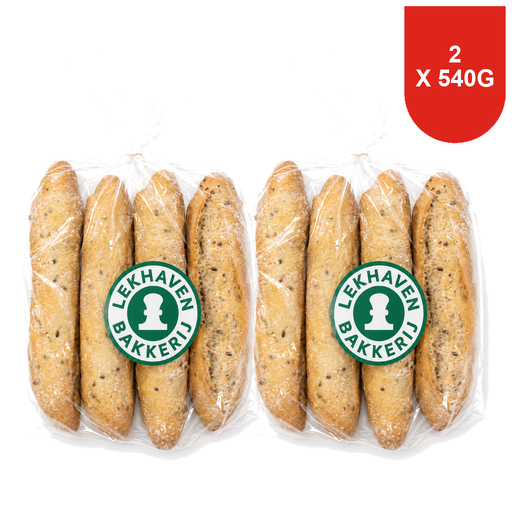
Lekhaven Bakkerij Multigrain Rustic Baguette, 4 × 135 g × 2
This multipack could be a good choice if you want to stock up on more bake-at-home bread for your Easter brunch.
The product name lists 4 × 135 g × 2. Before buying, check whether the pack contains baguettes or bread rolls. Also check the baking instructions, ingredients and allergens on the packaging.
View at Joybuy
Frequently asked questions
Is multigrain sourdough bread automatically wholemeal?
No. ‘Multigrain’ doesn’t tell you what proportion of the flour is wholemeal. Compare the ingredients of the loaves you’re considering; the fibre per 100 g is listed in the nutritional information. According to the Voedingscentrum, wholemeal bread contains more fibre and other nutrients than bread made with refined flour.
Does sourdough make bread gluten-free?
No. Sourdough bread may contain wheat, rye, barley or spelt. If you need gluten-free bread, check the specific product claim and the full ingredients and allergen information for that loaf.
Does multigrain sourdough bread always contain iodised salt?
No. According to the Voedingscentrum, bakers aren’t required to use baker’s salt. The AH OerDesem loaf mentioned above lists iodised salt, but that doesn’t tell you anything about another loaf. Read the ingredients or, if you’re buying unwrapped bread, ask what type of salt has been used.
Can I buy multigrain sourdough bread for Easter in advance?
Yes, as long as the storage instructions for your chosen product fit your plans. For example, PLUS says its Korenlanders Desem Meergranen Boekweit should be kept frozen. Bake-at-home bread also needs to be prepared before serving. Follow the storage, defrosting and baking instructions on the packaging for your loaf.


