
If you want to bake bread just before dinner
Baking a multigrain sourdough baguette at home lets you choose exactly when to serve it. Just remember to allow time and space in the oven; Jumbo and PLUS have examples in 250 g packs.


If you want warm, crisp bread on the table just before dinner, a multigrain sourdough baguette that you bake at home is a good choice. If you’d rather serve bread without an oven step, look for a fresh loaf from the shop. In either case, check the ingredients: multigrain doesn’t automatically mean wholemeal, and iodised salt won’t necessarily be listed on the label.
Baking a multigrain sourdough baguette at home lets you choose exactly when to serve it. Just remember to allow time and space in the oven; Jumbo and PLUS have examples in 250 g packs.
A rustic appearance or the word ‘multigrain’ isn’t enough to tell you what’s in the bread. Read the ingredients list and check the salt information, as recommended by the Netherlands Nutrition Centre.
If a guest needs to avoid certain ingredients, choose bread based on the allergen information on the packaging. A standard multigrain sourdough loaf isn’t automatically gluten-free.
First decide whether you want to bake the bread just before eating or serve it straight away. Then check that the ingredients and allergen information suit everyone at the table.
| What to consider | What to check when buying | Who it matters to |
|---|---|---|
| When to serve | Check whether the bread needs to be thawed or baked, and follow the instructions on the packaging. | I want to serve warm bread alongside the rest of dinner, so I need to allow time for baking. For around 42% of consumers, serving time is the top priority. |
| Wholemeal flour and salt | Look for wholemeal flour in the ingredients list. If the iodine in bread matters to you, check for iodised salt or baker’s salt. | A rustic crust doesn’t tell me what flour has been used; I want to be able to check the label. Around 33% of consumers prioritise checking these ingredients. |
| Allergens | Read the current allergen information. If a gluten-free option is essential, only choose bread that is explicitly labelled gluten-free. | If someone at the table needs to avoid certain ingredients, I need to know whether this bread is suitable before serving it. For around 17% of consumers, this is the first thing to consider. |
| Quantity and convenience | Compare pack sizes and check whether the bread is available at your shop. If you want sourdough, make sure it’s explicitly mentioned. | I’m looking for an amount that goes well with other dishes, and I want to be able to buy the bread in time. For around 8% of consumers, this practical convenience matters most. |
According to the Netherlands Nutrition Centre, multigrain bread contains at least three types of grain. That alone doesn’t tell you whether the flour is wholemeal.
Check the product description and ingredients list for wholemeal flour rather than judging by the colour, seeds or crust.
The Netherlands Nutrition Centre says that using baker’s salt when baking bread isn’t compulsory. So neither the baking method nor an organic label confirms what type of salt has been used.
If the iodine in bread matters to you, look for iodised salt or baker’s salt on the label.
PLUS’s multigrain sourdough baguette lists wheat and other gluten-containing cereals. Using sourdough doesn’t make those ingredients gluten-free.
If you need a gluten-free option, check the label and allergen information on the specific pack.
Bake-at-home bread needs to be prepared, while shop-baked bread is ready to serve. Jumbo says its shop-baked sourdough loaves are only available in store.
Decide in advance whether you’ll bake the bread or serve it straight away. If there’s any left over, follow the storage advice on the packaging.
Albert Heijn lists a 600 g organic multigrain sourdough hearth loaf.
Jumbo sells a 250 g par-baked multigrain sourdough baguette and also describes its shop-baked sourdough loaves.
Lidl lists a 600 g organic brown multigrain sourdough loaf with seeds.
ALDI lists, among other options, a multigrain baguette with seeds.
PLUS sells Korenlanders multigrain sourdough breads, including a 250 g bake-at-home baguette.
Dirk describes a 250 g rustic multigrain baguette to bake at home and serve with dinner.
These multigrain baguettes need to be thawed and baked before dinner. Pack sizes vary. If it matters to your choice, also check the packaging for sourdough, wholemeal flour or iodised salt.
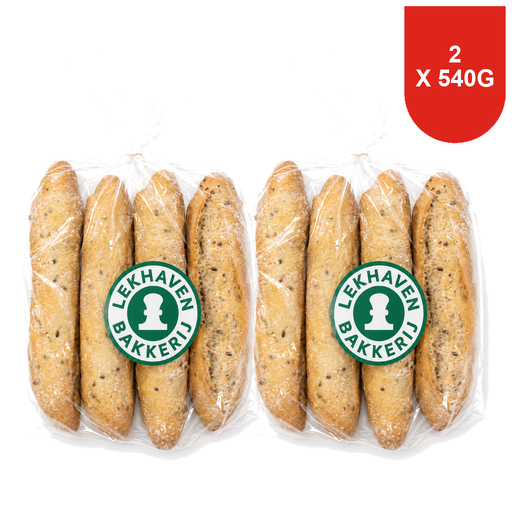 Image unavailable
If you want to bake bread just before dinner, remember to allow time for thawing first. This option contains two packs of four 135 g baguettes. Follow the cooking instructions and allergen information on the packaging.
 Image unavailable
If you’re after a smaller pack to bake for dinner, this option contains four 135 g baguettes. Allow time to thaw them first, and follow the packaging instructions for baking time and allergen information.
No. According to the Netherlands Nutrition Centre, multigrain bread contains at least three types of grain, but the name doesn’t tell you whether the flour is wholemeal. Check the product description and ingredients list for wholemeal flour.
No. The Netherlands Nutrition Centre says that baker’s salt isn’t compulsory when baking bread. To find out whether your chosen bread is made with it, look for baker’s salt or iodised salt on the label.
Not on the basis of the words ‘multigrain’ or ‘sourdough’ alone. For example, PLUS’s multigrain sourdough baguette contains wheat and other gluten-containing cereals. Choose a product that is explicitly labelled gluten-free and read the allergen information on the packaging.
Bake it shortly before serving, following the instructions for the product you’ve chosen. PLUS says to bake its Korenlanders multigrain sourdough baguette for 8–10 minutes in a preheated oven at 220 °C. Don’t automatically use this timing for another baguette.
Follow the storage advice on the packaging, and freeze any bread you won’t use soon in portions if needed. The Netherlands Nutrition Centre recommends keeping opened wholemeal bread for 2–4 days in a kitchen cupboard or 1–3 months in the freezer. This advice doesn’t necessarily apply to every multigrain bake-at-home loaf.