
Lunch shoppers who are mindful of fibre
You want to know whether a multigrain roll is wholemeal, rather than judging by its colour or name. According to the Netherlands Nutrition Centre, ‘multigrain’ on its own does not mean ‘wholemeal’.


If you’re looking for a wholemeal lunch roll, don’t rely on a dark colour, seeds or the word ‘multigrain’ alone. First check the product description and ingredients, then compare the nutritional information, allergens and format to find what suits your lunch. A whole loaf is ideal for making sandwiches at home, while individual rolls and part-baked baguettes need different preparation.
You want to know whether a multigrain roll is wholemeal, rather than judging by its colour or name. According to the Netherlands Nutrition Centre, ‘multigrain’ on its own does not mean ‘wholemeal’.
You’re after a roll to take with you, or bread to bake at home for lunch. The difference between bread that’s ready to eat and bread that needs baking determines how much time and preparation you’ll need.
You need to be able to check the ingredients in the exact roll you’re considering. For example, PLUS’s wholemeal multigrain rolls list various grains, soya, milk and sesame. That ingredient list tells you nothing about a different product.
First decide whether confirmed wholemeal status is a must for you. Then choose a lunch-friendly format and compare the details of the products that meet your needs.
| What to consider | What to check when buying | Who it matters to |
|---|---|---|
| Wholemeal status | Look for ‘wholemeal’ in the product description and check which grain ingredients are listed. | If I mainly want a wholemeal roll for lunch, the name ‘multigrain’ alone isn’t enough for me. Around 37% of consumers would prioritise confirmed wholemeal status. |
| Ingredients and allergens | Read the ingredients list and allergen information for the exact variant on the current packaging. | If certain ingredients don’t suit me, I need to know what’s in this particular roll. Around 18% of consumers would make this their first priority. |
| Lunch-friendly format | Check whether you’re buying a whole loaf, individual rolls or bread that needs baking, and whether any preparation is required. | I want to be able to eat my roll at the time I’ve planned for lunch, and I don’t always have the time or an oven. Around 27% of consumers would consider the right format most important. |
| Fibre and salt | Compare the nutritional information for specific products on the same basis, such as per 100 g. | If several options meet my requirements, I want to compare their fibre and salt fairly. Around 18% of consumers would use these nutritional values as the main point of comparison. |
According to the Netherlands Nutrition Centre, multigrain bread contains at least three types of grain, but it can also be made with refined flour. So the colour and visible seeds don’t confirm that a lunch roll is wholemeal.
If wholemeal is essential for you, check the product description and ingredients before choosing based on appearance.
Ingredients and allergens can change. Albert Heijn itself points out that the product information on a web page may differ from the current packaging.
Use online information to narrow down your options, then check the packaging of the roll you’re actually buying.
A claim about fibre or salt applies to the product it refers to and the comparison it’s based on, not to all multigrain bread from a brand.
Compare the nutritional information for the exact varieties on the same basis, such as per 100 g, rather than assuming a claim applies to a different format.
Part-baked bread needs an oven and time to prepare. For example, PLUS says its wholemeal multigrain baguettes need 8–10 minutes in the oven at 220 °C. Those instructions don’t necessarily apply to other baguettes.
Choose ready-to-eat bread if you can’t bake it. Otherwise, read the instructions for your chosen product before buying.
Albert Heijn’s online range includes a ‘Multigrain wholemeal roll’.
ALDI’s range includes a Farmhouse wholemeal multigrain loaf and a separate extra-high-fibre wholemeal loaf.
PLUS provides product information for wholemeal multigrain rolls and part-baked wholemeal multigrain baguettes.
Dirk’s online range includes both multigrain bread and varieties specifically labelled as wholemeal.
Lidl sells freshly baked bread and publishes a list of ingredients and allergens for it.
These baguettes offer a multigrain format for lunch. If you’re specifically looking for wholemeal bread, check the product description on the packaging. A multigrain name or a wholemeal ingredient alone doesn’t confirm that the bread is wholemeal.
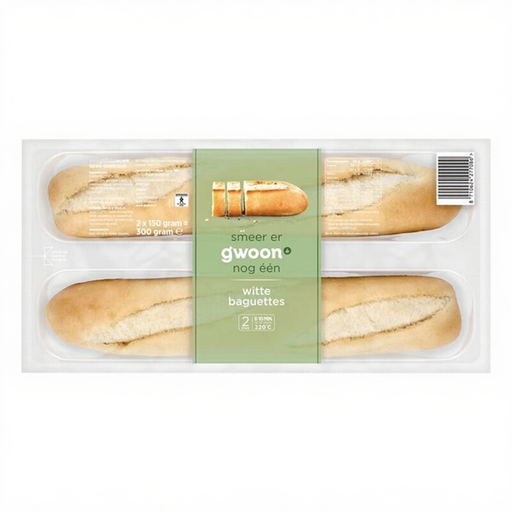 Image unavailable
Two multigrain baguettes for anyone looking for this format for lunch. Check the current packaging to see whether they’re labelled as wholemeal, which allergens they contain and whether they need to be baked before eating.
No. According to the Netherlands Nutrition Centre, multigrain means that at least three types of grain have been used, but the bread may also be made with refined flour. To choose wholemeal bread, look for the wholemeal description and check the ingredients of the specific loaf.
Compare the nutritional information for your chosen products on the same basis, such as per 100 g. The Netherlands Nutrition Centre gives the values for one 50 g slice of wholemeal bread cut at home as 3,4 g of fibre and 0,48 g of salt. These figures don’t apply to every multigrain roll or baguette.
Yes, check the allergens for the exact variety. PLUS’s product information for its wholemeal multigrain rolls lists wheat, rye, barley, oats, soya, milk and sesame, among other ingredients. Another roll may have a different recipe.
First check the baking instructions for the baguette you’re buying. PLUS says its wholemeal multigrain baguettes need to be baked for 8–10 minutes at 220 °C. Don’t assume the same instructions apply to another product.
That doesn’t follow from the rule described by the Netherlands Food and Consumer Product Safety Authority. The rule permits iodine compounds in bread through the addition of baker’s salt, but it doesn’t confirm that every loaf is made with it. If you need this information for a particular loaf, check the label or ask the baker.