For an Italian evening, choose multigrain bread that is explicitly described as wholegrain if wholegrains and fibre are your priorities: the name ‘multigrain’ and a dark colour don’t prove that it is. Compare fibre and salt per 100 g, check the allergens, and choose sliced bread if you want slices ready in advance, or bake-at-home bread if you want to prepare it just before eating.
Who is this choice relevant to?
If wholegrains and fibre matter to you
You’re looking for bread to serve with an Italian meal and want more reassurance than a dark colour or the name ‘multigrain’ can offer. According to the Netherlands Nutrition Centre, multigrain doesn’t automatically mean wholegrain, so check the product description and nutritional information.
If you want to serve warm bread
You want to prepare the bread just before the meal and serve it in pieces at the table. A wholegrain multigrain bake-at-home baguette could be a good fit, provided you check the baking instructions and allergens in advance.
If you’re comparing labels for guests
You want to compare the fibre and salt content of similar breads and check which ingredients or allergens may matter to your guests. Compare the nutritional values per 100 g and read the information on the packaging of the bread you buy.
What should you look for?
If fibre is a priority, start by checking whether the bread is described as wholegrain, then compare the nutritional information. The way you want to serve it and the ingredients your guests need to know about will help you decide which bread best suits the meal.
| What to consider | What to check when buying | Who it matters to |
|---|
| Wholegrains and fibre |
Check the wholegrain description and compare fibre per 100 g across similar breads. |
If you choose wholegrain deliberately, don’t rely on the name ‘multigrain’ alone. For around 36% of consumers, wholegrains and fibre are the main priority. |
| How to serve and prepare it |
Choose between sliced bread and bake-at-home bread; if you choose the latter, read the baking instructions. |
If you want to prepare the bread in advance or bake it just before eating, how it’s served will be the deciding factor. This convenience matters most to around 29% of consumers. |
| Taste and texture |
Check which grains and seeds the bread contains; don’t judge whether it’s wholegrain by its colour or name. |
For the bread basket, you’re looking for a taste and texture that suit the meal. Around 21% of consumers are expected to choose mainly on these qualities. |
| Salt and allergens |
Compare salt per 100 g and read the ingredients, allergens and any ‘may contain’ statements. |
If you’re buying bread for guests, you’ll want to know what it contains and how much salt it has. For around 14% of consumers, checking the label comes first. |
Common mistakes
-
Confusing multigrain or dark bread with wholegrain
According to the Netherlands Nutrition Centre, ‘multigrain’ means that different types of grain have been used; it doesn’t tell you whether the bread is entirely wholegrain. Colour and visible seeds don’t tell you that either.
Look for a wholegrain description on the packaging, then compare the fibre per 100 g.
-
Comparing nutritional values per serving only
Serving sizes can vary between products, making values per serving less useful when comparing two similar breads.
Compare fibre and salt per 100 g, as the Netherlands Nutrition Centre also recommends when reading food labels.
-
Choosing bake-at-home bread without planning when to serve it
A bake-at-home baguette needs to be prepared just before the meal. If you’re serving bread to guests, it’s also important to check the allergen information for that specific product.
Before buying, make sure you can follow the baking instructions and read the allergen information on the packaging.
-
Relying on a product page you looked at earlier
The ingredients and nutritional information for a bread can change, so a description you saw earlier may not match the packaging of the one you buy.
When you buy it, check the current ingredients, nutritional values and allergen information on the packaging.
Brands to consider
Albert Heijn
Albert Heijn provides product information for AH Zaans whole multigrain bread.
- Albert Heijn describes this specific bread as a whole multigrain loaf and lists 7,2 g of fibre and 0,6 g of salt per 100 g.
- These values don’t apply to the whole bread range. Check the current packaging when you buy it, including the allergen information.
ALDI
ALDI features a farmhouse wholegrain multigrain bread in its range information.
- ALDI describes this bread as a variety containing grains and seeds.
- Don’t treat this description as the nutritional profile for other ALDI breads; check the packaging of the variety you choose.
PLUS
PLUS lists wholegrain multigrain bake-at-home baguettes for preparing just before the meal.
- The product information for these baguettes states that they contain 56% wholemeal wheat flour and includes oven instructions.
- Check the packaging of the baguettes you choose for the current ingredients, allergens and baking instructions.
Dirk
Dirk features different types of bread among its multigrain and wholegrain products.
- The range overview can help you find individual types of bread.
- Compare fibre, salt and allergens using the information for the specific product and its packaging.
Lidl
Lidl features multigrain bread and provides an ingredients overview for oven-fresh bread.
- The ingredients overview gives you a starting point for taking a closer look at an oven-fresh loaf.
- For a specific variety, check the wholegrain description and nutritional information on the packaging.
Multigrain bread at Joybuy
These multigrain baguettes are an option if you want to serve bread in pieces with an Italian meal. Check the packaging to see whether the variety is entirely wholegrain and how to prepare it.
 No image available
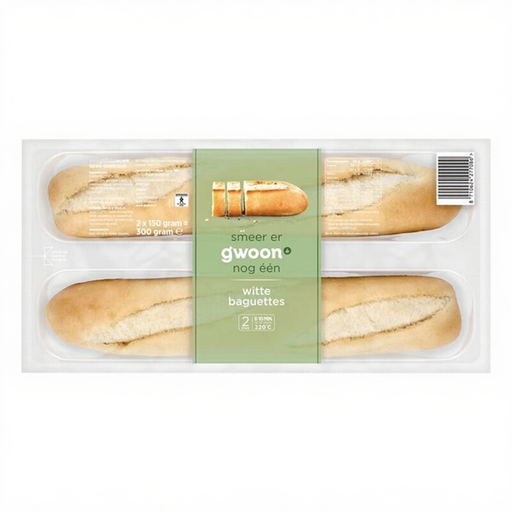
g'woon Popular Multigrain Baguettes, 2 pieces, 300 g
For serving baguettes with a meal. The pack contains 2 pieces, weighing 300 g in total. Check the wholegrain description, nutritional information per 100 g, allergens and baking instructions on the packaging.
View at Joybuy
Frequently asked questions
Is multigrain bread always wholegrain?
No. According to the Netherlands Nutrition Centre, multigrain bread contains at least three different types of grain; that doesn’t mean it’s entirely wholegrain. Check the product description and ingredients of the bread you want to buy.
How do I compare the nutritional values of two multigrain breads?
Compare similar breads per 100 g rather than per serving. Check fibre and salt in the nutritional information table, and also read the ingredients and allergen information. The Netherlands Nutrition Centre recommends using values per 100 g when comparing products.
Does all multigrain bread contain iodised salt?
You can’t tell from the name ‘multigrain’. Check the ingredients list on the specific packaging to see whether iodised salt is listed; the product information reviewed for Albert Heijn and PLUS mentions it for the breads in question.
How do I serve warm, wholegrain multigrain bake-at-home bread?
Follow the instructions for the product you’ve bought. PLUS recommends baking its wholegrain multigrain baguettes for 8–10 minutes in an oven at 220 °C; don’t assume that the same time and temperature apply to another baguette.
What should I check if a guest needs to avoid certain grains?
Read the full ingredients and allergen information on the specific packaging before serving the bread. Don’t rely on the ‘multigrain’ category: the grains used and any ‘may contain’ statements vary from product to product.


