
Students who like generous toppings
If you often make sandwiches or toasties, you’ll want to check that the slices are the thickness you’re after. Also check the type of bread on the label: multigrain does not automatically mean wholemeal.


For generously topped sandwiches or toasties, choose multigrain bread where you can check the slice thickness, or a loaf you can slice yourself. Check separately whether the label says ‘wholemeal’ if fibre is an important factor in your choice: multigrain does not automatically mean wholemeal. If you eat bread irregularly, consider buying half a loaf or freezing slices in portions as soon as you get home.
If you often make sandwiches or toasties, you’ll want to check that the slices are the thickness you’re after. Also check the type of bread on the label: multigrain does not automatically mean wholemeal.
If lectures, work or a shared kitchen mean you don’t eat bread every day, you could buy half a loaf or freeze slices in portions as soon as you buy them. This follows the Food Centre’s storage advice.
If wholemeal bread is your starting point, look for the ‘wholemeal’ label rather than relying on ‘multigrain’ alone. The Food Centre distinguishes between the two bread descriptions.
For your student room, first decide what sort of slices you want. Then check the bread description and choose an amount that suits your eating routine. A bread’s name is not a reliable guide to the thickness of its slices.
| What to consider | What to check when buying | Who is this important for? |
|---|---|---|
| Slice thickness | Look at the slices in store or check whether you can slice the loaf yourself. Don’t rely on words such as ‘hearty’ alone. | For generously topped sandwiches, I want to be able to judge in advance whether the slices are the thickness I prefer. For around 42% of these consumers, this is the main consideration for their snack. |
| Wholemeal and fibre | Look for the ‘wholemeal’ label and, if needed, compare the fibre information per 100 g on the same basis. | If fibre is my main priority, I don’t want to assume from the name ‘multigrain’ that the bread is wholemeal. Around 33% of these consumers prioritise checking this. |
| Quantity and storage | Check whether half a loaf will be enough, or freeze slices in portions as soon as you buy them. | If I don’t eat at home every day, I want to avoid having bread left over. For around 25% of these consumers, buying and storing the right amount is the main concern. |
According to the Food Centre, multigrain bread contains at least three different types of grain. The name does not mean it contains whole grains.
Look specifically for ‘wholemeal’ on the packaging if that’s the deciding factor for you.
If your eating routine varies, a whole loaf could be left uneaten for a while.
Choose half a loaf if that better suits how much you eat, or freeze a whole loaf in portions as soon as you buy it, as the Food Centre advises.
A name such as ‘hearty’ doesn’t tell you how thick each slice is. So you still won’t know whether the bread is right for the sandwiches or toasties you want to make.
Look at the slices in store or check the current packaging to see whether you can slice the bread to your preferred thickness.
The description ‘multigrain’ doesn’t tell you what type of salt is used in a particular loaf.
Check the ingredients list if you’re looking for iodised salt, or ask for product information if the bread is unwrapped.
Albert Heijn has an online category for multigrain and corn bread, including AH Liefde & Passie Meergranen.
Jumbo offers its own-brand multigrain bread options, including Stevig Meergranen.
PLUS lists multigrain bread in its online bread category and offers delivery or collection as shopping options.
Dirk lists, among other products, a half loaf of multigrain bread in its online range.
Lidl provides an ingredients and allergens overview for its oven-fresh bread.
These two bake-at-home products are for anyone who wants to slice their own multigrain bread. Before buying, check that the shape will give you the slices you want. Follow the packaging instructions for defrosting and baking.
 Image unavailable
For anyone who wants to slice a round loaf themselves for sandwiches. Check that you can cut it to your preferred thickness. The bread needs to be defrosted and baked, so check the packaging for preparation instructions.
If you specifically want wholemeal bread, check the label.
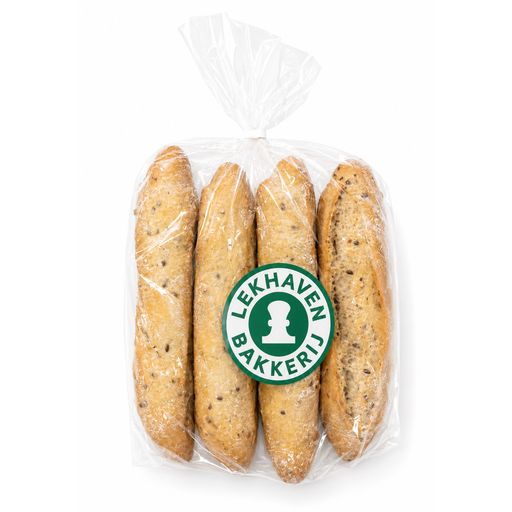 Image unavailable
Four individual baguettes for anyone who wants to use one at a time and slice it themselves. Check that the shape suits your fillings, and follow the packaging instructions for defrosting and baking.
Check the latest allergen information if you need to. The name ‘multigrain’ does not confirm that the baguettes are wholemeal.
No. According to the Food Centre, multigrain means the bread contains at least three different types of grain; it doesn’t tell you whether it’s wholemeal. If you’re looking for wholemeal bread, check the packaging for the ‘wholemeal’ label.
No. They’re a good choice if slice thickness matters to you for generously topped sandwiches or toasties. If you eat little bread or don’t eat it regularly, also consider the size of the loaf and whether you can freeze portions.
Buy an amount that suits your eating routine, or freeze the bread in portions as soon as you buy it. The Food Centre advises defrosting only what you need each time.
Check the ingredients list for that particular bread. If it’s unwrapped and the information isn’t available, ask the shop what type of salt has been used; ‘multigrain’ won’t tell you.
No. ‘Multigrain’ doesn’t mean gluten-free. Check the packaging and latest allergen information for each product; PLUS, for example, lists a Schär multigrain option as gluten-free.