
Hosts who want to make a centrepiece of the bread
If the bread is taking centre stage on the table, its shape, crust and serving time all matter. Compare a whole artisan loaf with a bake-at-home option; the latter needs preparation and an oven.


For a leisurely Sunday breakfast, choose a loaf that suits the way you plan to serve it: a whole artisan loaf or bake-at-home bread if crust and presentation matter, or sliced wholemeal multigrain bread if wholemeal flour, fibre and convenience are your priorities. The Netherlands Nutrition Centre says that ‘multigrain’ does not automatically mean ‘wholemeal’, so check the ingredients, nutritional information, allergens and storage instructions for each loaf.
If the bread is taking centre stage on the table, its shape, crust and serving time all matter. Compare a whole artisan loaf with a bake-at-home option; the latter needs preparation and an oven.
A special Sunday loaf can still fit your preference for wholemeal bread. Look beyond the word ‘multigrain’: check the product name, ingredients and fibre content per 100 g.
If allergens or the use of iodised salt matter to your choice, read the current label. For unpackaged bread, ask about the ingredients and allergens before you buy.
First decide how you want to serve the bread and how much you need. Then compare the product information for loaves that suit your plans. A rustic appearance doesn’t tell you how much wholemeal flour or fibre they contain.
| What to consider | What to check when buying | Who it matters to |
|---|---|---|
| Crust and presentation | Compare a whole artisan loaf with a bake-at-home option, and read the preparation instructions for bake-at-home bread. | If the bread is going in the middle of the table, I want a shape and crust that suit the way I’ll serve it. For around 40% of consumers choosing bread for this Sunday breakfast, presentation matters most. |
| Wholemeal flour and fibre | Check the product name and ingredients list; compare fibre on a like-for-like basis, for example per 100 g. | I don’t want to assume a loaf is wholemeal just because it’s dark or has visible seeds. For around 30% of consumers, verified wholemeal flour and fibre information are the top priorities. |
| Allergens and type of salt | Read the allergen information; where relevant, check whether baker’s salt or iodised salt is listed among the ingredients. | If I need to avoid certain ingredients or want to know which type of salt is used, I need to be able to check before serving. This clarity is the top priority for around 20% of consumers. |
| Quantity and storage | Choose a whole or half loaf, rolls or bake-at-home bread to suit the number of people eating, and read the storage instructions. | For a small gathering, I don’t want to put out more bread than we’ll use. Around 10% of consumers prioritise getting the quantity right and storing any leftovers. |
According to the Netherlands Nutrition Centre, multigrain refers to the use of different types of grain; it doesn’t automatically mean the bread contains wholemeal flour. A dark colour or visible seeds won’t tell you that either.
Look for ‘wholemeal’ in the product name and check the ingredients list and nutritional information for the specific loaf.
A sourdough-style or organic appearance doesn’t, in itself, tell you anything about the fibre content, salt content or type of salt used. The Netherlands Nutrition Centre also notes that bread doesn’t have to be made with baker’s salt.
Compare the information for each product and, if the type of salt matters to your choice, check whether baker’s salt or iodised salt is listed among the ingredients.
Multigrain bread can contain different grains and seeds. If you need to avoid certain ingredients, you’ll need information about the specific loaf before you buy it.
For packaged bread, read the current label. For unpackaged bread, ask about allergens in advance; the Netherlands Food and Consumer Product Safety Authority highlights how important this information is for shoppers.
A large loaf can look great on the table, but if there are only a few of you, you may have bread left over.
Choose a size that suits your group and follow the storage instructions for the loaf you’ve bought.
Bake-at-home bread also takes time to prepare, so factor that in before breakfast.
These retailers offer different types of multigrain bread to compare. Assess the ingredients and nutritional information for the bread you actually choose, rather than the range as a whole.
Albert Heijn offers, among other options, whole multigrain artisan loaves and products in its Liefde & Passie and OerDesem ranges.
Jumbo offers both standard and wholemeal multigrain breads, including a half Boeren Donker Volkoren Meergranen loaf.
PLUS offers Korenlanders multigrain bread and multigrain products to bake at home.
Dirk offers, among other options, half multigrain loaves, whole artisan loaves and multigrain baguettes to bake at home.
ALDI offers, among other options, whole multigrain artisan loaves, farmhouse wholemeal multigrain bread and multigrain baguettes.
Lidl lists a 600 g organic brown sourdough multigrain loaf with seeds.
These products include baguettes, round loaves and individual rolls for a Sunday breakfast. The baguettes and round loaves need preparing, so choose a size to suit the number of people eating and check the packaging if ingredients or nutritional values will influence your choice.
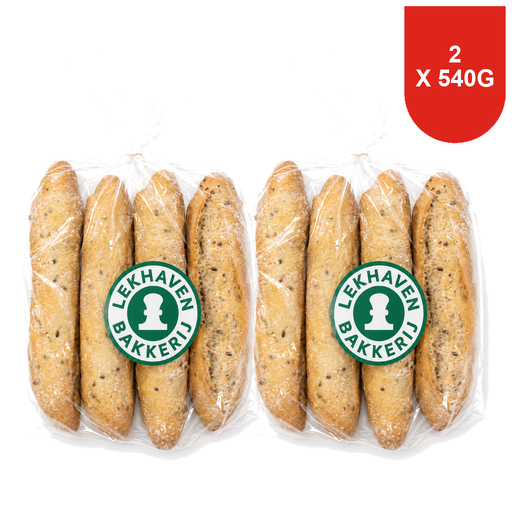 Image unavailable
For anyone who wants to bake baguettes shortly before Sunday breakfast and serve them in portions.
According to the product description, they need around 4 hours to defrost, followed by 5–7 minutes in the oven at 220 °C. Check the packaging for allergens, and compare nutritional values only when it’s clear what they relate to.
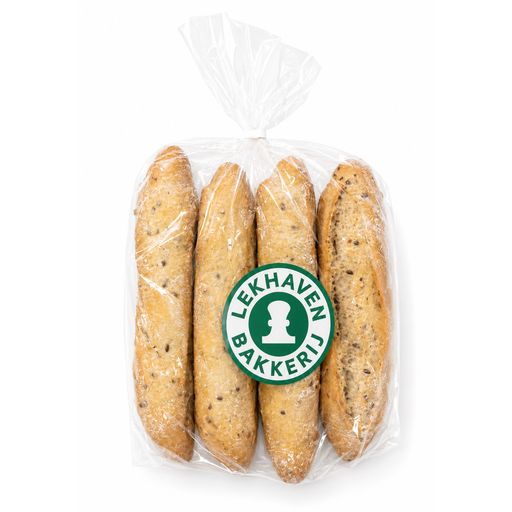 Image unavailable
Four individual baguettes are ideal for a breakfast where you want to serve the bread one piece at a time.
The product description recommends defrosting for around 4 hours, then baking for 5–7 minutes at 220 °C. Check the current packaging for allergen information and the basis for any nutritional values.
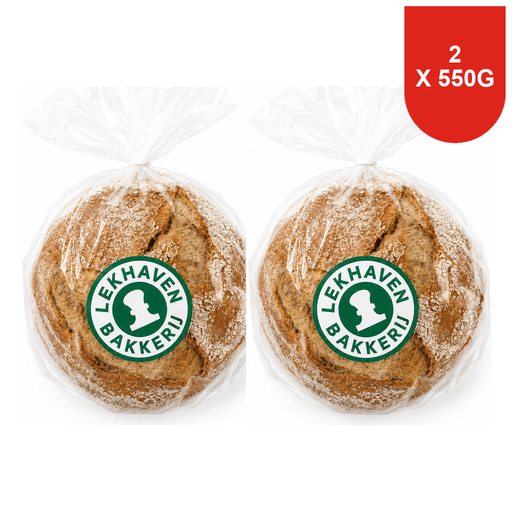 Image unavailable
Two round loaves are a good fit for a breakfast table where you want to slice the bread yourself.
The description recommends defrosting for around 4 hours, baking for 11–13 minutes at 220 °C and then leaving to cool for half an hour. Check the packaging for allergens and the basis for the nutritional values.
 Image unavailable
This single round loaf is a good option if you want to slice bread at the table without preparing two loaves.
According to the description, allow around 4 hours to defrost, 11–13 minutes to bake at 220 °C and half an hour to cool. Check the packaging for allergens and compare nutritional values only on the same basis.
 Image unavailable
Four individual multigrain rolls are practical if you want to serve separate portions for a smaller group.
The product description lists rye, wheat, millet, maize, barley and oats, among other ingredients, and gives a fibre content of 3,3 g per 100 g. Check the current allergen information if you need to avoid any ingredients.
No. According to the Netherlands Nutrition Centre, multigrain bread contains at least three different types of grain; that alone doesn’t mean the flour is wholemeal. If wholemeal flour matters to your choice, check the product name and ingredients.
No. The Netherlands Nutrition Centre says that bread doesn’t have to be made with baker’s salt. Check the label for your chosen loaf to see whether baker’s salt or iodised salt is listed among the ingredients, or ask the baker.
For pre-packed bread, read the allergen information on the label. For unpackaged bread, ask for allergen information about the specific product before buying; don’t rely on the bread’s name or appearance alone.
Yes, as long as the storage instructions for your chosen bread suit your plans. Albert Heijn and PLUS recommend freezing some specific multigrain loaves on the day of purchase. Follow the instructions on the packaging for your loaf, and remember to allow time to defrost and bake bread that needs finishing in the oven.