
People who regularly eat bread with soup
If split pea soup is a regular feature on your table, how much bread you eat is the main factor in deciding whether a whole or half loaf is more practical. Also check whether you can freeze any leftovers.


A wholemeal multigrain loaf is a good match for a regular split pea soup meal if you’ll use it up or freeze it. Choose a half loaf if a whole one would be left uneaten, or a bake-at-home option if you’d like to serve warm bread and have time to prepare it. Whatever you choose, check the ingredients, allergen and nutritional information; the name ‘multigrain’ alone doesn’t mean the bread is wholemeal.
If split pea soup is a regular feature on your table, how much bread you eat is the main factor in deciding whether a whole or half loaf is more practical. Also check whether you can freeze any leftovers.
If you’re looking for wholemeal bread, check the product description and compare the fibre and salt per 100 g. Multigrain doesn’t automatically mean wholemeal.
If you need to be mindful of allergens or iodised salt, the ingredient information matters more than the name of the bread. Check the packaging or ask about unwrapped bread.
First, work out how much bread you’ll eat with your split pea soup. Then compare the product descriptions, nutritional information and ingredients of breads that suit the way you’ll use them.
| What to consider | What to check when buying | Who it matters to |
|---|---|---|
| Quantity and waste | Compare the size of whole and half loaves. Check the storage or freezing advice. | If I regularly eat bread with soup, I want to avoid leaving some uneaten. An estimated 36% of consumers put this first. |
| Wholemeal, fibre and salt | Check whether the product description says wholemeal, and compare the fibre and salt per 100 g. | When soup is a regular meal, I want to know what kind of bread I’m eating, not just how many types of grain it contains. An estimated 29% of consumers prioritise wholemeal, fibre and salt. |
| Ingredients and allergens | Read the ingredients and allergen information. If needed, also check whether baker’s salt or iodised salt has been used. | If I need to avoid certain ingredients or keep an eye on the salt used, the bread needs to suit my needs. An estimated 21% of consumers put this check first. |
| Preparation and storage | Check the loaf size, freezing advice and any oven or air fryer instructions. | For a soup meal, sometimes I want to serve bread straight away, and sometimes I’d rather serve it warm. An estimated 14% of consumers consider convenience the most important factor. |
A smaller loaf only helps to avoid waste if the quantity better matches what you eat. The number of slices and the weight can vary between products.
Compare loaf sizes and consider whether you’ll use up a whole loaf in time or can freeze it.
According to the Voedingscentrum, baker’s salt is not compulsory in bread. The name ‘multigrain’ doesn’t tell you which salt has been used.
Look for baker’s salt or iodised salt in the ingredients list, or ask about it when buying unwrapped bread.
Multigrain bread can contain grains that contain gluten. A name referring to several types of grain doesn’t mean the bread is gluten-free.
Before choosing, check the ingredients, allergen information and whether the bread is explicitly labelled gluten-free.
AH Zaans meergranen half is an example of a smaller loaf for anyone who doesn’t use a whole one each time.
Jumbo offers, among other options, whole and half loaves of Boeren Donker Volkoren Meergranen, as well as Stevig Meergranen with seeds.
The 400 g Halfje donker meergranenbrood is worth considering if a smaller quantity suits you better.
ALDI offers Boeren volkoren meergranenbrood in both whole and half loaf sizes.
PLUS offers both a whole dark multigrain loaf and bake-at-home wholemeal multigrain baguettes.
Bakker van der Akker Bakkers meergranen half is a smaller loaf for a meal where you won’t eat much bread.
These products offer different quantities and types of bread to serve with split pea soup: round loaves, individual rolls and baguettes to bake at home. Compare the packaging for each product, and check the ingredients and nutritional information that matter to you.
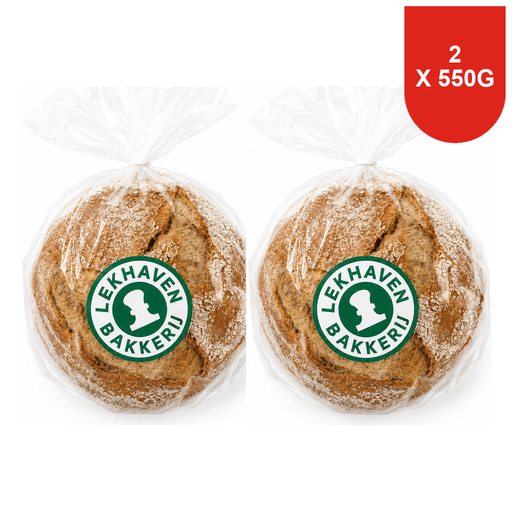 No image available
This pack of two round loaves is a good fit for a soup meal where you’d like to use or store more bread. Check the label if wholemeal ingredients, allergens or nutritional values per 100 g matter to you.
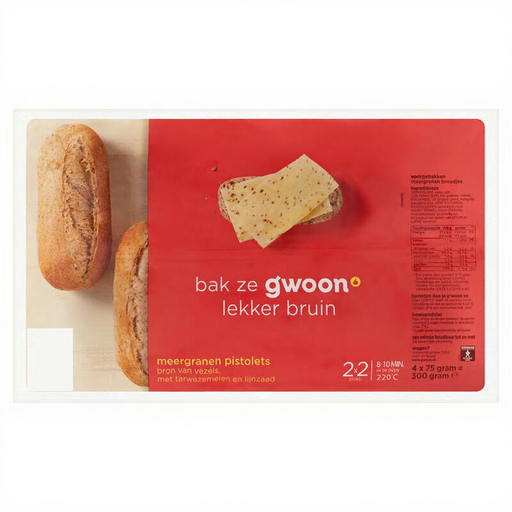 No image available
Four individual rolls are a handy option if you want to serve one with each bowl of split pea soup. Check the label to see whether the ingredients and nutritional values meet your needs.
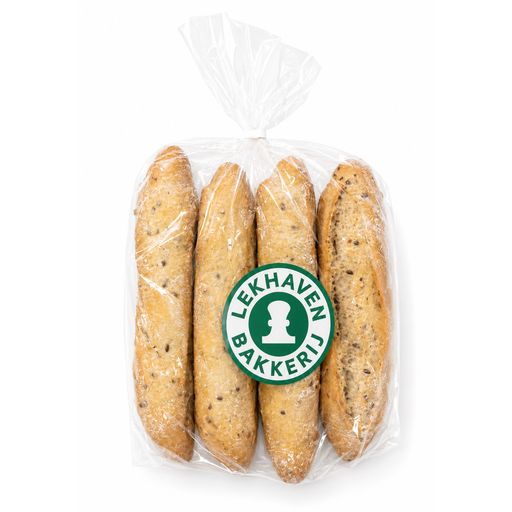 No image available
These four baguettes are ideal if you’re planning to bake bread to serve with your soup. Check the pack for preparation instructions, and look at the label for wholemeal ingredients and nutritional values.
 No image available
A 550 g round loaf is an option if you’d like to serve one whole loaf with your soup. Check the ingredients, storage advice and nutritional information on the packaging before comparing it with other breads.
No. Check whether the product description says wholemeal and read the ingredients list; the word ‘multigrain’ on its own doesn’t tell you.
The salt in the bread adds to the salt in the soup meal. The Voedingscentrum lists 1,74 g of salt for a 250 g bowl of split pea soup; compare the salt content of different breads per 100 g.
For pre-packed bread, read the allergen information in or alongside the ingredients list. According to the Netherlands Food and Consumer Product Safety Authority, information about allergens present must also be available where unpackaged bread is sold; ask before you choose.
No. According to the Voedingscentrum, using baker’s salt in bread is not compulsory. If it matters to your choice, check the ingredients list for baker’s salt or iodised salt.
It depends on the bread and the storage advice. For example, Albert Heijn says that AH Zaans meergranen half can be frozen at home on the day of purchase; for other breads, follow the instructions on their packaging.