What should you look for when choosing?
Start with the snack you want to make: a sandwich you can use straight away, a piece of baguette you slice yourself, or a loaf you need to bake first. Then check the actual slice and the label of the product you’ve chosen.
| What to consider |
What to check when buying |
Who should pay particular attention? |
| Width and sturdiness |
Look at an actual slice or slice a whole loaf or baguette yourself. A ‘sliced’ label doesn’t specify a standard slice thickness. |
For warm or generous toppings, I want a piece of bread that’s big enough and won’t tear straight away. An estimated 36% of consumers consider this the most important factor. |
| Quick to serve |
Check whether the bread is ready to use or needs to be defrosted, baked and sliced first. |
If I’m serving several snacks at once, I don’t want to wait for the oven first. That’s why around 29% of consumers prioritise minimal preparation. |
| Ingredients and nutritional information |
Read the ingredients and allergen information; compare fibre and salt per 100 g. Check whether it’s labelled wholemeal and, if it matters to you, whether it contains iodised salt or baker’s salt. |
I want to know what’s in the bread and don’t rely on the word ‘multigrain’ alone. For around 21% of consumers, label information is decisive. |
| Baking and portioning it yourself |
Read the preparation instructions and check that you have the equipment and time you need. Also consider whether the shape of the bread suits the number of pieces you want to serve. |
I’m happy to make time for warm pieces that I can slice myself, as long as baking fits into my evening plans. This is the top priority for around 14% of consumers. |
Brands and shops to compare
Compare the shape and label for each product: a sliced whole loaf, baguette and bake-at-home bread don’t all solve the same preparation problem.
Albert Heijn
Albert Heijn lists a range of sliced multigrain breads, including a dark wholemeal multigrain sourdough loaf.
- Product information for these breads includes details such as ingredients and nutritional values, so you can compare the exact varieties.
- ‘Sliced’ doesn’t confirm the thickness of the slices. Check them yourself if thickness matters for your toppings.
Jumbo
Jumbo describes products including dark multigrain bread made with wholemeal wheat flour and sunflower seeds, as well as sturdy wholemeal bread with sunflower seeds.
- The bread descriptions give you a starting point for comparing the grain base and texture of each product.
- A description such as ‘sturdy’ doesn’t confirm that the slices are thick or suitable for your toppings.
PLUS
PLUS lists multigrain bread and multigrain baguettes, including a product that needs to be baked before serving.
- You can compare preparation methods, ingredients and nutritional information for specific baguettes.
- Check whether each product is ready to use; a baguette isn’t a pre-sliced sandwich loaf.
Dirk
Dirk lists products including whole multigrain bread, crusty artisan loaves and rustic multigrain bake-at-home baguettes.
- The different bread shapes let you choose between sandwiches and baguette pieces that you portion yourself.
- For the product you choose, check the slice thickness, preparation method and full packaging information.
ALDI
ALDI describes sliced farmhouse wholemeal multigrain bread and a multigrain baguette with seeds.
- These product shapes let you compare pre-sliced bread with a baguette that you can portion yourself.
- Check the packaging of the variety you choose for the actual slice, ingredients and nutritional values.
Multigrain bread and baguettes at Joybuy
These products suit you if you want to cut a baguette into snack-sized pieces or slice a round loaf yourself. Check the preparation instructions for each product and decide whether the pieces are suitable for your toppings; these aren’t confirmed as thickly sliced sandwich loaves.
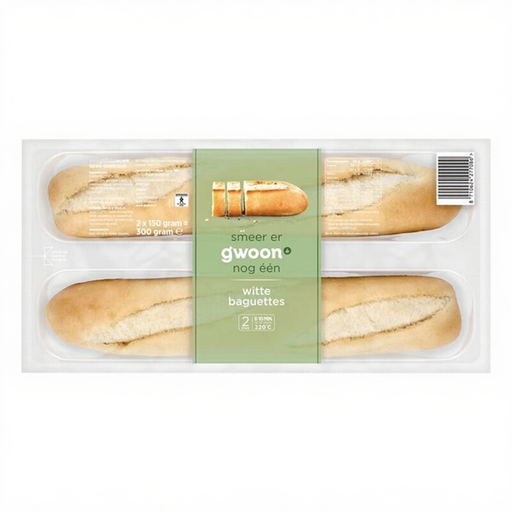 Image unavailable
g'woon Popular Multigrain Baguettes, 2 stuks, 300 g
The baguette shape is ideal for snacks you want to portion yourself. The pack contains 2 baguettes with a total weight of 300 g.
Check the preparation instructions and see whether the pieces are wide and sturdy enough for the toppings you want to use.
View at Joybuy
 Image unavailable
Lekhaven Bakkerij Multigrain Country Bread Round, 550 g
This round multigrain loaf is a good option if you want to slice the pieces for your snacks yourself. The loaf weighs 550 g.
This frozen variety needs to be defrosted and baked first. Check the baking instructions on the packaging and see whether it’s sturdy enough for your toppings.
View at Joybuy
 Image unavailable
Lekhaven Bakkerij Multigrain Rustic Baguette, 4 × 135 g
These baguettes are ideal for a snack night when you want to slice the bread into pieces yourself after baking. The pack contains 4 baguettes weighing 135 g each.
This frozen bake-at-home product needs to be defrosted, baked and cooled. Follow the baking instructions on the packaging and check whether the pieces are suitable for warm or generous toppings.
View at Joybuy
Frequently asked questions
Is multigrain bread automatically wholemeal?
No. If you’re looking for a wholemeal variety, check the ingredients and product description for the exact loaf. The Netherlands Nutrition Centre explains that wholemeal bread is made from the entire grain; ‘multigrain’ doesn’t answer that question.
Is ‘thick cut’ enough to help me choose bread for generous toppings?
No. You should also check the actual width, thickness and texture of the slice. A product description such as ‘sliced’, ‘sturdy’ or ‘rustic’ doesn’t automatically tell you whether it’s the right size for your snack.
Does every loaf in the Netherlands contain iodised baker’s salt?
No. According to the Netherlands Nutrition Centre, using baker’s salt is not compulsory. Check the label of the bread you choose to see whether iodised salt or baker’s salt is listed among the ingredients.
How do I check for allergens in multigrain bread?
Read the allergen information for the exact product, even if you already know which grains are in another variety. PLUS lists different gluten-containing grains and possible warnings about other allergens for specific multigrain baguettes; you can’t assume that information applies to another loaf.
Can I cook a multigrain bake-at-home baguette in an air fryer?
Only if the preparation instructions for the product you’ve chosen allow it. For a specific bake-at-home multigrain variety, PLUS recommends 4 minutes in a preheated air fryer at 200 °C; for another loaf, follow the instructions on its packaging.


