
For generously topped toast
If you’re making broad, open-faced bites, look for bread labelled as thickly sliced or choose a whole loaf that you can slice yourself.


For generously topped Italian-style bites, choose multigrain bread labelled as thickly sliced, or a whole loaf that you can cut to size yourself. If you have time to use the oven, a bake-at-home baguette can work well for smaller warm bites. Bakkerij Lamers lists its Waldkoren at 14.5 mm when thickly sliced, compared with 11.5 mm for standard slices. Don’t assume other loaves will have the same slice thickness, and check the ingredients, allergens and nutritional information for each product.
If you’re making broad, open-faced bites, look for bread labelled as thickly sliced or choose a whole loaf that you can slice yourself.
Check the ingredients, allergens and nutritional information for the exact loaf, including fibre and salt per 100 g. The name ‘multigrain’ doesn’t automatically mean that a loaf is wholemeal.
A bake-at-home baguette lets you cut your own smaller bites, but you’ll need to allow time for preparation and baking. It’s a different shape from a broad slice of bread.
When choosing multigrain bread for an Italian evening, start by considering the shape of your topped bites, the ingredients and when you’ll be serving them.
| What to consider | What to look for | Who it matters to |
|---|---|---|
| Slice thickness and loaf shape | Look for a stated slice thickness or choose a loaf you can cut yourself. The word ‘sliced’ alone doesn’t tell you how thick the slices are. | If I’m adding generous toppings, I want a slice I can hold easily. Around 50% of consumers choosing multigrain bread for this Italian evening prioritise slice thickness or being able to cut it themselves. |
| Ingredients and allergens | Compare fibre and salt per 100 g, and read the ingredients and allergen information for the exact product. | When I’m choosing bread for guests, I want to know which grains and allergens it contains. For around 30% of these consumers, the ingredients matter most. |
| Preparation and serving time | Check whether the bread is ready to serve or needs to be defrosted or baked first. | If I want to serve warm, smaller bites, the preparation needs to fit my schedule. Around 20% of these consumers prioritise convenience at serving time. |
A sliced supermarket loaf won’t necessarily have the thickness you need for broad, topped bites.
Check the slice thickness, ask whether a whole loaf can be thickly sliced, or cut it yourself.
The grains used, whether the bread is wholemeal and its nutritional values vary from loaf to loaf. Allergens also depend on the exact product.
Read the product description, ingredients, allergen information and nutritional details on the packaging. Compare nutritional values on the same basis, such as per 100 g.
A baguette gives you smaller slices than a broad round loaf or hearth-baked loaf, and needs to be baked first.
Choose a baguette if smaller bites suit your plans. For broad slices, choose a loaf whose slicing you can control.
These brands offer different types of multigrain bread. Check the loaf shape, slicing options and packaging for the specific product.
Albert Heijn describes AH Liefde & Passie Meergranen as a sliced, brown multigrain loaf weighing 550 g.
Jumbo’s multigrain range includes Stevig Meergranen and Boeren Donker Volkoren Meergranen.
Lidl describes a multigrain loaf containing ingredients such as wheat, barley and buckwheat.
ALDI includes multigrain loaves in its daily fresh range and also sells part-baked multigrain baguettes.
PLUS lists various multigrain loaves, including Korenlanders Desem Meergranen Boekweit.
Dirk lists both Bakker van der Akker Bakkers meergranen half and a rustic bake-at-home multigrain baguette.
These products suit two ways of serving: a round multigrain loaf that you slice yourself for topped bites, or baguettes for smaller bites that you bake at home. Check how much preparation each option requires.
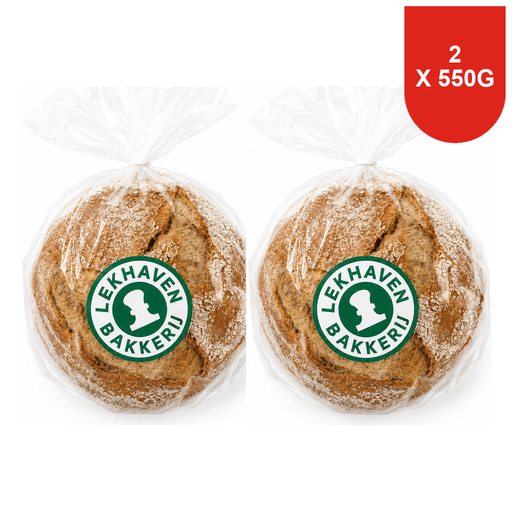 Image unavailable
A round loaf you can slice yourself if you want to choose the size of the slices.
According to the product information, this frozen bread needs to be defrosted and baked, then left to cool for around half an hour before slicing. Check the packaging for nutritional values per 100 g and allergen information.
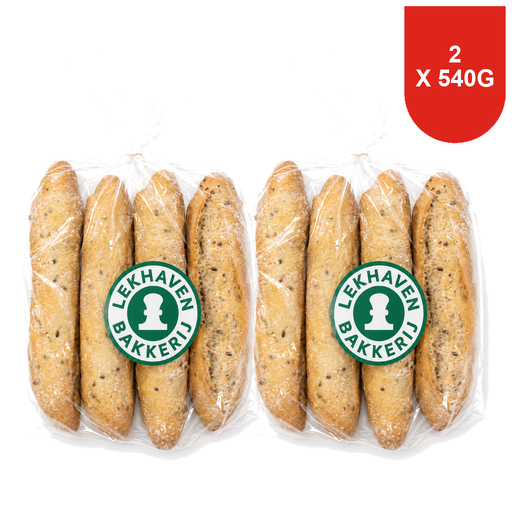 Image unavailable
The baguette shape works well for smaller bites that you want to slice after baking, rather than broad sandwich slices.
Allow time for defrosting and baking. Follow the baking instructions on the packaging, and use the nutritional values per 100 g shown on the pack when comparing products.
 Image unavailable
You can slice this round loaf yourself to choose the slice size for your topped bites.
This frozen bread needs to be defrosted and baked. According to the product information, leave it to cool for around half an hour before slicing. Check the packaging for nutritional values per 100 g and allergen information.
No, ‘sliced’ on its own doesn’t tell you how thick the slices are. Bakkerij Lamers lists its Waldkoren separately as 11.5 mm for standard slices and 14.5 mm for thick slices. For another loaf, look for a stated thickness or ask about the slicing options.
No, ‘multigrain’ and ‘wholemeal’ don’t mean the same thing. Check the product description and ingredients for the loaf you’re buying. For example, PLUS describes its Korenlanders Donker meergranen rond heel as wholemeal multigrain bread.
Read the allergen information on the packaging for the exact loaf, even if you’re not serving anything else with it. For example, Albert Heijn lists sesame among the ingredients in AH Liefde & Passie Meergranen. Don’t assume another variety has the same ingredients.
No, don’t assume that all Dutch bread contains iodised baker’s salt. The Staatscourant described efforts to encourage its use through an agreement in 2008; according to Brood.net Professionals, its use isn’t a legal requirement. Check the ingredients list for a specific loaf.
You can if the storage instructions for that specific bread allow it. Albert Heijn advises freezing AH Liefde & Passie Meergranen on the day of purchase and using it within one month. For other loaves, follow the instructions on their packaging.