
If you pay attention to wholegrains and fibre
You want to pair sweet toppings with bread whose wholegrain status and fibre content you can compare on the label, rather than relying on the word “multigrain” alone.


Choose multigrain bread that is explicitly labelled wholegrain, and compare the fibre per 100 g if those qualities are your priority. If you’re mainly after a satisfying bite with sweet toppings, check which seeds the specific bread contains. According to the Netherlands Nutrition Centre, multigrain means the bread is made from at least three types of grain, but it doesn’t tell you whether it’s wholegrain. Check the ingredients and allergens too, including sesame.
You want to pair sweet toppings with bread whose wholegrain status and fibre content you can compare on the label, rather than relying on the word “multigrain” alone.
You’re looking for a hearty slice with seeds such as sunflower seeds, linseed or sesame to contrast with soft, sweet toppings.
You want to check which grains, seeds and allergens the bread contains before buying, or you’re choosing bread for a young child who is just starting to eat it.
First decide whether a wholegrain base, texture to go with sweet toppings or the ingredients matters most to you. Then compare the relevant information on the label of the bread you want to buy.
| What to consider | What to check when buying | Who it matters to |
|---|---|---|
| Wholegrains and fibre | Look for an explicit wholegrain label and compare the fibre per 100 g. | If I often eat sweet toppings, I want to know what kind of bread forms the basis of my breakfast. For around 42% of consumers, wholegrains and fibre come first. |
| Seeds and texture | Check which seeds are listed in the ingredients and choose a type of bread that works with your toppings. | With soft, sweet toppings, I’m looking for a slice with a noticeable bite. Around 33% of consumers say this texture is their top priority. |
| Ingredients and suitability | Check the allergen information, including “may contain” statements, and consider whether bread with seeds is suitable for a young child. | When I’m buying bread for someone else, the ingredients and texture need to suit them. This is the top consideration for around 25% of consumers. |
According to the Netherlands Nutrition Centre, multigrain refers to at least three different types of grain. The name doesn’t confirm that the bread is wholegrain or tell you how much fibre it contains.
Look for an explicit wholegrain label, then compare the fibre per 100 g.
Seeds don’t tell you everything about the ingredients. Product information from Jumbo, PLUS and Albert Heijn shows that allergens such as gluten-containing grains, sesame and soya can vary from one loaf to another.
For the specific bread, check both the listed allergens and any “may contain” statement.
A mention of baker’s salt or iodised salt doesn’t prove that every multigrain loaf contains the same amount of iodine.
If this information matters to your purchase, check the ingredients list of the bread you choose.
A whole loaf may not suit your needs if you only have bread for breakfast now and then.
If needed, choose a smaller loaf or follow the specific product’s instructions for freezing portions.
Bread you don’t use in time may go to waste.
AH Liefde & Passie Multigrain is a brown multigrain bread containing ingredients such as sunflower seeds and sesame seeds.
Jumbo Hearty Multigrain and Jumbo Farmer’s Dark Wholegrain Multigrain are two breads explicitly described as wholegrain, with seeds and kernels.
PLUS describes its Korenlanders Dark Multigrain Round Loaf as a wholegrain multigrain loaf.
Dirk describes its Whole Multigrain Artisan Loaf as a hearty bread with grains and seeds.
ALDI lists both Luxury Artisan Multigrain Bread and Farmer’s Wholegrain Multigrain Bread; only the second name explicitly mentions wholegrain.
Lidl describes its multigrain bread as containing ingredients such as wheat, barley, buckwheat and seeds.
These products include round multigrain loaves, multigrain baguettes and rolls for anyone looking for a type of bread to go with sweet toppings. If you specifically want wholegrain bread or want to compare fibre, check the product’s labelling and nutritional information per 100 g.
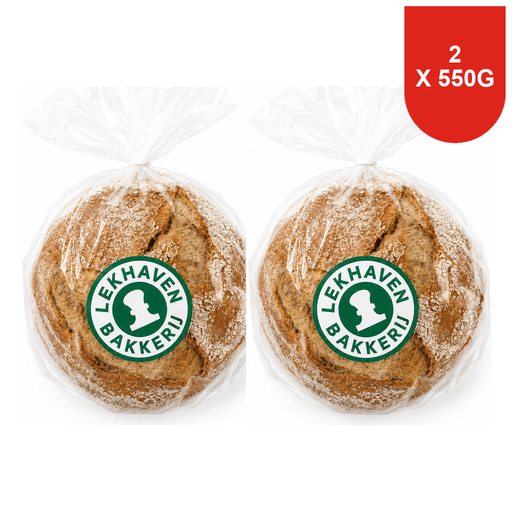 Image unavailable
A round loaf for anyone who enjoys slices with sweet toppings and wants to check the seeds on the label.
The product name lists two 550 g loaves. Allow time to defrost and bake for breakfast; check the packaging if you’re looking for wholegrain bread or a higher fibre option.
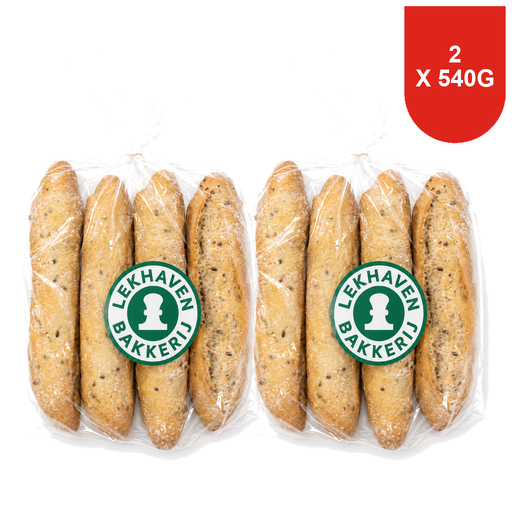 Image unavailable
The baguette shape may suit you if you’d rather serve a smaller bread with sweet toppings than slices from a round loaf.
The product name lists 4 × 135 g × 2; check how many baguettes are in the pack. Allow time to defrost and bake, and read the ingredients and allergen information before buying.
 Image unavailable
This round loaf is ideal if you want to cut slices for a breakfast with sweet toppings.
The product name lists 550 g. Allow time to defrost, bake and cool before slicing; check the packaging to compare wholegrain status and fibre.
 Image unavailable
Rolls are a handy alternative if you’d rather serve individual portions with a sweet breakfast than slice a whole loaf.
The product name lists four rolls. Check the packaging to see which seeds and allergens they contain, and whether the product is explicitly labelled wholegrain.
No. According to the Netherlands Nutrition Centre, multigrain bread is made from at least three different types of grain. To check whether it’s wholegrain, look at the product description and ingredients.
It depends on what you’re looking for. To choose wholegrain bread with more fibre, compare the wholegrain label and fibre per 100 g. For a satisfying bite, check which seeds are actually listed in the ingredients. One doesn’t tell you the other.
The Netherlands Nutrition Centre recommends starting after 6 months with brown bread or wheat bread without seeds or kernels. Choose the bread and way of serving it to suit your child’s eating skills.
No, don’t assume that every loaf has the same ingredients. If it matters to your choice, check the specific product’s ingredients for mentions such as iodised salt or baker’s salt.
Follow the storage instructions for the bread you choose. Albert Heijn and PLUS say that the loaves mentioned here can be frozen on the day of purchase. Freezing separate portions can be handy if you don’t have bread for breakfast every day.