
Parents of school-age party guests
They want to serve seeded bread, but also check that it is explicitly labelled wholemeal or brown. The Voedingscentrum lists wholemeal and brown bread as suitable choices for children aged 4 to 12.


For school-age children who are used to seeded bread, you can choose a multigrain loaf that is also explicitly labelled wholemeal or brown; the word ‘multigrain’ alone doesn’t tell you this. Individual rolls are handy if you want to keep slicing to a minimum, but check the allergen information for every variety. For babies who are starting to eat bread after six months, the Voedingscentrum recommends brown or wheat bread without seeds or kernels.
They want to serve seeded bread, but also check that it is explicitly labelled wholemeal or brown. The Voedingscentrum lists wholemeal and brown bread as suitable choices for children aged 4 to 12.
They want to be able to put out rolls without having to slice a whole loaf. Individual seeded rolls, such as the pack of four rolls from Bakker van der Akker at Dirk, offer a convenient way to serve them.
Before buying, they need to know the children’s ages and the ingredients in the bread they’re considering. For babies starting to eat bread after six months, the Voedingscentrum recommends a variety without seeds or kernels; the Netherlands Food and Consumer Product Safety Authority stresses the importance of clear allergen information on labels.
First, find out whether all your guests can eat seeded bread. Then choose a type of bread and serving format to suit the children and the number of portions you want to prepare.
| What to consider | What to check before buying | Who it matters to |
|---|---|---|
| Wholemeal and fibre | Look for the wholemeal or brown label. Compare fibre only on a like-for-like basis, for example per 100 g; check whether baker’s salt is used if iodine content is a factor in your choice. | If the type of bread is my first consideration for the children, I don’t want to judge it by its seeded crust alone. Around 33% of consumers prioritise this nutritional consideration. |
| Portions | Compare the number of rolls or the weight of a whole loaf with the portions you want to serve. | When I’m preparing bread for lots of children, I want to keep slicing to a minimum. Around 25% of consumers prioritise convenient portioning. |
| Allergens | Read the label on the product you’ve chosen. If you’re buying unpackaged bread, ask for allergen information before you buy. | If a guest has a food allergy, I need to know what ingredients the bread contains before serving it. Allergens are the main consideration for around 25% of consumers. |
| Age and texture | Ask whether any children are just starting to eat bread; choose an option without seeds or kernels for them. | If there’s a baby among the guests, I don’t want to assume that the same seeded bread is suitable for everyone. Around 17% of consumers prioritise age suitability. |
Seeds and several types of grain don’t guarantee that a loaf is wholemeal. The Voedingscentrum recommends wholemeal and brown bread for children aged 4 to 12.
Check the type-of-bread label on the packaging and, if it matters to your choice, compare the fibre content per 100 g.
By then, it may be too late to find a suitable alternative for a guest with an allergy. The Netherlands Food and Consumer Product Safety Authority says that allergens must be clearly listed on the labels of packaged foods.
Ask about allergies in advance and keep the packaging or allergen information to hand while the bread is being served.
For babies starting to eat bread after six months, the Voedingscentrum recommends brown or wheat bread without seeds or kernels. This guidance for first foods doesn’t automatically apply to older children.
Ask how old your youngest guests are and, if needed, set aside some bread without seeds or kernels for them.
Albert Heijn’s online range includes products such as AH Multigrain Triangle Rolls.
Jumbo lists both multigrain bread and a half loaf of Farmhouse Dark Wholemeal Multigrain Bread with seeds and kernels.
Lidl lists multigrain bread in its range.
ALDI describes its multigrain bread as containing grains and seeds, and also lists a Farmhouse Wholemeal Multigrain variety.
PLUS lists Korenlanders Light Multiseed as a whole loaf weighing 800 g.
Dirk lists packs of four Bakker van der Akker Multikorn multigrain rolls with seeds and kernels.
These multigrain breads are a good fit for a party table if you want to serve seeded bread: choose between baguettes you can divide up and round loaves you can slice yourself. Before choosing bread for your guests, check the type of bread, allergens and preparation instructions on each pack.
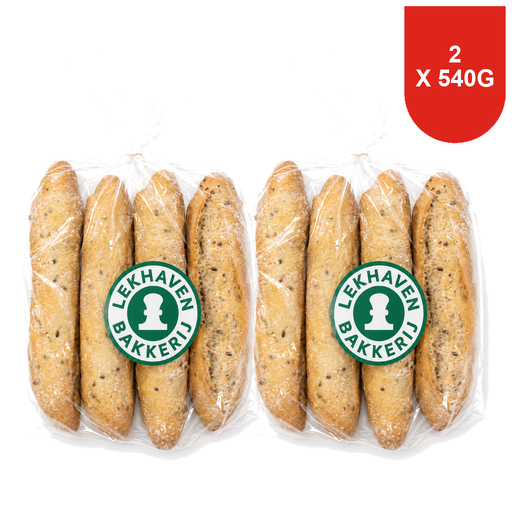 Image unavailable
A baguette is handy when you want to put out individual portions. The product name states 4 x 135 gx 2; check exactly how many baguettes are in the pack. Allow time to defrost and bake, and read the allergen information before serving.
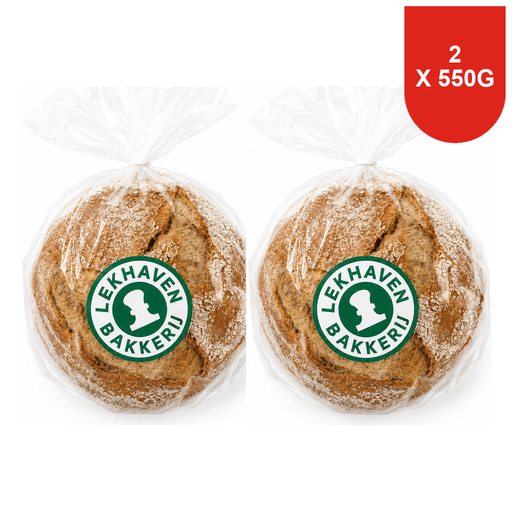 Image unavailable
Two round loaves give you the option of slicing your own portions for the party. The product name states that there are two loaves of 550 g each. Allow time to defrost, bake and cool, and check the type-of-bread label and allergen information on the packaging.
 Image unavailable
This round loaf is a good choice if you want to cut your own portions from a single loaf. The product name states 550 g. Check the baking instructions on the packaging before you put it in the oven, and check the type-of-bread label and allergen information too.
No, multigrain and wholemeal don’t mean the same thing. The Voedingscentrum recommends wholemeal and brown bread for children aged 4 to 12, so check the type-of-bread label on the product you plan to serve.
Don’t assume that every multigrain loaf is made with baker’s salt. The Voedingscentrum highlights the importance of bread made with baker’s salt for iodine intake; if it matters to your choice, check the product information to see whether baker’s salt is listed.
Before buying, check the ingredients and allergen information for the specific bread. Read the label on packaged bread and ask for information about unpackaged bread before choosing it; don’t rely on the word ‘multigrain’ alone.
For babies starting to eat bread after six months, the Voedingscentrum recommends brown or wheat bread without seeds or kernels. Ask which children are still getting used to bread, and keep a separate option without seeds or kernels for them if needed.