
Families who prepare school lunches every day
If you go through several loaves a week, it helps to choose a size that matches the number of slices your family actually eats. Freezing some of the loaf can stop a large one from going stale.


For school lunches, choose a loaf size your household can finish or freeze in portions. Check separately whether you want a wholegrain option: multigrain does not automatically mean wholegrain. If your child has an allergy or needs to eat gluten-free, the latest allergen information and the school’s arrangements are essential.
If you go through several loaves a week, it helps to choose a size that matches the number of slices your family actually eats. Freezing some of the loaf can stop a large one from going stale.
Using several types of grain does not automatically make a loaf wholemeal. The Netherlands Nutrition Centre explains that multigrain bread contains at least three types of grain; check the wholegrain label separately.
Check the latest ingredients and allergen information before you buy. If gluten-free bread is essential, choose only a product clearly labelled gluten-free and check the arrangements at your child’s school or after-school care (BSO).
First, work out how much bread you use during the school week. Then check the wholegrain labelling, allergens and storage options.
| What to consider | What to check when buying | Who it matters to |
|---|---|---|
| Size and how much you use | Check the weight and choose a whole loaf, half loaf or individual rolls to suit the number of lunches you expect to make. | If bread goes into lunchboxes every school day, I want to have enough in the house without opening more than we can eat. Around 33% of consumers say finding the right size is their top priority. |
| Wholegrain and fibre | Look for an explicit wholegrain claim and, if you wish, compare the fibre per 100 g in the nutrition information. | I want to know whether the bread in the lunchbox is genuinely wholegrain, rather than simply made with several types of grain. Around 27% of consumers say this is their top priority. |
| Allergens | Read the latest allergen information and any warnings; check for a gluten-free claim if needed. | If a dietary restriction is essential, I need to know whether the bread is suitable before packing it. This is the top priority for around 20% of consumers. |
| Storage | Check the storage instructions and whether you can freeze the bread straight away in convenient portions. | When we don’t need the same number of slices every day, I want to avoid the rest going stale. Storage is the most important consideration for around 20% of consumers. |
According to the Netherlands Nutrition Centre, multigrain means that at least three types of grain are used. On its own, the name does not tell you whether the bread is wholegrain.
Look for an explicit wholegrain claim if that matters to you. You can also compare the fibre per 100 g in specific products.
Regular multigrain bread may contain gluten-containing cereals and other allergens. A multigrain claim does not mean the bread is gluten-free.
Before packing bread for a child with a relevant dietary restriction, check the latest ingredients, allergen information and any warnings. Also ask about the arrangements at their school or after-school care (BSO).
If you can’t use a loaf in time, you may end up throwing bread away. The Netherlands Nutrition Centre notes that bread can become drier after spending a long time in the freezer.
If needed, divide the bread into lunch portions as soon as you buy it, freeze them and follow the storage instructions on the packaging.
These brands offer examples you can use to compare types of bread, sizes and product information. The features mentioned apply to the specific products described, not necessarily to the entire range.
Albert Heijn provides product information for packaged multigrain bread, including AH Vloerbrood meergranen heel.
Jumbo offers half and whole multigrain loaves, as well as a Stevig Meergranenbrood labelled wholegrain.
Dirk lists Bakker van der Akker Bakkers multigrain bread in half and whole sizes.
ALDI describes its Boeren volkoren meergranen heel as a loaf made with grains and seeds.
The PLUS range shown includes different types of bread, including Brood van Soma Haverkorn meergranenbrood and Korenlanders Desem Meergranen Boekweit.
Lidl provides an ingredients and allergen overview for its freshly baked bread range.
This selection includes round multigrain loaves, multigrain baguettes and rolls in a range of pack sizes. Choose an amount to suit your lunches and, for products you bake at home, check the baking time too.
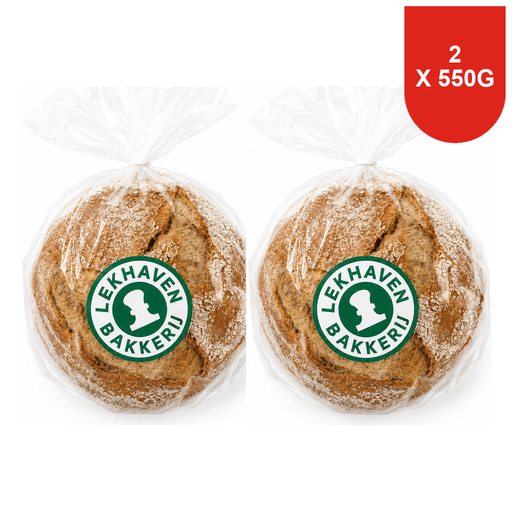 Image unavailable
Two loaves may suit a household preparing several school lunches. The pack contains two round loaves, each weighing 550 g. Remember to allow time for defrosting and baking when planning ahead. Check the latest allergen information and baking instructions on the packaging.
 Image unavailable
One 550 g loaf may suit you if you don’t want to open a pack of two. Allow time for defrosting, baking and cooling, and follow the latest baking instructions on the packaging. Check the allergen information before use too.
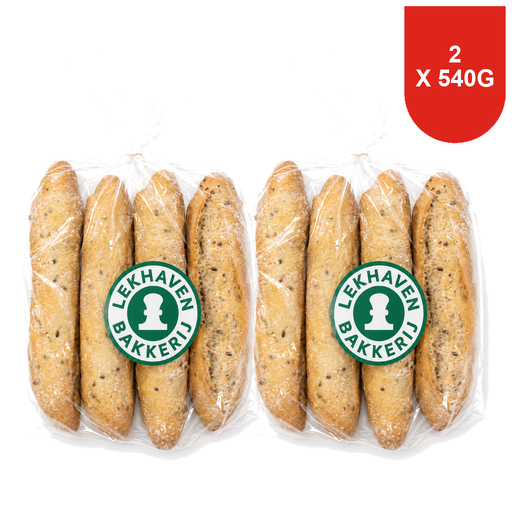 Image unavailable
Individual baguettes may suit you if you’re planning several lunches with separate rolls. This is a pack of two sets of four baguettes, each weighing 135 g, rather than a standard whole or half loaf. Allow time for defrosting and baking, and check the allergen information on the packaging.
 Image unavailable
Four individual baguettes may suit you if you want to bake a smaller amount at a time. Each baguette weighs 135 g; you’ll need to defrost and bake them before use. Follow the latest baking instructions and check the allergen information on the packaging.
 Image unavailable
A pack of four rolls may suit you if you prefer individual lunch portions to slices from a whole loaf. If your child has a dietary restriction, check the latest allergen information and the arrangements at their school.
No. According to the Netherlands Nutrition Centre, multigrain bread contains at least three different types of grain; that alone does not mean the bread is wholegrain. Look for an explicit wholegrain claim if you want wholemeal bread.
Not unless it is clearly labelled gluten-free. Multigrain bread may contain gluten-containing cereals, so check the specific product and the latest allergen information before packing it.
If there’s a relevant dietary restriction, check the latest ingredients and allergen information for the bread you choose, along with any warnings. Also ask what arrangements the school or after-school care service makes for food brought from home.
If you won’t use the bread soon, freeze it in portions shortly after buying it and take out only what you need. The Netherlands Nutrition Centre recommends keeping bread in the freezer for 1 to 3 months and notes that it may become drier if stored for longer. Follow the instructions on the product packaging too.
You can’t tell from the name multigrain bread. The Netherlands Food and Consumer Product Safety Authority explains that iodine compounds may be present in Dutch bread through baker’s salt, subject to the relevant conditions. Check the ingredients of the loaf you choose.