For a daily secondary-school lunch, choose a loaf size that will be eaten at home, and check the product description if you specifically want wholemeal bread. According to the Netherlands Nutrition Centre, ‘multigrain’ means that a loaf is made with at least three types of grain; it does not automatically mean that it is wholemeal. When choosing between a half and a whole loaf, compare the number of slices you use. Before packing lunch, also check the label for relevant allergens and make sure you follow the school’s rules.
Who are these choices relevant to?
Families who regularly make packed lunches for school
If the amount of bread you use varies from day to day, consider buying a half loaf or freezing a whole loaf in portions as soon as you get home. The Netherlands Nutrition Centre advises freezing bread in portions after buying it and taking out only what you need each day.
Parents who make a conscious choice to buy wholemeal
The word ‘multigrain’ alone isn’t enough. Check that ‘wholemeal’ appears in the product description or on the packaging, and look at the ingredients list if needed.
Anyone making lunch who needs to check for allergens
If there’s a relevant allergy or a school rule to follow, the information for the exact loaf matters. Check the ingredients, allergen information and any cross-contamination warnings, and bear the school’s policy in mind.
What should you look for when choosing?
First, work out how much bread you’ll actually use at home. Then check whether it’s described as wholemeal, look for allergen information and consider whether the preparation fits into a busy school morning.
| What to consider |
What to check when buying |
Who should pay particular attention? |
| How much bread you use and avoiding waste |
Choose a half or whole loaf to suit the number of slices you use. If needed, freeze a whole loaf in portions as soon as you get home. |
If we don’t need many slices at home, I want to avoid the rest going stale. For around 36% of consumers, reducing waste is the top priority. |
| Wholemeal or just multigrain |
Look for an explicit wholemeal description; colour, seeds and the word ‘multigrain’ don’t prove that it’s wholemeal. |
When I want to pack wholemeal bread, the product description needs to confirm that choice. Around 29% of consumers give this top priority. |
| Allergens and school rules |
Read the allergen information for the exact product and check the school’s rules. |
If a pupil has a relevant allergy, I want to know what’s in the bread before it goes into their lunchbox. This check matters most to around 21% of consumers. |
| Daily preparation |
Check whether the bread is sliced and whether it needs to be defrosted or baked. |
On a school morning, I want to be able to make lunch without any unexpected preparation. Everyday convenience is the top priority for around 14% of consumers. |
Common mistakes
-
Assuming ‘multigrain’ means ‘wholemeal’
According to the Netherlands Nutrition Centre, ‘multigrain’ means that at least three types of grain are used. On its own, the term doesn’t tell you whether the whole grain has been used.
If wholemeal matters to you, check the product description or ingredients list. Don’t rely on a dark colour or visible seeds alone.
-
Assuming a half loaf and a whole loaf provide the same number of lunches
A whole loaf may not be the best choice if you don’t use much bread and some of it goes stale before you finish it.
Choose a size based on how many slices you use at home. The Netherlands Nutrition Centre advises freezing bread you’ll need later in portions as soon as you get home.
-
Guessing which allergens are present from the type of bread
Multigrain breads can contain different ingredients and have different allergen information. The Netherlands Food and Consumer Product Safety Authority lists cereals containing gluten as allergens that consumers must be informed about.
Read the information for the exact loaf before packing it, including any ‘may contain’ warnings. If you’re buying unpackaged bread, ask for the allergen information and check the school’s rules.
Brands to consider
These examples show the product information you can compare across different breads. The features apply to the products mentioned, not necessarily to a retailer’s entire range.
Dirk
Dirk lists Bakker van der Akker Bakkers multigrain bread as a half loaf, a size to consider if you don’t use much bread each day.
- A half loaf may suit the number of slices you use at home.
- Check the product description if you’re specifically looking for wholemeal multigrain bread.
Jumbo
Jumbo describes Stevig Meergranen as a wholemeal multigrain loaf with seeds.
- The product information includes ingredients, allergens and nutritional information.
- If you don’t use much bread at home each day, you’ll need a plan for storing a whole loaf.
ALDI
ALDI lists both a luxe meergranen vloerbrood and a separate boeren volkoren meergranenbrood.
- ‘Wholemeal’ is explicitly included in the name of the boerenbrood.
- Check the ingredients, allergens and packaging information for the loaf you choose.
PLUS
PLUS describes Korenlanders Donker meergranen rond heel as a wholemeal multigrain loaf.
- The product information includes ingredients, allergens and storage advice.
- Choose a whole loaf to suit how much you use at home, and check the label on the product you buy.
Joybuy products for lunch
These products are multigrain rolls and multigrain baguettes sold in portions, not half or whole sliced loaves. When choosing, check whether they’re described as wholemeal, look at the allergen information and consider how much preparation they need.
 Image unavailable
g'woon Multigrain Rolls, 4 pieces
Four rolls make a handy portion for lunches when you don’t want to cut into a whole loaf.
Check the product description if you’re looking for wholemeal bread. This product contains cereals with gluten and sesame, so read the latest label and take the school’s rules into account.
View at Joybuy
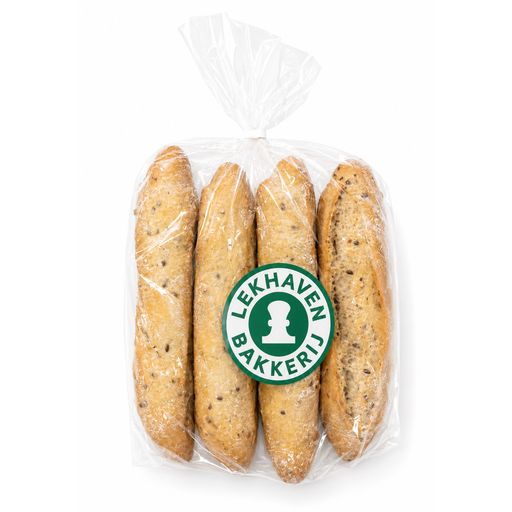 Image unavailable
Lekhaven Bakkerij Multigrain Rustic Baguette, 4 × 135 g
The four 135 g baguettes are individual portions for anyone who can prepare lunch in advance.
Allow time to defrost and bake them, and follow the preparation instructions on the packaging. If you’re looking for wholemeal bread, check the product description. If you have an allergy, read the latest label, including the information about wheat and sesame.
View at Joybuy
Frequently asked questions
Is multigrain bread automatically wholemeal?
No. According to the Netherlands Nutrition Centre, multigrain bread is made with at least three types of grain, but the name doesn’t automatically mean the bread is wholemeal. Look for an explicit wholemeal description if that matters to you.
If I have an allergy, can I rely on the word ‘multigrain’?
No. Check the allergen information for the exact loaf. According to the Netherlands Food and Consumer Product Safety Authority, cereals containing gluten are among the allergens consumers must be informed about. Also check for other relevant ingredients and any cross-contamination warnings.
What should I do if I won’t get through a whole loaf quickly?
Freeze the bread in portions as soon as you get home, then take out what you need for each school day. This is the Netherlands Nutrition Centre’s storage advice for bread you won’t use straight away. Alternatively, choose a smaller size that better suits how much you use at home.


