
Parents who look for wholemeal ingredients
For a daily school sandwich, you’ll want to know which flours have been used. The ingredients list and fibre per 100 g give you a clearer picture than the word ‘multigrain’.


When choosing a school lunch, don’t rely on the word ‘multigrain’ alone: according to the Voedingscentrum, it tells you which types of grain are used, not whether the bread is wholemeal. If wholemeal is your top priority, compare wholemeal multigrain breads specifically, checking the ingredients and fibre per 100 g. If your child mainly eats white bread, a loaf made with both wholemeal flour and white flour could be a stepping stone. Whichever you choose, check the label and the school’s allergen policy.
For a daily school sandwich, you’ll want to know which flours have been used. The ingredients list and fibre per 100 g give you a clearer picture than the word ‘multigrain’.
If your child is used to eating mainly white bread, you may want to try a loaf that also contains wholemeal flour without going straight for a fully wholemeal option. You can see at home whether they like the taste and texture.
Before packing lunch, you’ll need to know which allergens are listed on the bread you’ve bought, including any warnings about possible traces. Also check the school or class policy.
When to choose it: Choose this option if a clearly wholemeal base and comparing fibre per 100 g are your priorities. Jumbo lists 55,7% wholemeal wheat flour and 8,0 g fibre per 100 g for Boeren Donker Volkoren Meergranen, and 49,4% and 7,6 g per 100 g for Schotel Meergranen Volkoren.
Things to consider: A texture with grains and seeds may not appeal to a child who’s used to soft white bread. Check the allergens for your chosen variety separately.
When to choose it: You could try this option if your child isn’t ready to eat a fully wholemeal sandwich yet. Albert Heijn lists 31% wholemeal wheat flour, 30% white wheat flour and 5,2 g fibre per 100 g for AH Vloerbrood meergranen heel.
Things to consider: This AH loaf isn’t fully wholemeal and, according to the product information cited, has less fibre per 100 g than the two Jumbo breads mentioned. Whether your child will eat it is a separate consideration.
| What to consider | What to check when buying | Who it matters to |
|---|---|---|
| Wholemeal content and fibre | Check which flours are in the bread and compare fibre per 100 g on the current label. | If I mainly want to pack bread with a clearly wholemeal base, I won’t let the word ‘multigrain’ make the decision for me. Around 40% of consumers put this need first. |
| Taste and texture | Check the flour mix and whether it contains kernels or seeds; try it at home with the fillings your child usually has. | My child is used to white bread, so I’m looking for a manageable step towards bread with wholemeal flour, without assuming they’ll eat a darker slice. For around 30% of consumers, whether their child will accept it matters most. |
| Allergens | Check the current packaging, including any warnings about possible traces, and ask about the school’s policy. | Before I pack bread, I need to know whether the ingredients and warnings comply with the arrangements for my child and their school. This check comes first for around 20% of consumers. |
| Storage and portions | Read the storage instructions and check whether you can divide the bread into useful portions. | On school days, I want to pack only the sandwiches I need and avoid leaving the rest unused. For around 10% of consumers, this is the main consideration. |
According to the Voedingscentrum, multigrain means that different types of grain are used; the word doesn’t tell you whether the bread has a wholemeal base.
Read the full product name and ingredients list. Then compare the fibre per 100 g in the breads you’re considering.
A dark loaf with seeds isn’t necessarily fully wholemeal. According to Albert Heijn, AH Vloerbrood meergranen heel contains both wholemeal wheat flour and white wheat flour.
Check the label for the exact variety to see which flours it contains, along with its fibre and allergens, rather than judging the bread by its appearance.
The AH and Jumbo breads mentioned contain gluten-containing grains; other allergens present or potentially present vary by product.
Read the current packaging before buying, and make sure the bread complies with the school or class policy before packing it.
If you don’t use all the slices in time, some of the bread may go to waste. The Voedingscentrum recommends freezing bread in portions as soon as you buy it.
Divide the bread into portions and follow the storage instructions on the packaging. Jumbo says that Schotel Meergranen Volkoren can be frozen at home on the day of purchase.
The breads mentioned show why it’s worth comparing the flours, nutritional information and allergens for each product; the brand name alone won’t determine which one to choose.
AH Vloerbrood meergranen heel is a specific example of bread made with both wholemeal flour and white flour.
Boeren Donker Volkoren Meergranen and Schotel Meergranen Volkoren are two Jumbo multigrain breads specifically labelled as wholemeal.
Lidl describes a multigrain bread containing, among other things, wheat, barley and buckwheat.
ALDI lists Luxe vloerbrood meergranen and Boeren volkoren meergranen as different types of bread.
PLUS lists options including Korenlanders Desem Meergranen Boekweit and Brood van Soma Haverkorn meergranen.
Dirk lists multigrain breads alongside loaves specifically labelled as wholemeal.
These products come in different sizes and formats of multigrain bread and rolls for lunch. First choose the format you want and consider how much preparation is involved. Check the packaging to make sure the flours, fibre and allergens are suitable for your school lunch.
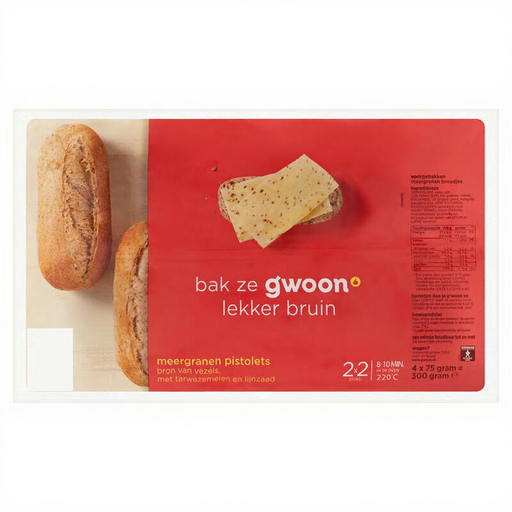 Image unavailable
Four individual rolls are a handy option if you want to pack one for each lunch.
Looking specifically for a mix of wholemeal and white flour? Check the flours on the current packaging. Before packing, also read the allergen information and check the school policy.
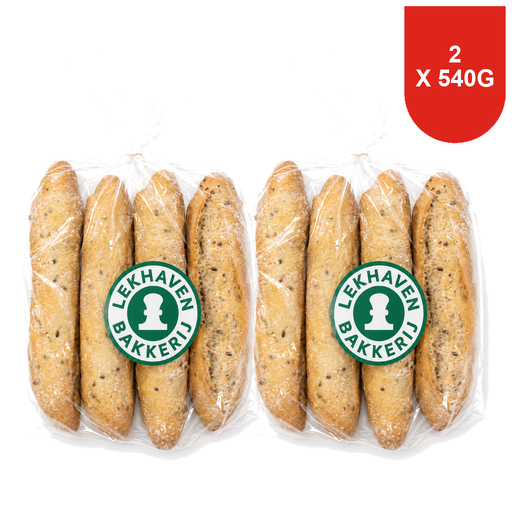 Image unavailable
This format is ideal if you want to plan individual baguettes for lunches.
Allow time to defrost and bake before serving. Check the packaging for the flours, fibre per 100 g and allergens, including wheat and sesame.
 Image unavailable
The pack of four baguettes is useful for planning individual lunch portions.
Allow time to defrost and bake them. To compare wholemeal content or fibre, check the current nutritional information and allergens on the packaging.
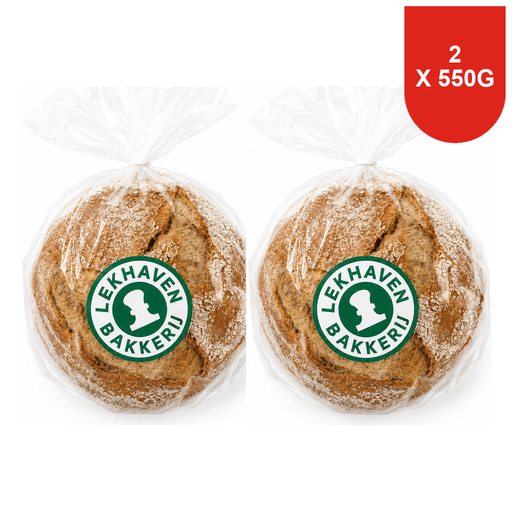 Image unavailable
Two round loaves give you the option of planning sandwiches for several lunches.
Allow time to defrost, bake, cool and slice the bread. Before choosing it for school, check the flours, fibre and allergens on the packaging.
 Image unavailable
This single round loaf is a good option if you want to prepare one loaf and slice it yourself.
Defrosting and baking take a little planning; let the bread cool before slicing. For a school lunch, check the current information about the flours, fibre and allergens.
No. According to the Voedingscentrum, ‘multigrain’ refers to bread made with at least three types of grain, but it can also contain white flour. To check whether it has a wholemeal base, look at the full product name and ingredients list.
Multigrain bread made with both wholemeal and white flour could be a stepping stone, as long as your child is willing to eat it. Albert Heijn lists 31% wholemeal wheat flour and 30% white wheat flour for AH Vloerbrood meergranen heel. Try it at home to see whether your child likes the taste and texture, and compare the label if fibre is your top priority.
The AH and Jumbo breads discussed here contain gluten-containing grains, so they aren’t suitable if the school requires you to pack gluten-free bread. For any other bread, check the current label separately and ask about the policy at your child’s school or in their class.
Divide the bread into portions and follow the storage instructions for your chosen product. The Voedingscentrum recommends freezing bread in portions as soon as you buy it. Jumbo says that Schotel Meergranen Volkoren should be frozen on the day of purchase and used within one month.